
Iran protest crackdown: At least 538 left dead as Tehran warns US, Israel against intervention
Iranian officials have taken an increasingly hard line. The country’s attorney general warned that those caught protesting — or even assisting demonstrators — could be charged with being an “enemy of God”, a crime under Iranian law that carries the death penalty. In
- Jan 11, 2026,
- Updated Jan 11, 2026 10:45 PM IST
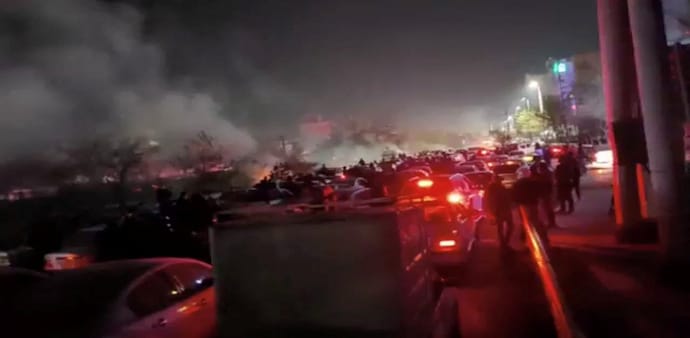
A sweeping crackdown on nationwide protests in Iran has left at least 538 people dead, according to activists, as the Islamic Republic faces one of its gravest internal crises in years and mounting pressure from the United States and its allies.
The US-based Human Rights Activists News Agency (HRANA) said on Sunday that more than 10,600 people have been detained during the two weeks of unrest that have rocked cities and towns across Iran, as per a AP report. The group, which relies on a network of activists inside the country who crosscheck information, has previously provided figures that broadly aligned with later independent assessments during earlier protest movements.
Iranian authorities have not released any official nationwide casualty figures. Independent verification has become increasingly difficult as the government imposed a near-total internet blackout and cut international phone lines, leaving families, journalists and rights groups struggling to assess the true scale of the violence.
The protests, which erupted earlier this month, have rapidly evolved into one of the most serious challenges to Iran’s leadership since the mass demonstrations of 2019. What began as scattered rallies has grown into a broad-based movement fuelled by anger over political repression, economic hardship and long-standing grievances against the ruling system.
According to human rights organisations, security forces have used live ammunition, tear gas and mass arrests to disperse crowds. Activists say the internet shutdown, imposed nationwide on Thursday, has provided cover for an expanded crackdown, allowing authorities to operate largely out of public view.
Iranian officials have taken an increasingly hard line. The country’s attorney general warned that those caught protesting — or even assisting demonstrators — could be charged with being an “enemy of God”, a crime under Iranian law that carries the death penalty. In recent days, authorities have also confirmed the arrest of key figures believed to be organising or coordinating protests.
As tensions escalate inside Iran, the crisis has spilled onto the international stage, raising fears of a wider confrontation. Tehran has warned that the U.S. military and Israel would be considered “legitimate targets” if Washington uses force to protect protesters or intervene directly.
US President Donald Trump has repeatedly issued sharp warnings to Iran’s leadership, threatening intervention if authorities continue to kill demonstrators. On Saturday night, Trump appeared to double down on that stance.
“Iran is looking at FREEDOM, perhaps like never before. The USA stands ready to help!!!,” he wrote on his Truth Social platform.
According to reports by The New York Times and The Wall Street Journal, senior US officials have presented Trump with military options for potential strikes on Iran, though no final decision has been taken. The reports underscore the seriousness with which Washington is viewing the situation, even as direct intervention would carry enormous regional risks.
Several US lawmakers have echoed the president’s rhetoric. Senator Lindsey Graham wrote on social media that the Iranian people’s “long nightmare is soon coming to a close”, signalling growing support among some American politicians for a more aggressive stance.
Israel, meanwhile, has gone on high alert amid the escalating rhetoric. Israeli media reported that officials are deliberately keeping a low public profile on the protests to avoid giving Iranian authorities an opportunity to portray the unrest as a foreign-backed conspiracy — a narrative Tehran has frequently used during past uprisings.
Iran has a long history of responding forcefully to mass protests, most notably in November 2019, when hundreds were killed during demonstrations over fuel price hikes. Each wave of unrest has been met with a similar playbook: security crackdowns, sweeping arrests, media restrictions and internet shutdowns.
What distinguishes the current crisis is the intensity of international attention and the explicit threats of possible US intervention, a factor that significantly raises the stakes for both Tehran and Washington. Analysts warn that any military action, even if limited, could trigger retaliation across the Middle East, drawing in regional actors and further destabilising an already volatile region.
A sweeping crackdown on nationwide protests in Iran has left at least 538 people dead, according to activists, as the Islamic Republic faces one of its gravest internal crises in years and mounting pressure from the United States and its allies.
The US-based Human Rights Activists News Agency (HRANA) said on Sunday that more than 10,600 people have been detained during the two weeks of unrest that have rocked cities and towns across Iran, as per a AP report. The group, which relies on a network of activists inside the country who crosscheck information, has previously provided figures that broadly aligned with later independent assessments during earlier protest movements.
Iranian authorities have not released any official nationwide casualty figures. Independent verification has become increasingly difficult as the government imposed a near-total internet blackout and cut international phone lines, leaving families, journalists and rights groups struggling to assess the true scale of the violence.
The protests, which erupted earlier this month, have rapidly evolved into one of the most serious challenges to Iran’s leadership since the mass demonstrations of 2019. What began as scattered rallies has grown into a broad-based movement fuelled by anger over political repression, economic hardship and long-standing grievances against the ruling system.
According to human rights organisations, security forces have used live ammunition, tear gas and mass arrests to disperse crowds. Activists say the internet shutdown, imposed nationwide on Thursday, has provided cover for an expanded crackdown, allowing authorities to operate largely out of public view.
Iranian officials have taken an increasingly hard line. The country’s attorney general warned that those caught protesting — or even assisting demonstrators — could be charged with being an “enemy of God”, a crime under Iranian law that carries the death penalty. In recent days, authorities have also confirmed the arrest of key figures believed to be organising or coordinating protests.
As tensions escalate inside Iran, the crisis has spilled onto the international stage, raising fears of a wider confrontation. Tehran has warned that the U.S. military and Israel would be considered “legitimate targets” if Washington uses force to protect protesters or intervene directly.
US President Donald Trump has repeatedly issued sharp warnings to Iran’s leadership, threatening intervention if authorities continue to kill demonstrators. On Saturday night, Trump appeared to double down on that stance.
“Iran is looking at FREEDOM, perhaps like never before. The USA stands ready to help!!!,” he wrote on his Truth Social platform.
According to reports by The New York Times and The Wall Street Journal, senior US officials have presented Trump with military options for potential strikes on Iran, though no final decision has been taken. The reports underscore the seriousness with which Washington is viewing the situation, even as direct intervention would carry enormous regional risks.
Several US lawmakers have echoed the president’s rhetoric. Senator Lindsey Graham wrote on social media that the Iranian people’s “long nightmare is soon coming to a close”, signalling growing support among some American politicians for a more aggressive stance.
Israel, meanwhile, has gone on high alert amid the escalating rhetoric. Israeli media reported that officials are deliberately keeping a low public profile on the protests to avoid giving Iranian authorities an opportunity to portray the unrest as a foreign-backed conspiracy — a narrative Tehran has frequently used during past uprisings.
Iran has a long history of responding forcefully to mass protests, most notably in November 2019, when hundreds were killed during demonstrations over fuel price hikes. Each wave of unrest has been met with a similar playbook: security crackdowns, sweeping arrests, media restrictions and internet shutdowns.
What distinguishes the current crisis is the intensity of international attention and the explicit threats of possible US intervention, a factor that significantly raises the stakes for both Tehran and Washington. Analysts warn that any military action, even if limited, could trigger retaliation across the Middle East, drawing in regional actors and further destabilising an already volatile region.