
'No sign of life' at crash site of helicopter carrying Iran's president Ebrahim Raisi
The crash is likely to reverberate across the Middle East. That's because Iran has spent decades supporting armed groups in Lebanon, Syria, Iraq, Yemen and the Palestinian territories that allow it to project power and potentially deter attacks from the US or Israel
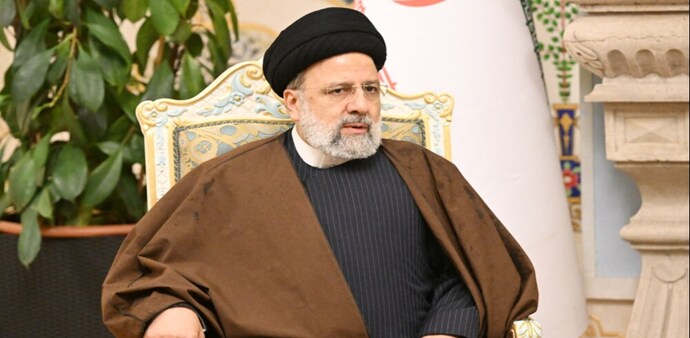
- May 20, 2024,
- Updated May 20, 2024 8:49 AM IST
Iranian state television said there is no sign of life seen at the crash site of a helicopter that was carrying President Ebrahim Raisi and others.
The site was across a steep valley and rescuers had yet to reach it, state media reported. As the sun rose Monday, rescuers saw the helicopter from a distance of some 2 kilometers (1.25 miles), the head of the Iranian Red Crescent Society, Pir Hossein Kolivand, told state media.
He did not elaborate and the officials had been missing at that point by over 12 hours. The helicopter crashed Sunday and was carrying Raisi, Foreign Minister Hossein Amirabdollhian and others.
The crash is likely to reverberate across the Middle East. That's because Iran has spent decades supporting armed groups in Lebanon, Syria, Iraq, Yemen and the Palestinian territories that allow it to project power and potentially deter attacks from the United States or Israel, the sworn enemies of its 1979 Islamic Revolution.
Tensions have never been higher than they were last month, when Iran under Raisi and Supreme Leader Ayatollah Ali Khamenei launched hundreds of drones and ballistic missiles at Israel in response to an airstrike on an Iranian Consulate in Syria that killed two Iranian generals and five officers.
Israel, with the help of the United States, Britain, Jordan and others, intercepted nearly all the projectiles. In response, Israel apparently launched its own strike against an air defense radar system in the Iranian city of Isfahan, causing no casualties but sending an unmistakable message.
The sides have waged a shadow war of covert operations and cyberattacks for years, but the exchange of fire in April was their first direct military confrontation.
The ongoing war between Israel and Hamas has drawn in other Iranian allies, with each attack and counterattack threatening to set off a wider war.
It's a combustible mix that could be ignited by unexpected events, like a helicopter carrying top officials crashing.
Iranian state television said there is no sign of life seen at the crash site of a helicopter that was carrying President Ebrahim Raisi and others.
The site was across a steep valley and rescuers had yet to reach it, state media reported. As the sun rose Monday, rescuers saw the helicopter from a distance of some 2 kilometers (1.25 miles), the head of the Iranian Red Crescent Society, Pir Hossein Kolivand, told state media.
He did not elaborate and the officials had been missing at that point by over 12 hours. The helicopter crashed Sunday and was carrying Raisi, Foreign Minister Hossein Amirabdollhian and others.
The crash is likely to reverberate across the Middle East. That's because Iran has spent decades supporting armed groups in Lebanon, Syria, Iraq, Yemen and the Palestinian territories that allow it to project power and potentially deter attacks from the United States or Israel, the sworn enemies of its 1979 Islamic Revolution.
Tensions have never been higher than they were last month, when Iran under Raisi and Supreme Leader Ayatollah Ali Khamenei launched hundreds of drones and ballistic missiles at Israel in response to an airstrike on an Iranian Consulate in Syria that killed two Iranian generals and five officers.
Israel, with the help of the United States, Britain, Jordan and others, intercepted nearly all the projectiles. In response, Israel apparently launched its own strike against an air defense radar system in the Iranian city of Isfahan, causing no casualties but sending an unmistakable message.
The sides have waged a shadow war of covert operations and cyberattacks for years, but the exchange of fire in April was their first direct military confrontation.
The ongoing war between Israel and Hamas has drawn in other Iranian allies, with each attack and counterattack threatening to set off a wider war.
It's a combustible mix that could be ignited by unexpected events, like a helicopter carrying top officials crashing.