
US-Israel-Iran War Live Updates: Israel warns Iran’s next Supreme Leader will be a ‘target for elimination’
Business Today Desk | Updated Mar 4, 2026 7:00 PM IST
US-Israel-Iran War Live Updates: Israel has issued direct threat to Iran’s succession process as regional hostilities intensify with missile strikes, casualties, and international concerns.
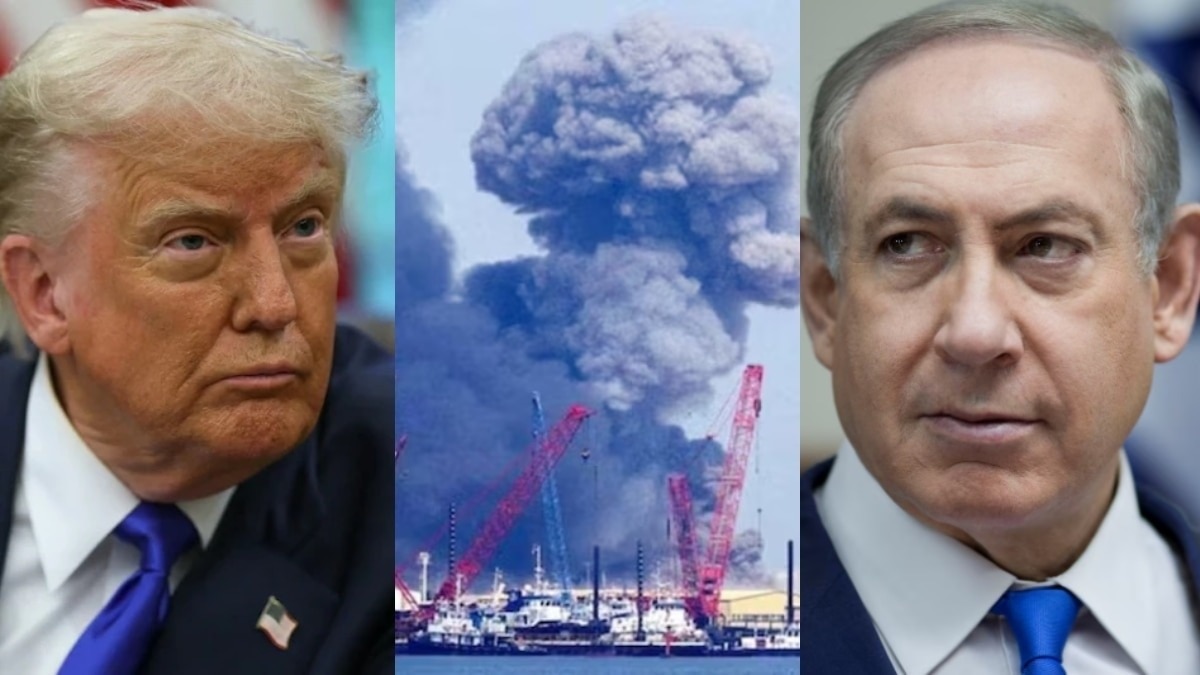 The Israeli military claims to have destroyed ballistic missile production and storage facilities, as well as a building in Qom associated with succession discussions.
Israel has issued a stark warning that any successor chosen as Iran’s next Supreme Leader will be considered a direct target, as conflict between Israel, the United States, and Iran escalates across the region. The announcement follows intensified military action, with Israeli and U.S. forces striking Iranian nuclear and military sites, including a reported attack on a building linked to Iran’s Assembly of Experts in Qom. These developments coincide with Iran’s Assembly preparing to name a replacement for Ayatollah Khamenei, killed in an Israeli strike after nearly four decades in power, heightening uncertainty around Iran’s leadership transition.
Israeli Foreign Minister Katz declared, “Every leader appointed by the Iranian terror regime to continue and lead the plan to destroy Israel, to threaten the United States and the free world and the countries of the region, and to suppress the Iranian people — will be a target for elimination,” in a post on X. He added, “It does not matter what his name is or the place where he hides. The Prime Minister and I have instructed the IDF to prepare and act by all means to carry out the mission as an integral part of the objectives of Operation Lion's Roar.”
Explosions were reported in Tehran as Israeli air defences responded to incoming Iranian missiles. Jerusalem and other cities in the region also experienced blasts, while air raid sirens sounded in Bahrain and Qatar. Qatar’s Ministry of Defence confirmed that two ballistic missiles were launched at the country, with one striking Al-Udeid Air Base. The United Arab Emirates stated it intercepted the majority of over 1,000 Iranian missiles and drones fired since the fighting began.
The conflict has resulted in significant casualties, with nearly 800 people killed in Iran, according to the Iranian Red Crescent Society. In Israel, missile and drone attacks have caused 11 deaths. Lebanese authorities reported at least four fatalities in Baalbek due to Israeli strikes, and the country’s Health Ministry confirmed more than 50 deaths and over 300 injuries since hostilities expanded into Lebanon. 1
Qatar Energy halts LNG output; Petronet LNG issues force majeure amid Hormuz crisis
Amid escalating tensions in West Asia involving Iran and Israel, Qatar Energy, the world’s largest exporter of liquefied natural gas (LNG), has halted LNG production and declared force majeure to affected buyers after its energy infrastructure was targeted.
In a statement on X, QatarEnergy said it had stopped production of LNG and related products due to the deteriorating security situation. The company added that it had informed its buyers about the force majeure and would continue to update stakeholders as more information becomes available.
Qatar accounts for nearly 40% of India’s LNG imports, making the disruption significant for the country’s energy supply. The halt in production is linked to difficulties in shipping cargo through the Strait of Hormuz, a crucial global energy transit route facing heightened security risks amid the conflict.
The strait, located between Iran and Oman, handles around 30% of global seaborne crude trade, and disruptions could impact global oil and gas supply chains. If the situation persists, industrial users and city gas distribution companies in India may face supply cuts, potentially affecting CNG for vehicles and piped natural gas (PNG) used in households.
Following the disruption, Petronet LNG Ltd issued a force majeure notice to Qatar Energy and its offtakers including GAIL, Indian Oil Corporation and Bharat Petroleum.
In a stock exchange filing, Petronet said its LNG tankers Disha, Raahi and Aseem were unable to safely transit the Strait of Hormuz to reach Ras Laffan, QatarEnergy’s LNG loading port, due to the ongoing conflict. The company added that the financial impact of the situation cannot yet be assessed.
Iran reportedly permits only Chinese vessels through Hormuz as shipping crisis deepens
Iran has reportedly said it will allow only Chinese vessels to pass through the Strait of Hormuz, citing Beijing’s supportive stance toward Tehran during the ongoing conflict.
According to the announcement, the strategic waterway has been closed to all other ships, with Iranian authorities warning that any unauthorised vessel attempting to cross the strait could be directly targeted by its forces.
3
NATO defences intercept Iranian missile headed toward Turkish airspace, says Turkey
NATO air and missile defence systems deployed in the eastern Mediterranean intercepted and destroyed a ballistic missile launched from Iran after it passed over Syria and Iraq and headed toward Turkish airspace, Turkey’s Defence Ministry said.
The incident marks the first time NATO member Turkey, which borders Iran to the northwest, has been directly affected by the escalating conflict involving Iran, the United States and Israel that has drawn in several countries across the region.
In a statement, the Turkish Defence Ministry urged restraint from all sides amid the growing tensions.
“We warn all parties to refrain from actions that would lead to further escalation of conflict in the region,” the ministry said.
It added that Turkey would continue consultations with NATO and other allies as the situation evolves.
The ministry also confirmed that the interception caused no casualties or injuries.
Indian man from Telangana hurt in Iran-linked strike near Abu Dhabi airport
A man from Telangana sustained minor injuries in an attack near Abu Dhabi International Airport that has been linked to Iran amid the ongoing tensions in West Asia, his parents said on Wednesday.
N. Rajeswara Rao, a resident of Pothireddypalle village in Rajanna Sircilla district, works in the housekeeping department at the airport. He informed his family that he and several others suffered minor injuries in the incident.
“My son has been working there for the past year at the airport. He was injured in the attack and spoke to us over a video call, but he is not showing us the injuries. I just want my son to return home soon,” his father, Prabhakar Rao, told news agency PTI.
1
Air India Express to run extra flights from Muscat and Ras Al Khaimah
Air India Express has announced that it will continue operating flights to and from Muscat on March 5, 2026, while adding extra services linking Muscat with Delhi and Mumbai.
The airline is also operating special flights from Ras Al Khaimah to Delhi, Kochi and Mumbai, with these services scheduled to run until March 7, 2026.
1
Kuwait extends visit visas, grants three-month absence allowance for residents abroad
Kuwait’s Ministry of Interior has announced an automatic one-month extension for visit visas along with a three-month absence allowance for residents currently outside the country.
Visit visas set to expire during this period will be automatically extended from February 28, 2026, with all related fees and fines waived. In addition, residents who have exceeded the permitted period of stay outside Kuwait will be allowed to remain abroad for an additional three months without facing penalties.
Aramco’s Ras Tanura refinery targeted again in suspected drone attack
Saudi Aramco’s Ras Tanura refinery has reportedly been targeted again by an unidentified projectile. “There was an attempted attack on the Ras Tanura refinery, and initial estimates indicate that it was carried out using a drone and caused no damage,” an official spokesperson for Saudi Arabia’s Ministry of Defence said.
The incident marks the second such attack on the facility since the US-Israel conflict with Iran escalated on February 28.
Drone hits Iranian Kurdish opposition headquarters in Iraq’s Kurdistan
A drone strike targeted the headquarters of an Iranian Kurdish opposition group in Iraq’s Kurdistan region on Wednesday, according to security sources. There were no immediate reports of casualties or details about the extent of the damage.
The strike highlights the fragile security environment in the region, where Iranian Kurdish opposition groups have long operated and where tensions involving regional actors frequently spill across borders. Security sources confirmed the attack but did not immediately identify who carried it out. Further details on the incident and potential damage were not available.
1
Israel hits Beirut suburbs as conflict with Iran spreads to Lebanon
Israeli and US forces continued their strikes across Iran on Wednesday (March 4, 2026), as the conflict widened to Lebanon amid rising regional tensions.
Israel expanded its air campaign in Lebanon, targeting areas around the presidential palace near Beirut, as well as locations south of the capital and strongholds of the Iran-backed militant group Hezbollah. The strikes reportedly killed at least 11 people.
One of the air strikes hit a hotel in Hazmieh, marking the first reported Israeli attack on the predominantly Christian suburb near Beirut that lies close to the presidential palace and several foreign embassies.
Iran Guards assert full control over Strait of Hormuz amid maritime security concerns
Iran's Revolutionary Guard Corps has declared that the Strait of Hormuz, a crucial maritime corridor for global oil and gas shipments, is entirely under its control. The announcement, released through Iran's state-affiliated media, comes at a time when regional tensions are high, drawing international attention to the security of one of the world's most vital energy pathways. The Strait of Hormuz links the Gulf to the Arabian Sea, and any disruption to its traffic could have significant repercussions for global energy markets and shipping operations.
In a statement carried by Fars news agency, Guards Navy official Mohammad Akbarzadeh said, "Currently, the Strait of Hormuz is under the complete control of the Islamic Republic's Navy." The declaration signals a strong warning to commercial and military vessels operating in the area, coinciding with increased geopolitical friction throughout the Gulf region.
Iran's warning to vessels navigating the passage included explicit references to potential risks from missiles or stray drones. The Guards highlighted the vulnerability of maritime traffic, stating that ships could face serious threats if they attempt to transit the corridor. This caution reflects the growing unease over the safety of international shipping and the possibility of further escalation affecting the flow of global trade.
The Strait of Hormuz handles a substantial portion of the world's energy exports, making its security a top concern for both regional and global stakeholders. Recent developments have prompted foreign governments to review their maritime security protocols, as the corridor remains a key chokepoint in the international energy supply chain. According to industry analysts, any sustained interference in this passage could result in immediate impacts on oil prices and delivery schedules.
The Iranian claim follows statements from international leaders, including assurances by the United States to maintain open navigation routes in the area. The US Navy has indicated readiness to escort oil tankers through the Strait, reflecting the broader international focus on preserving the security and stability of this critical maritime gateway in light of ongoing hostilities and operational risks.
Pakistan asks Saudi Arabia to route oil via Yanbu as Strait of Hormuz shipping stalls
Pakistan has requested Saudi Arabia to route its oil supplies through the Red Sea port of Yanbu after the closure of the Strait of Hormuz disrupted regional shipping, the country’s Petroleum Ministry said in a statement on Wednesday (March 4, 2026).
The move comes as the ongoing conflict in West Asia has severely affected shipping through the Strait of Hormuz, a key global oil chokepoint through which a significant share of the world’s crude exports — and most of Pakistan’s fuel imports — normally pass. The disruption has raised concerns over energy security for import-dependent economies.
According to the ministry, Saudi authorities have assured Pakistan that crude supplies can be facilitated through the Red Sea port of Yanbu to help meet the country’s energy requirements. One vessel has already been arranged to sail to Yanbu to lift crude destined for Pakistan.
“Saudi Arabia reaffirmed that it would support Pakistan in meeting its emergency energy needs,” the ministry said.
Pakistan’s Petroleum Minister Ali Pervaiz Malik raised the issue during a meeting with Saudi Arabia’s Ambassador to Pakistan, Nawaf bin Said Al-Malki, the statement added.
The minister noted that the majority of Pakistan’s energy imports transit through the Strait of Hormuz and said the government is closely monitoring the evolving situation to ensure uninterrupted fuel supplies.
Iran determined to defend itself amid conflict with Israel and US, says Foreign Minister Araghchi
US-Israel Strikes Iran News: Iran’s Foreign Minister Seyed Abbas Araghchi on Wednesday said Tehran remains determined to defend itself and confront what he described as “US-Israeli aggression”, according to Iranian state broadcaster Press TV.
Araghchi’s remarks came as tensions in the region escalated following a series of military exchanges involving Iran, Israel and the United States.
Earlier in a post on social media platform X, Araghchi said Iran had studied past US military engagements in the region and adapted its defence strategy accordingly.
“We've had two decades to study defeats of the U.S. military to our immediate east and west. We've incorporated lessons accordingly. Bombings in our capital have no impact on our ability to conduct war. Decentralised Mosaic Defence enables us to decide when, and how the war will end,” Araghchi wrote.
The statement reflects Iran’s long-standing military doctrine of decentralised defence, often referred to as the “Mosaic Defence” strategy, which focuses on distributed command structures and asymmetric warfare capabilities.
In a separate statement, the Iranian government said the country had not initiated hostilities but would exercise its right to self-defence under international law.
“We have never initiated any war and have not attacked any neighbouring country. However, under the United Nations Charter, self-defence is our inherent right. Iran's response is strictly directed at bases from which actions have been carried out against our territory,” the statement said.
Meanwhile, Iran’s Islamic Revolutionary Guard Corps (IRGC) announced that it had launched the 16th wave of Operation True Promise 4 targeting US and Israeli forces in the region.
In an official statement, the IRGC said its Aerospace Division carried out missile and drone strikes against multiple locations in what it described as the “heart and northern parts of the occupied territories”.
The targets cited by the IRGC included what it described as the general staff headquarters of the Israeli military and the Ministry of War in the Hakiriya district. The statement also mentioned strikes on strategic infrastructure in Bnei Brak, military positions in Beit Hakfa northeast of Tel Aviv, and a military centre in Western Galilee.
Iran claimed the operations were “effective”, although independent verification of the strikes and their impact was not immediately available.