
Are ships avoiding US military-guided transit assistance through Strait of Hormuz?
Strait of Hormuz: The White House stated that the Strait of Hormuz remains open despite the attacks. Spokeswoman Olivia Wales accused Iran of committing "acts of international terrorism" against commercial shipping and said the United States was responding forcefully.
- Jul 16, 2026,
- Updated Jul 16, 2026 8:17 AM IST
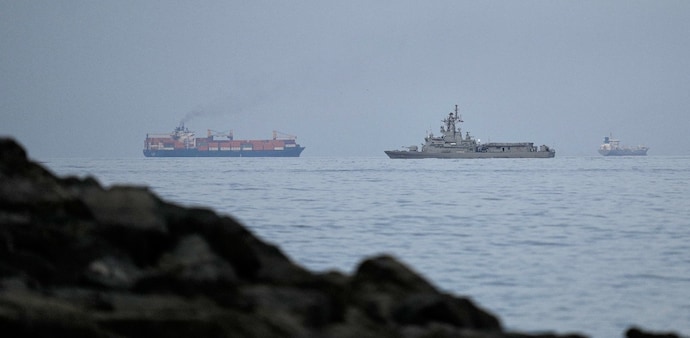
Shipping companies are increasingly avoiding a US military-guided transit scheme through the Strait of Hormuz following a series of Iranian attacks on commercial vessels. These attacks have raised concerns over crew safety and the security of the route.
For decades, vessels entering and leaving the Gulf used a Traffic Separation Scheme established by the UN's shipping agency in 1968, which involved sailing through designated lanes in the middle of the strait. However, since the Iran war began on February 28, Iranian forces have mined the area, forcing ships to use makeshift routes closer to either the Iranian or Omani coast.
Last month, as per Reuters, the US military was assisting commercial vessels to transit the strait through an operation involving aerial and maritime drones, helicopters, and ship-to-ship coordination. This initiative helped keep Gulf energy exports flowing, enabling the export of tens of millions of barrels of oil and limiting the impact on global energy prices.
Despite this, shipping companies are now reassessing the Omani route used under the US-assisted scheme after a wave of attacks on vessels operating in those waters, said the news agency. Iran's Revolutionary Guards claimed responsibility for attacks on two Emirati oil supertankers. Data from the UN's shipping agency shows five vessels have been attacked since July 7 in Omani waters, including three crude oil supertankers, one liquefied natural gas tanker, and one container ship. It is unclear whether all targeted ships were part of the US-guided transit arrangement.
One shipping source said the US appeared to have no control over the situation and that their company had decided not to send ships through the strait due to worsening security and crew safety concerns. Torbjorn Solvedt, principal Middle East analyst at Verisk Maplecroft, said Iran's continued attacks on ships along the Omani route suggest the US efforts to keep vessels moving are unlikely to succeed.
The White House stated that the Strait of Hormuz remains open despite the attacks. Spokeswoman Olivia Wales accused Iran of committing "acts of international terrorism" against commercial shipping and said the United States was responding forcefully.
A US defence official said more than 100 vessels had coordinated directly with the US military to transit the strait over the past week, while over 300 ships passed through the wider region. This indicates the operation is still functioning, although traffic remains below pre-war levels.
MUST READ | Schrödinger’s Hormuz: Is there a 20% fee on ships transiting the strait or not?
Security concerns continue to rise. Around nine Greek-operated LNG tankers that entered the Gulf through Hormuz in the past week remain stranded inside the strait. Two additional tankers have been attacked in open waters outside the strait since July 7.
Five maritime security sources said the US military had not provided sufficient clarity about the risks associated with the Omani route. Greek maritime security companies Diaplous and MARISKS have advised shipping companies to pause voyages or warned that there is currently no assurance that transits through the Strait of Hormuz can be conducted with an acceptable level of safety.
Shipping companies are increasingly avoiding a US military-guided transit scheme through the Strait of Hormuz following a series of Iranian attacks on commercial vessels. These attacks have raised concerns over crew safety and the security of the route.
For decades, vessels entering and leaving the Gulf used a Traffic Separation Scheme established by the UN's shipping agency in 1968, which involved sailing through designated lanes in the middle of the strait. However, since the Iran war began on February 28, Iranian forces have mined the area, forcing ships to use makeshift routes closer to either the Iranian or Omani coast.
Last month, as per Reuters, the US military was assisting commercial vessels to transit the strait through an operation involving aerial and maritime drones, helicopters, and ship-to-ship coordination. This initiative helped keep Gulf energy exports flowing, enabling the export of tens of millions of barrels of oil and limiting the impact on global energy prices.
Despite this, shipping companies are now reassessing the Omani route used under the US-assisted scheme after a wave of attacks on vessels operating in those waters, said the news agency. Iran's Revolutionary Guards claimed responsibility for attacks on two Emirati oil supertankers. Data from the UN's shipping agency shows five vessels have been attacked since July 7 in Omani waters, including three crude oil supertankers, one liquefied natural gas tanker, and one container ship. It is unclear whether all targeted ships were part of the US-guided transit arrangement.
One shipping source said the US appeared to have no control over the situation and that their company had decided not to send ships through the strait due to worsening security and crew safety concerns. Torbjorn Solvedt, principal Middle East analyst at Verisk Maplecroft, said Iran's continued attacks on ships along the Omani route suggest the US efforts to keep vessels moving are unlikely to succeed.
The White House stated that the Strait of Hormuz remains open despite the attacks. Spokeswoman Olivia Wales accused Iran of committing "acts of international terrorism" against commercial shipping and said the United States was responding forcefully.
A US defence official said more than 100 vessels had coordinated directly with the US military to transit the strait over the past week, while over 300 ships passed through the wider region. This indicates the operation is still functioning, although traffic remains below pre-war levels.
MUST READ | Schrödinger’s Hormuz: Is there a 20% fee on ships transiting the strait or not?
Security concerns continue to rise. Around nine Greek-operated LNG tankers that entered the Gulf through Hormuz in the past week remain stranded inside the strait. Two additional tankers have been attacked in open waters outside the strait since July 7.
Five maritime security sources said the US military had not provided sufficient clarity about the risks associated with the Omani route. Greek maritime security companies Diaplous and MARISKS have advised shipping companies to pause voyages or warned that there is currently no assurance that transits through the Strait of Hormuz can be conducted with an acceptable level of safety.