
Beyond Strait of Hormuz: How China-Iran rail system countered US threat
China is Iran's biggest oil buyer - and most oil passes through the Persian Gulf
- Mar 3, 2026,
- Updated Mar 3, 2026 1:59 PM IST
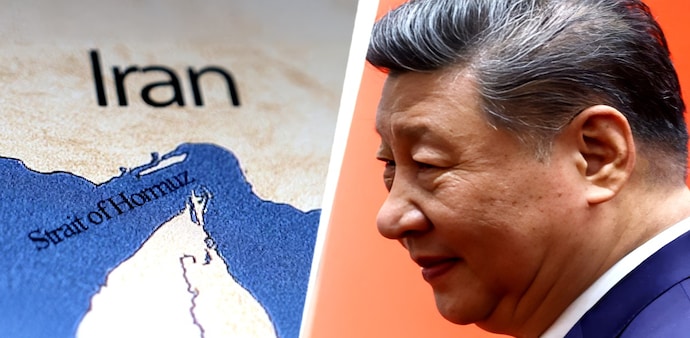
Iran has shut the Strait of Hormuz, a narrow sea lane in the Persian Gulf through which 20 per cent of the world's oil flows. Iran's all-powerful Islamic Revolutionary Guard Corps (IRGC) on Monday said that the Strait is "closed" for shipping traffic and that any vessel attempting to pass through the strategic waterway would be set on fire.
Also read: Saudi oil refinery shutdown: Brent crude prices could hit triple-digit mark; here's how
Oil markets are tense. China is Iran's biggest oil buyer - and most oil passes through the Persian Gulf. On the surface, Beijing appears to be the most exposed if discounted Iranian crude stops flowing to China.
Also read: US-Iran war: How India's largest infra company L&T could be impacted
In 2025, China imported about 1.38 million barrels per day of Iranian crude. It buys more than 80% of Iran's oil exports. Kpler data shows that those 1.38 million bpd account for roughly 80–90% of Tehran's total shipments of around 1.7–2.1 million bpd, especially as US sanctions limit other buyers.
If Hormuz stays shut, China's seaborne crude imports from Iran could face disruption.
But that may not be entirely accurate, as China has quietly built an overland alternative.
A route built long before the crisis
Beijing has, for decades, been preparing to reduce reliance on vulnerable sea lanes like the Strait of Malacca and the Strait of Hormuz.
Iran and China have been connected by rail for over a decade. The first direct freight train from China arrived in Iran in February 2016, after the Kazakhstan–Turkmenistan–Iran rail link opened in December 2014. That link created a continuous overland corridor from China through Central Asia into Iran.
The inaugural train carried 32 containers and reached Tehran after a 14-day, 10,399-kilometer (6,462-mile) journey from Yiwu in eastern China, according to Iran's ISNA news agency. The route passed through Kazakhstan and Turkmenistan before entering Iran.
China Daily reported that the train - also known as the Silk Road train - left Yiwu in Zhejiang province before arriving in Tehran. The train reached Aprin Dry Port near Tehran, dramatically cutting transit time.
"The train's journey was 30 days shorter than the time usually taken by ships to sail from Shanghai to Iran's Bandar Abbas port," Iran's transport minister and railway chief, Mohsen Pour-Aqaei, was as saying by China's Xinhua. "To revive the Silk Road Economic Belt, the launch of the train is an important move, since about 700 kilometers of the trip has been done per day."
The rail journey covered 10,399 km from Yiwu to Tehran via Xinjiang, the Alataw Pass, Kazakhstan, and Turkmenistan - taking about 14 days. By sea, similar shipments take 30 to 40 days.
The Stimson Center, a US think tank, too, reported in August 2025 that a train link between Iran and China provides an alternative route for Tehran's oil exports and overall trade with China.
The centre noted that the Aprin dry port - an inland terminal linked by rail and road to actual sea ports - allows for greater connectivity with the rest of Iran.
The 25-year deal and a strategic reboot
In March 2021, China and Iran signed a $400 billion, 25-year strategic partnership focused on trade, investment, energy, infrastructure, and military cooperation - and, crucially for Beijing, a stable oil supply.
Nearly a decade after the 2016 test train, the two sides relaunched a fully operational freight corridor under that 2021 pact. The upgraded corridor included electrification and regular schedules designed to bypass sanctions and reduce exposure to Hormuz.
In June 2025, Mehr News, a semi-official news agency sponsored by the government of Iran, reported the official launch of a new commercial rail route linking China and Iran. The first cargo train - under the 2021 pact - from the eastern Chinese city of Xian arrived at the Aprin dry port near Tehran, covering 5,300 km.
The news agency said that with the rail line far from any American military presence, "Iran can export oil and import goods from China with ease of mind if the sea trade is disrupted."
There are limits, of course.
Nearly 90% of Iran's exports to China are oil-based products such as petrochemicals, petroleum products, and gases, or mining-based products such as copper concentrate and iron concentrate.
Most crude exports still move by ship, and large volumes of oil cannot realistically be transported by rail. However, the new route provides a contingency channel for non-crude trade and selected goods in the event that maritime routes are disrupted.
The Iranian news agency noted: "The rail mode shortens the delivery time for goods to 15 days, compared to 30 days via the maritime route and helps China evade the Malacca Strait chokepoint."
The Malacca Strait remains one of the most sensitive shipping corridors in the world. A significant share of China's crude imports from West Asia and Africa passes through it.
A bigger strategic picture
On May 12, 2025, railway officials from Iran, China, Kazakhstan, Uzbekistan, Turkmenistan, and Turkey met in Tehran to advance a transcontinental rail system connecting Asia to Europe.
Iran's role in China's Belt and Road Initiative - unveiled by President Xi Jinping in 2013 - places it squarely inside a trillion-dollar infrastructure strategy. The overland link also positions itself as an alternative to the India–Middle East–Europe Economic Corridor (IMEC), which runs from India through the UAE, Saudi Arabia, and Jordan to Israel and Europe.
If Hormuz remains restricted for an extended period, China will still face oil supply challenges. Most crude still moves by sea. But Beijing has spent years building insurance into its trade routes.
Iran has shut the Strait of Hormuz, a narrow sea lane in the Persian Gulf through which 20 per cent of the world's oil flows. Iran's all-powerful Islamic Revolutionary Guard Corps (IRGC) on Monday said that the Strait is "closed" for shipping traffic and that any vessel attempting to pass through the strategic waterway would be set on fire.
Also read: Saudi oil refinery shutdown: Brent crude prices could hit triple-digit mark; here's how
Oil markets are tense. China is Iran's biggest oil buyer - and most oil passes through the Persian Gulf. On the surface, Beijing appears to be the most exposed if discounted Iranian crude stops flowing to China.
Also read: US-Iran war: How India's largest infra company L&T could be impacted
In 2025, China imported about 1.38 million barrels per day of Iranian crude. It buys more than 80% of Iran's oil exports. Kpler data shows that those 1.38 million bpd account for roughly 80–90% of Tehran's total shipments of around 1.7–2.1 million bpd, especially as US sanctions limit other buyers.
If Hormuz stays shut, China's seaborne crude imports from Iran could face disruption.
But that may not be entirely accurate, as China has quietly built an overland alternative.
A route built long before the crisis
Beijing has, for decades, been preparing to reduce reliance on vulnerable sea lanes like the Strait of Malacca and the Strait of Hormuz.
Iran and China have been connected by rail for over a decade. The first direct freight train from China arrived in Iran in February 2016, after the Kazakhstan–Turkmenistan–Iran rail link opened in December 2014. That link created a continuous overland corridor from China through Central Asia into Iran.
The inaugural train carried 32 containers and reached Tehran after a 14-day, 10,399-kilometer (6,462-mile) journey from Yiwu in eastern China, according to Iran's ISNA news agency. The route passed through Kazakhstan and Turkmenistan before entering Iran.
China Daily reported that the train - also known as the Silk Road train - left Yiwu in Zhejiang province before arriving in Tehran. The train reached Aprin Dry Port near Tehran, dramatically cutting transit time.
"The train's journey was 30 days shorter than the time usually taken by ships to sail from Shanghai to Iran's Bandar Abbas port," Iran's transport minister and railway chief, Mohsen Pour-Aqaei, was as saying by China's Xinhua. "To revive the Silk Road Economic Belt, the launch of the train is an important move, since about 700 kilometers of the trip has been done per day."
The rail journey covered 10,399 km from Yiwu to Tehran via Xinjiang, the Alataw Pass, Kazakhstan, and Turkmenistan - taking about 14 days. By sea, similar shipments take 30 to 40 days.
The Stimson Center, a US think tank, too, reported in August 2025 that a train link between Iran and China provides an alternative route for Tehran's oil exports and overall trade with China.
The centre noted that the Aprin dry port - an inland terminal linked by rail and road to actual sea ports - allows for greater connectivity with the rest of Iran.
The 25-year deal and a strategic reboot
In March 2021, China and Iran signed a $400 billion, 25-year strategic partnership focused on trade, investment, energy, infrastructure, and military cooperation - and, crucially for Beijing, a stable oil supply.
Nearly a decade after the 2016 test train, the two sides relaunched a fully operational freight corridor under that 2021 pact. The upgraded corridor included electrification and regular schedules designed to bypass sanctions and reduce exposure to Hormuz.
In June 2025, Mehr News, a semi-official news agency sponsored by the government of Iran, reported the official launch of a new commercial rail route linking China and Iran. The first cargo train - under the 2021 pact - from the eastern Chinese city of Xian arrived at the Aprin dry port near Tehran, covering 5,300 km.
The news agency said that with the rail line far from any American military presence, "Iran can export oil and import goods from China with ease of mind if the sea trade is disrupted."
There are limits, of course.
Nearly 90% of Iran's exports to China are oil-based products such as petrochemicals, petroleum products, and gases, or mining-based products such as copper concentrate and iron concentrate.
Most crude exports still move by ship, and large volumes of oil cannot realistically be transported by rail. However, the new route provides a contingency channel for non-crude trade and selected goods in the event that maritime routes are disrupted.
The Iranian news agency noted: "The rail mode shortens the delivery time for goods to 15 days, compared to 30 days via the maritime route and helps China evade the Malacca Strait chokepoint."
The Malacca Strait remains one of the most sensitive shipping corridors in the world. A significant share of China's crude imports from West Asia and Africa passes through it.
A bigger strategic picture
On May 12, 2025, railway officials from Iran, China, Kazakhstan, Uzbekistan, Turkmenistan, and Turkey met in Tehran to advance a transcontinental rail system connecting Asia to Europe.
Iran's role in China's Belt and Road Initiative - unveiled by President Xi Jinping in 2013 - places it squarely inside a trillion-dollar infrastructure strategy. The overland link also positions itself as an alternative to the India–Middle East–Europe Economic Corridor (IMEC), which runs from India through the UAE, Saudi Arabia, and Jordan to Israel and Europe.
If Hormuz remains restricted for an extended period, China will still face oil supply challenges. Most crude still moves by sea. But Beijing has spent years building insurance into its trade routes.