
Built for 50°C summers: Here's what Indian Railways can teach Europe about keeping trains cool
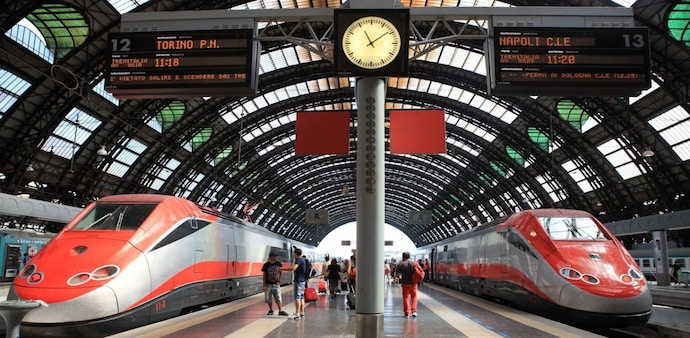
Europe's recent heatwaves have revealed vulnerabilities extending well beyond air conditioners. Extreme temperatures can overheat electrical equipment, reduce the efficiency of cooling systems, cause overhead power lines to sag and even deform railway tracks.
- Jun 26, 2026,
- Updated Jun 26, 2026 5:12 PM IST
Passengers stranded inside sweltering coaches. Air conditioners giving up as temperatures soared past 40°C. Delays piling up because rail infrastructure could not cope with an unforgiving heatwave. Across Europe, scenes like these have become increasingly common this summer, exposing how railway systems built for milder weather are struggling in a warming climate.
Thousands of kilometres away, India has long faced an even tougher test. Every year, trains criss-cross the country in temperatures touching 50°C, carrying around 24 million passengers a day. Air-conditioning failures are not unheard of, but large-scale cooling breakdowns remain relatively rare considering the sheer size of the network.
MUST READ | Why Europe's trains are failing: The hidden reason ACs can't cope as temperatures cross 40°C
The difference lies not just in technology, but in decades of designing, maintaining and operating trains for extreme heat.
A railway built for scale — and for summer
Indian Railways moves more people every day than the population of many countries. With over 13,000 passenger trains running daily across a network spanning more than 68,000 route km, reliability is more than an operational goal — it is a necessity.
An air-conditioning failure on even a small percentage of trains could disrupt travel for tens of thousands of passengers. That reality has shaped the railway's maintenance practices and engineering standards over decades.
Air-conditioned travel is now the norm for millions
The face of long-distance train travel in India has changed significantly over the past decade. Premium services such as Vande Bharat, Rajdhani, Shatabdi and Tejas operate entirely with air-conditioned coaches, while most Mail and Express trains now include multiple AC classes alongside traditional sleeper coaches.
DON'T MISS | Europe heatwave: France's anti-AC culture wilts as 40°C triggers 'Black Friday' buying vibes
With passengers increasingly opting for greater comfort, more than half of reserved long-distance travellers now journey in air-conditioned coaches. Indian Railways has steadily expanded its AC fleet while phasing out older rolling stock.
Built with heat in mind
Perhaps the biggest distinction between India and Europe is that Indian trains are engineered for conditions that would once have been considered exceptional elsewhere.
Air-conditioning systems are designed to keep functioning when outside temperatures approach 50°C, particularly on routes crossing some of India's hottest regions. Compressors, condensers, ventilation units and electrical components are selected with prolonged exposure to intense heat in mind rather than occasional spikes.
Many European rail networks, by contrast, were designed around historical weather patterns when sustained temperatures above 40°C were uncommon.
Maintenance starts before passengers board
The reliability of India's cooling systems owes as much to maintenance as to engineering.
Before coaches return to service, railway staff carry out preventive inspections that include cleaning condensers, replacing air filters, checking refrigerant pressure, testing compressors and blower motors, inspecting electrical circuits and calibrating thermostats. The objective is simple: identify problems in the depot instead of discovering them midway through a journey.
This preventive approach becomes especially critical during the peak summer season, when cooling systems operate almost continuously.
Repairs don't always wait for the next station
On many premium trains, maintenance teams travel with the service itself. Electrical staff and AC technicians can diagnose and rectify minor faults while the train is still on the move, reducing the chances of passengers enduring an entire journey without cooling.
This rapid-response capability often prevents small technical glitches from escalating into complete system failures.
Modern coaches are changing the game
The widespread introduction of modern LHB coaches has further improved passenger comfort. Compared with older designs, these coaches offer better insulation, more efficient roof-mounted air-conditioning units and improved airflow, helping maintain stable cabin temperatures even during extreme summers.
New-generation Vande Bharat trains take the concept a step further with digitally controlled climate systems that continuously regulate cabin temperature and monitor equipment performance.
A vast maintenance network
Supporting the rolling stock is an extensive network of coaching depots, carriage workshops and electrical maintenance facilities spread across the country. Thousands of coaches are inspected, serviced and repaired every day, ensuring cooling systems remain operational despite relentless summer conditions.
It is this ecosystem — not a single technological breakthrough — that underpins the reliability of India's railway air-conditioning network.
Europe's new climate reality
Europe's recent heatwaves have revealed vulnerabilities extending well beyond air conditioners. Extreme temperatures can overheat electrical equipment, reduce the efficiency of cooling systems, cause overhead power lines to sag and even deform railway tracks.
As climate change makes such events more frequent, railway operators are being forced to rethink design standards that were based on a cooler climate.
Lessons from India
India's experience offers practical ideas rather than a one-size-fits-all solution.
Designing trains for future climate extremes instead of historical averages, investing more heavily in preventive maintenance, expanding real-time monitoring of HVAC systems, improving coach insulation and accelerating the replacement of ageing rolling stock could all help European railways become more resilient.
The lesson is not that Indian Railways is flawless — it experiences technical failures too — but that decades of operating in one of the world's hottest environments have forced it to adapt long before many others. As extreme heat becomes Europe's new normal, those adaptations may prove increasingly valuable.
Passengers stranded inside sweltering coaches. Air conditioners giving up as temperatures soared past 40°C. Delays piling up because rail infrastructure could not cope with an unforgiving heatwave. Across Europe, scenes like these have become increasingly common this summer, exposing how railway systems built for milder weather are struggling in a warming climate.
Thousands of kilometres away, India has long faced an even tougher test. Every year, trains criss-cross the country in temperatures touching 50°C, carrying around 24 million passengers a day. Air-conditioning failures are not unheard of, but large-scale cooling breakdowns remain relatively rare considering the sheer size of the network.
MUST READ | Why Europe's trains are failing: The hidden reason ACs can't cope as temperatures cross 40°C
The difference lies not just in technology, but in decades of designing, maintaining and operating trains for extreme heat.
A railway built for scale — and for summer
Indian Railways moves more people every day than the population of many countries. With over 13,000 passenger trains running daily across a network spanning more than 68,000 route km, reliability is more than an operational goal — it is a necessity.
An air-conditioning failure on even a small percentage of trains could disrupt travel for tens of thousands of passengers. That reality has shaped the railway's maintenance practices and engineering standards over decades.
Air-conditioned travel is now the norm for millions
The face of long-distance train travel in India has changed significantly over the past decade. Premium services such as Vande Bharat, Rajdhani, Shatabdi and Tejas operate entirely with air-conditioned coaches, while most Mail and Express trains now include multiple AC classes alongside traditional sleeper coaches.
DON'T MISS | Europe heatwave: France's anti-AC culture wilts as 40°C triggers 'Black Friday' buying vibes
With passengers increasingly opting for greater comfort, more than half of reserved long-distance travellers now journey in air-conditioned coaches. Indian Railways has steadily expanded its AC fleet while phasing out older rolling stock.
Built with heat in mind
Perhaps the biggest distinction between India and Europe is that Indian trains are engineered for conditions that would once have been considered exceptional elsewhere.
Air-conditioning systems are designed to keep functioning when outside temperatures approach 50°C, particularly on routes crossing some of India's hottest regions. Compressors, condensers, ventilation units and electrical components are selected with prolonged exposure to intense heat in mind rather than occasional spikes.
Many European rail networks, by contrast, were designed around historical weather patterns when sustained temperatures above 40°C were uncommon.
Maintenance starts before passengers board
The reliability of India's cooling systems owes as much to maintenance as to engineering.
Before coaches return to service, railway staff carry out preventive inspections that include cleaning condensers, replacing air filters, checking refrigerant pressure, testing compressors and blower motors, inspecting electrical circuits and calibrating thermostats. The objective is simple: identify problems in the depot instead of discovering them midway through a journey.
This preventive approach becomes especially critical during the peak summer season, when cooling systems operate almost continuously.
Repairs don't always wait for the next station
On many premium trains, maintenance teams travel with the service itself. Electrical staff and AC technicians can diagnose and rectify minor faults while the train is still on the move, reducing the chances of passengers enduring an entire journey without cooling.
This rapid-response capability often prevents small technical glitches from escalating into complete system failures.
Modern coaches are changing the game
The widespread introduction of modern LHB coaches has further improved passenger comfort. Compared with older designs, these coaches offer better insulation, more efficient roof-mounted air-conditioning units and improved airflow, helping maintain stable cabin temperatures even during extreme summers.
New-generation Vande Bharat trains take the concept a step further with digitally controlled climate systems that continuously regulate cabin temperature and monitor equipment performance.
A vast maintenance network
Supporting the rolling stock is an extensive network of coaching depots, carriage workshops and electrical maintenance facilities spread across the country. Thousands of coaches are inspected, serviced and repaired every day, ensuring cooling systems remain operational despite relentless summer conditions.
It is this ecosystem — not a single technological breakthrough — that underpins the reliability of India's railway air-conditioning network.
Europe's new climate reality
Europe's recent heatwaves have revealed vulnerabilities extending well beyond air conditioners. Extreme temperatures can overheat electrical equipment, reduce the efficiency of cooling systems, cause overhead power lines to sag and even deform railway tracks.
As climate change makes such events more frequent, railway operators are being forced to rethink design standards that were based on a cooler climate.
Lessons from India
India's experience offers practical ideas rather than a one-size-fits-all solution.
Designing trains for future climate extremes instead of historical averages, investing more heavily in preventive maintenance, expanding real-time monitoring of HVAC systems, improving coach insulation and accelerating the replacement of ageing rolling stock could all help European railways become more resilient.
The lesson is not that Indian Railways is flawless — it experiences technical failures too — but that decades of operating in one of the world's hottest environments have forced it to adapt long before many others. As extreme heat becomes Europe's new normal, those adaptations may prove increasingly valuable.