

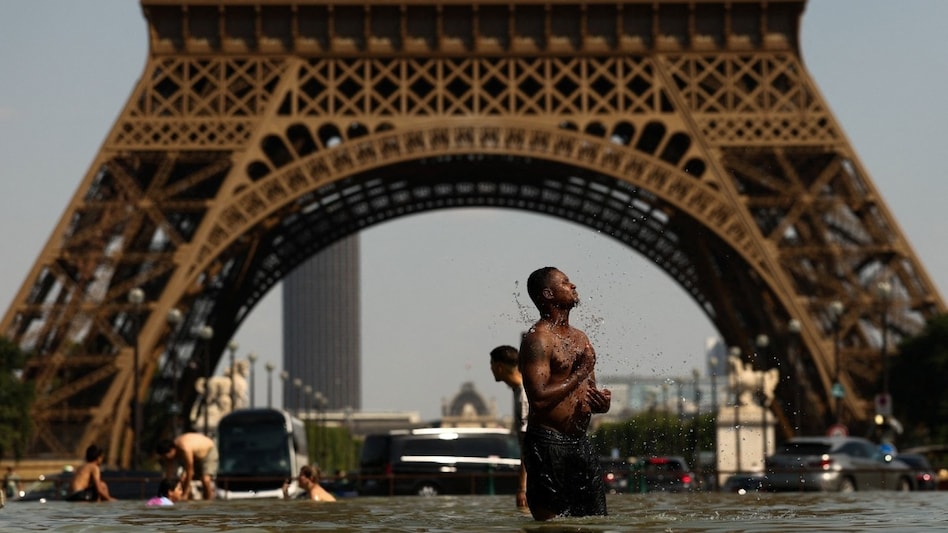
 People cool off in the Trocadero Fountain near to the Eiffel Tower in Paris. (Photo: Reuters)
For decades, much of Europe prided itself on a rail network built for comfort, efficiency and a relatively mild climate. This summer, that assumption is melting away. As temperatures surge past 40°C across parts of France, Spain, Italy and Germany, passengers are increasingly finding themselves trapped in overheated carriages as air-conditioning systems struggle, fail, or shut down entirely.
The problem is not simply that trains are getting hot. Europe's railways are discovering that they were largely designed for a cooler continent.
 'No country should help Iran evade sanctions': Marco Rubio on Modi-Pezeshkian meet at SCO summit
 ‘Ill-educated, egregiously wrong…’: Neelkanth Mishra says ‘2.6% GDP growth’ claim is obviously incorrect
 Buyback tax: How India changed the rules three times in 18 months and what investors need to know
 Nifty, Sensex, Nifty Bank outlook for today: GIFT Nifty up nearly 90 points; key levels to watch
 'Stay away or...': After Marco Rubio's SCO ultimatum, Scott Bessent warns Iran's allies
 U.S. May Tighten Child Passport Checks Under Trump, Indians And Birth Tourism Families Face Scrutiny
 Market Commentary | Deven Choksey On Buying Opportunities & Market Trends
 “India Is Certainly Not In Crisis”: Arvind Panagariya On Growth, Investment And Reforms
 Daily Calls: Ask Your STOCK MARKET TODAY QUERIES | Market Update | Share Market News Today
 What’s Hot: Stocks, Gold & Big Money Moves | Daily Markets Show | September 02 | Business Today
 Inox Wind shares in focus after Rs 755 crore repeat order from IOC; key detailsBuyback tax: How India changed the rules three times in 18 months and what investors need to know
 SBI, Coal India, HAL: Top PSU stocks to trade — Check key levels, target prices & stop loss
 Hexaware Tech shares in focus as CEO resigns; read full resignation letterNifty, Sensex, Nifty Bank outlook for today: GIFT Nifty up nearly 90 points; key levels to watch
 ₹600, AC cabin and a Taj Mahal trip: Dutch couple shares the good and bad of India train rideInox Wind shares in focus after Rs 755 crore repeat order from IOC; key details
 Earth nearing climate red line: World set to cross 1.5°C warming threshold, warns UN bodyBuyback tax: How India changed the rules three times in 18 months and what investors need to know‘Ill-educated, egregiously wrong…’: Neelkanth Mishra says ‘2.6% GDP growth’ claim is obviously incorrect












