
‘Death to Khamenei’: Economic rage fuels Iran’s most serious unrest since 2022
Iranian authorities have responded by hardening their rhetoric and warning against outside involvement. Foreign Ministry spokesperson Esmaeil Baghaei said Iranians would not tolerate foreign interference in addressing internal challenges.
- Jan 2, 2026,
- Updated Jan 2, 2026 9:17 PM IST
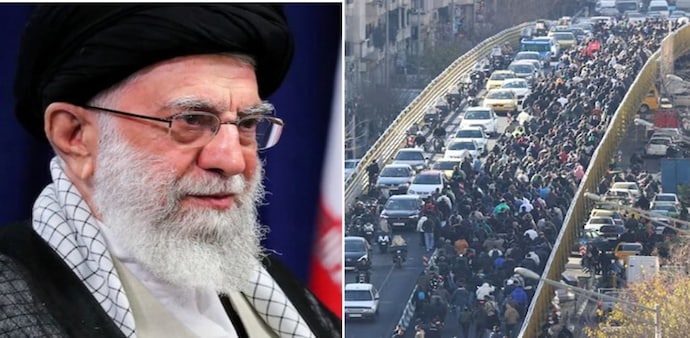
Iran is once again in the grip of mass unrest, as protests triggered by economic hardship have escalated into open political defiance. Entering their sixth day, the demonstrations mark the most serious challenge to the Islamic Republic since the 2022 uprising sparked by the death of Mahsa Amini, underscoring how rapidly economic anger is turning into a broader rejection of the system itself.
From currency collapse to nationwide revolt
The immediate trigger for the unrest was the dramatic collapse of Iran’s currency. The rial plunged to historic lows, touching around 1.4 million rials to the US dollar, sending prices of basic goods soaring and sharply eroding living standards. Shopkeepers in Tehran’s major bazaars were among the first to protest, blaming years of economic mismanagement and sudden financial shocks. From the capital, demonstrations spread rapidly to cities including Shiraz, Isfahan, Kermanshah, Fasa and even the conservative Shia clerical stronghold of Qom.
As students and urban residents joined traders, what began as protests over inflation and the rising cost of living turned into a nationwide movement. Chants quickly moved beyond prices and wages to target the political leadership itself. At funerals of protesters killed in clashes with security forces, mourners shouted “Death to Khamenei” and “Shah will return,” slogans that strike at the core of the Islamic Republic’s legitimacy. At least six people have been killed so far as confrontations turned violent across dozens of cities.
“Refrigerators are empty. Pockets are empty. Every day, people see themselves becoming poorer,” one protester told the *Jerusalem Post*. Another described Iran’s economy as rentier and monopolistic, dominated by elites tied to the regime and the Islamic Revolutionary Guard Corps (IRGC). “The entire economy has been swallowed,” he said. Inflation, unemployment and hunger, many Iranians say, have pushed society beyond economic distress to a psychological breaking point.
Regime pushback
Iranian authorities have responded by hardening their rhetoric and warning against outside involvement. Foreign Ministry spokesperson Esmaeil Baghaei said Iranians would not tolerate foreign interference in addressing internal challenges. “Iranians will resolve their problems through dialogue and engagement with one another and will not allow any form of foreign intervention,” he wrote on X (formally twitter).
Parliament speaker Mohammad Bagher Ghalibaf struck a sharper tone, warning that US military forces across the Middle East would be treated as legitimate targets if Washington took hostile action. Responding to comments by US President Donald Trump in support of Iranian protesters, Ghalibaf said Trump’s remarks amounted to a “formal admission” of interference and cautioned that any American “adventurism” would be met with retaliation against US centres and forces throughout the region.
Trump, meanwhile, warned Tehran against violently targeting demonstrators. In a Truth Social post, he said that if Iran “shoots and violently kills peaceful protesters, which is their custom,” the United States would “come to their rescue,” adding that Washington was “locked and loaded and ready to go.” Though he offered no details, the comments revived fears in Tehran of US strikes or even regime-change efforts at a moment of acute internal pressure.
Sanctions squeeze & a deepening crisis
The unrest is unfolding against a backdrop of severe international pressure and economic isolation. A Financial Times report said Iran is offering to sell advanced weapons systems — including ballistic missiles, drones and warships — to foreign governments in exchange for cryptocurrency, an apparent attempt to bypass Western sanctions and financial controls.
While the current protests were ignited by currency collapse and soaring prices, they have rapidly evolved into a broader indictment of Iran’s governing system. As regional conflict, sanctions and political uncertainty converge, the unrest has become about more than economics alone, raising fresh questions about how the Islamic Republic handles challenge to its authority at the most fundamental level.
Iran is once again in the grip of mass unrest, as protests triggered by economic hardship have escalated into open political defiance. Entering their sixth day, the demonstrations mark the most serious challenge to the Islamic Republic since the 2022 uprising sparked by the death of Mahsa Amini, underscoring how rapidly economic anger is turning into a broader rejection of the system itself.
From currency collapse to nationwide revolt
The immediate trigger for the unrest was the dramatic collapse of Iran’s currency. The rial plunged to historic lows, touching around 1.4 million rials to the US dollar, sending prices of basic goods soaring and sharply eroding living standards. Shopkeepers in Tehran’s major bazaars were among the first to protest, blaming years of economic mismanagement and sudden financial shocks. From the capital, demonstrations spread rapidly to cities including Shiraz, Isfahan, Kermanshah, Fasa and even the conservative Shia clerical stronghold of Qom.
As students and urban residents joined traders, what began as protests over inflation and the rising cost of living turned into a nationwide movement. Chants quickly moved beyond prices and wages to target the political leadership itself. At funerals of protesters killed in clashes with security forces, mourners shouted “Death to Khamenei” and “Shah will return,” slogans that strike at the core of the Islamic Republic’s legitimacy. At least six people have been killed so far as confrontations turned violent across dozens of cities.
“Refrigerators are empty. Pockets are empty. Every day, people see themselves becoming poorer,” one protester told the *Jerusalem Post*. Another described Iran’s economy as rentier and monopolistic, dominated by elites tied to the regime and the Islamic Revolutionary Guard Corps (IRGC). “The entire economy has been swallowed,” he said. Inflation, unemployment and hunger, many Iranians say, have pushed society beyond economic distress to a psychological breaking point.
Regime pushback
Iranian authorities have responded by hardening their rhetoric and warning against outside involvement. Foreign Ministry spokesperson Esmaeil Baghaei said Iranians would not tolerate foreign interference in addressing internal challenges. “Iranians will resolve their problems through dialogue and engagement with one another and will not allow any form of foreign intervention,” he wrote on X (formally twitter).
Parliament speaker Mohammad Bagher Ghalibaf struck a sharper tone, warning that US military forces across the Middle East would be treated as legitimate targets if Washington took hostile action. Responding to comments by US President Donald Trump in support of Iranian protesters, Ghalibaf said Trump’s remarks amounted to a “formal admission” of interference and cautioned that any American “adventurism” would be met with retaliation against US centres and forces throughout the region.
Trump, meanwhile, warned Tehran against violently targeting demonstrators. In a Truth Social post, he said that if Iran “shoots and violently kills peaceful protesters, which is their custom,” the United States would “come to their rescue,” adding that Washington was “locked and loaded and ready to go.” Though he offered no details, the comments revived fears in Tehran of US strikes or even regime-change efforts at a moment of acute internal pressure.
Sanctions squeeze & a deepening crisis
The unrest is unfolding against a backdrop of severe international pressure and economic isolation. A Financial Times report said Iran is offering to sell advanced weapons systems — including ballistic missiles, drones and warships — to foreign governments in exchange for cryptocurrency, an apparent attempt to bypass Western sanctions and financial controls.
While the current protests were ignited by currency collapse and soaring prices, they have rapidly evolved into a broader indictment of Iran’s governing system. As regional conflict, sanctions and political uncertainty converge, the unrest has become about more than economics alone, raising fresh questions about how the Islamic Republic handles challenge to its authority at the most fundamental level.