
Exotic meat, prized collagen: Why Pakistan’s donkey trade with China has taken off
Hangeng Group operates the abattoir and processing facilities near Gwadar and plans to increase its daily slaughter capacity to 800 donkeys within months.
- Sep 16, 2026,
- Updated Sep 16, 2026 6:00 AM IST
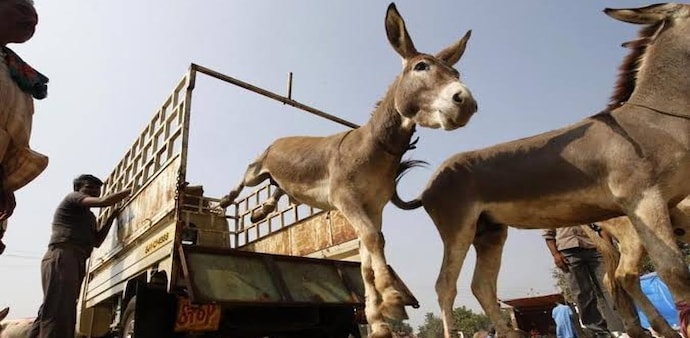
Pakistan is developing a unique trade with China through a slaughterhouse in Balochistan that processes hundreds of donkeys daily for Chinese customers. The demand is driven by both the meat and the hides, which are used in traditional Chinese medicine.
Hangeng Group operates the abattoir and processing facilities near Gwadar and plans to increase its daily slaughter capacity to 800 donkeys within months, according to a report in Bloomberg. CEO Andy Liao said the business could generate about $5 million a month in foreign-exchange earnings within six months, rising to $7 million within two years.
Donkey meat is not consumed locally due to religious beliefs but is considered a delicacy in parts of China. The hides are especially valuable as they are used to produce ejiao, a collagen-rich ingredient in traditional Chinese medicine.
MUST READ | India’s imports from China rise to $65.49 billion in April-August 2026-27
Ejiao is made by boiling donkey skin to extract collagen. It is commonly used as a blood tonic to treat anaemia and to boost immunity and improve sleep. The compound is also used in cosmetics and is believed to have anti-ageing benefits.
China’s demand for ejiao is growing even as its supply of donkey hides declines. The country’s donkey population has fallen due to millions being slaughtered annually for their hides. This has led Chinese buyers to seek supplies from countries including Pakistan, Brazil, and Australia.
A 2023 US Congressional Research Service report estimated that between 2.3 million and 4.8 million donkeys are slaughtered each year for their hides. The Chinese ejiao market was valued at about $7.8 billion in 2021.
DON'T MISS | 'Don't kill the Golden Goose': Trump says US must keep its AI lead over China
Africa has traditionally been a major source of donkey hides, but the African Union endorsed a continent-wide moratorium on donkey slaughter for skins and related exports in 2024. Animal welfare organisation Brooke estimated in June 2025 that Africa’s donkey population could fall by half to around 14 million by 2040 if the ban is not enforced.
Pakistan’s donkey population exceeded 6 million in 2025, according to the Pakistan Economic Survey.
Hangeng began building its Pakistan facility six years ago and has invested around $50 million. The company employs nine Chinese managers and about 500 local workers.
MUST READ | China spies on us, we spy on China too: Trump after Iran satellite images report
It sources donkeys from 11 suppliers, tagging each animal for traceability, and plans to eventually work with 50 farms. So far, it has exported five containers of meat and hides, with the first shipment reaching China’s Tianjin port in June after government approval.
Hangeng also plans to expand into breeding, establish a laboratory, and eventually enter seafood exports.
Pakistan is developing a unique trade with China through a slaughterhouse in Balochistan that processes hundreds of donkeys daily for Chinese customers. The demand is driven by both the meat and the hides, which are used in traditional Chinese medicine.
Hangeng Group operates the abattoir and processing facilities near Gwadar and plans to increase its daily slaughter capacity to 800 donkeys within months, according to a report in Bloomberg. CEO Andy Liao said the business could generate about $5 million a month in foreign-exchange earnings within six months, rising to $7 million within two years.
Donkey meat is not consumed locally due to religious beliefs but is considered a delicacy in parts of China. The hides are especially valuable as they are used to produce ejiao, a collagen-rich ingredient in traditional Chinese medicine.
MUST READ | India’s imports from China rise to $65.49 billion in April-August 2026-27
Ejiao is made by boiling donkey skin to extract collagen. It is commonly used as a blood tonic to treat anaemia and to boost immunity and improve sleep. The compound is also used in cosmetics and is believed to have anti-ageing benefits.
China’s demand for ejiao is growing even as its supply of donkey hides declines. The country’s donkey population has fallen due to millions being slaughtered annually for their hides. This has led Chinese buyers to seek supplies from countries including Pakistan, Brazil, and Australia.
A 2023 US Congressional Research Service report estimated that between 2.3 million and 4.8 million donkeys are slaughtered each year for their hides. The Chinese ejiao market was valued at about $7.8 billion in 2021.
DON'T MISS | 'Don't kill the Golden Goose': Trump says US must keep its AI lead over China
Africa has traditionally been a major source of donkey hides, but the African Union endorsed a continent-wide moratorium on donkey slaughter for skins and related exports in 2024. Animal welfare organisation Brooke estimated in June 2025 that Africa’s donkey population could fall by half to around 14 million by 2040 if the ban is not enforced.
Pakistan’s donkey population exceeded 6 million in 2025, according to the Pakistan Economic Survey.
Hangeng began building its Pakistan facility six years ago and has invested around $50 million. The company employs nine Chinese managers and about 500 local workers.
MUST READ | China spies on us, we spy on China too: Trump after Iran satellite images report
It sources donkeys from 11 suppliers, tagging each animal for traceability, and plans to eventually work with 50 farms. So far, it has exported five containers of meat and hides, with the first shipment reaching China’s Tianjin port in June after government approval.
Hangeng also plans to expand into breeding, establish a laboratory, and eventually enter seafood exports.