
Flydubai flight plunged 14,000 feet in seconds before Saudi diversion; what happened onboard?
Flydubai flight FZ1073 from Dubai to Tel Aviv plunged more than 14,000 feet in under 30 seconds before diverting to Tabuk, Saudi Arabia, according to Flightradar24 data. The flight sent distress signals after an alleged violent fight between the pilots, with one reportedly stabbing the other and trying to take control of the aircraft.
- Sep 30, 2026,
- Updated Sep 30, 2026 4:37 PM IST
A Flydubai flight from Dubai to Tel Aviv sent distress signals after an alleged violent fight between its pilots, with one reportedly stabbing the other and attempting to take control of the aircraft. The Boeing 737 MAX 8 later diverted to Tabuk, Saudi Arabia, where it landed safely.
According to Flightradar24 flight-tracking data, Flydubai flight FZ1073, operating from Dubai International Airport to Ben Gurion International Airport on September 30, experienced significant altitude fluctuations while flying at cruising altitude.
The aircraft, registered A6-FKF, took off from Dubai at around 03:05 UTC and climbed to approximately 34,000 feet. At around 05:21 UTC, the flight began experiencing sharp altitude changes. The aircraft then plunged more than 14,000 feet in less than 30 seconds, according to the tracking data.
The plane subsequently climbed and descended sharply again, with its altitude falling by more than 17,000 feet within a period of less than two minutes. It eventually stabilised at around 15,000 feet, although further fluctuations in altitude and ground speed were recorded.
The Boeing 737 MAX 8 subsequently landed safely, with Flydubai confirming that all passengers and crew were accounted for.
The aircraft, registered as A6-FKF, departed Dubai International Airport at 03:05 UTC and climbed to a cruising altitude of around 34,000 feet.
Altitude fluctuations
According to Flightradar24 flight-tracking data, the aircraft began experiencing significant altitude fluctuations at around 05:21 UTC. It was recorded at approximately 34,000 feet shortly before the descent began.
MUST READ: Flydubai Dubai-Israel flight diverted to Saudi Arabia after pilots get into physical fight: Report
At around 05:22 UTC, the aircraft dropped more than 14,000 feet in under 30 seconds, according to the tracking data. The aircraft then climbed sharply before descending again. Within less than two minutes, it had descended more than 17,000 feet, based on the flight data provided.
The aircraft subsequently stabilised at around 15,000 feet, although its altitude continued to fluctuate. Ground speed also varied significantly as the aircraft continued towards Tabuk.
Emergency codes activated
The flight subsequently transmitted squawk 7700, the internationally standardised transponder code indicating a general emergency.
The aircraft later changed its transponder code to 7500, which indicates unlawful interference. It subsequently switched back to 7700 as it approached Tabuk.
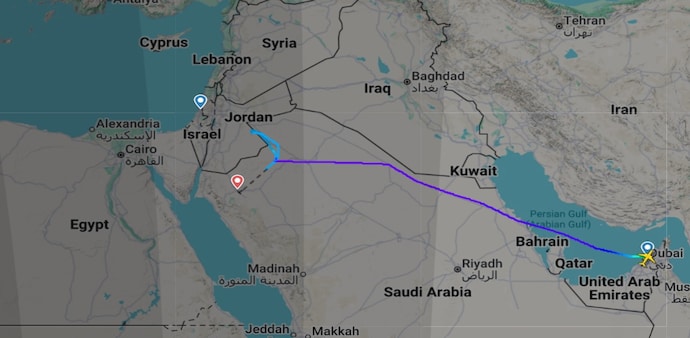
The flight also changed direction during the incident. After turning west and briefly entering Jordanian airspace, it made a 180-degree turn before heading southwest towards Tabuk Regional Airport.
Multiple media reports, including Reuters and CNN, have said the onboard disturbance involved a physical altercation between the pilots. Flydubai has not confirmed that account, saying only that the aircraft experienced an “incident” while en route.
ALSO READ: India-Mongolia direct flights begin, cut New Delhi-Ulaanbaatar travel time to 5 hours
Flydubai confirms safe landing
In a statement, Flydubai said FZ1073 landed safely at Tabuk Airport and that all passengers were safe and accounted for. The airline said its teams were working with the relevant authorities and that further updates would be issued as confirmed information became available.
The aircraft landed at Tabuk Regional Airport at around 06:45 UTC, according to the incident timeline.
The sequence of the steep descent, emergency transponder codes and subsequent diversion is reflected in the Flightradar24 tracking data. However, flight-tracking data alone does not establish what caused the aircraft's altitude changes.
Minute-by-minute timeline
| Time UTC | What happened |
|---|---|
| 03:05 | Flight FZ1073 departed Dubai International Airport for Tel Aviv. |
| 05:21 | Major altitude fluctuations began while the aircraft was at around 34,000 feet. |
| 05:22 | Aircraft dropped more than 14,000 feet in under 30 seconds, according to Flightradar24 flight-tracking data. |
| 05:28–05:31* | Squawk 7700, indicating a general emergency, was activated. |
| 05:35–05:38* | Squawk 7500, indicating unlawful interference, was activated. |
| ~06:45 | Aircraft landed safely at Tabuk Regional Airport, Saudi Arabia. |
A Flydubai flight from Dubai to Tel Aviv sent distress signals after an alleged violent fight between its pilots, with one reportedly stabbing the other and attempting to take control of the aircraft. The Boeing 737 MAX 8 later diverted to Tabuk, Saudi Arabia, where it landed safely.
According to Flightradar24 flight-tracking data, Flydubai flight FZ1073, operating from Dubai International Airport to Ben Gurion International Airport on September 30, experienced significant altitude fluctuations while flying at cruising altitude.
The aircraft, registered A6-FKF, took off from Dubai at around 03:05 UTC and climbed to approximately 34,000 feet. At around 05:21 UTC, the flight began experiencing sharp altitude changes. The aircraft then plunged more than 14,000 feet in less than 30 seconds, according to the tracking data.
The plane subsequently climbed and descended sharply again, with its altitude falling by more than 17,000 feet within a period of less than two minutes. It eventually stabilised at around 15,000 feet, although further fluctuations in altitude and ground speed were recorded.
The Boeing 737 MAX 8 subsequently landed safely, with Flydubai confirming that all passengers and crew were accounted for.
The aircraft, registered as A6-FKF, departed Dubai International Airport at 03:05 UTC and climbed to a cruising altitude of around 34,000 feet.
Altitude fluctuations
According to Flightradar24 flight-tracking data, the aircraft began experiencing significant altitude fluctuations at around 05:21 UTC. It was recorded at approximately 34,000 feet shortly before the descent began.
MUST READ: Flydubai Dubai-Israel flight diverted to Saudi Arabia after pilots get into physical fight: Report
At around 05:22 UTC, the aircraft dropped more than 14,000 feet in under 30 seconds, according to the tracking data. The aircraft then climbed sharply before descending again. Within less than two minutes, it had descended more than 17,000 feet, based on the flight data provided.
The aircraft subsequently stabilised at around 15,000 feet, although its altitude continued to fluctuate. Ground speed also varied significantly as the aircraft continued towards Tabuk.
Emergency codes activated
The flight subsequently transmitted squawk 7700, the internationally standardised transponder code indicating a general emergency.
The aircraft later changed its transponder code to 7500, which indicates unlawful interference. It subsequently switched back to 7700 as it approached Tabuk.
The flight also changed direction during the incident. After turning west and briefly entering Jordanian airspace, it made a 180-degree turn before heading southwest towards Tabuk Regional Airport.
Multiple media reports, including Reuters and CNN, have said the onboard disturbance involved a physical altercation between the pilots. Flydubai has not confirmed that account, saying only that the aircraft experienced an “incident” while en route.
ALSO READ: India-Mongolia direct flights begin, cut New Delhi-Ulaanbaatar travel time to 5 hours
Flydubai confirms safe landing
In a statement, Flydubai said FZ1073 landed safely at Tabuk Airport and that all passengers were safe and accounted for. The airline said its teams were working with the relevant authorities and that further updates would be issued as confirmed information became available.
The aircraft landed at Tabuk Regional Airport at around 06:45 UTC, according to the incident timeline.
The sequence of the steep descent, emergency transponder codes and subsequent diversion is reflected in the Flightradar24 tracking data. However, flight-tracking data alone does not establish what caused the aircraft's altitude changes.
Minute-by-minute timeline
| Time UTC | What happened |
|---|---|
| 03:05 | Flight FZ1073 departed Dubai International Airport for Tel Aviv. |
| 05:21 | Major altitude fluctuations began while the aircraft was at around 34,000 feet. |
| 05:22 | Aircraft dropped more than 14,000 feet in under 30 seconds, according to Flightradar24 flight-tracking data. |
| 05:28–05:31* | Squawk 7700, indicating a general emergency, was activated. |
| 05:35–05:38* | Squawk 7500, indicating unlawful interference, was activated. |
| ~06:45 | Aircraft landed safely at Tabuk Regional Airport, Saudi Arabia. |