
Flydubai mid-air attack: Co-pilot who attacked Indian pilot had been flagged as security risk, says report
flydubai mid-air attack: Officials are trying to determine how the 29-year-old was permitted to fly for flydubai and how he was the first officer in the cockpit of a plane headed for Israel.
- Oct 3, 2026,
- Updated Oct 3, 2026 7:52 AM IST
Flydubai mid-air emergency: The Flydubai co-pilot accused of attacking Indian pilot Smit Machchhar during a mid-air emergency has been identified as 29-year-old Omani national Hamam al-Hammami. He had previously been suspended from flying by Oman Air after being identified as a security risk, ABC News reported, citing senior intelligence and law enforcement officials.
According to officials, al-Hammami was found in possession of extremist materials while working as a co-pilot trainee for Oman Air in 2024. He was, however, allowed to continue working for the airline in an administrative role, according to sources.
Officials are now trying to determine how the 29-year-old was permitted to fly for Flydubai and how he came to be the first officer in the cockpit of a flight headed for Israel, sources added.
On Thursday, al-Hammami was transferred from Saudi Arabia to the United States. He is reportedly "cooperating" with authorities investigating the incident and has indicated that he intended to crash the plane in Israel.
ALSO READ | Flydubai suspends Tel Aviv route after flight deck incident, investigation underway
What Israel said about the Flydubai co-pilot
Israel Prime Minister Benjamin Netanyahu previously said that the co-pilot who stabbed the captain had undergone radical Islamist indoctrination and appeared to be suicidal.
"We know that he underwent Islamist radical indoctrination. That appears to be something we are gathering from his personal information," Israeli Prime Minister Benjamin Netanyahu said in an interview with Fox News.
Two Israeli security officials said that Tel Aviv's initial assessment was that the co-pilot was likely acting alone, as per Reuters. Netanyahu said that it was clear the co-pilot was suicidal.
"It looks very likely that he was going to down the plane," Netanyahu said. Coupled with "the Islamist tendencies, that radicalization that are found in his background, I think that's ... a pretty good clue," he said, without giving further details. "But again, I don't make final conclusions yet. But that's the indications we have now," he added.
DON'T MISS | Flydubai flight incident: Israel to tighten pilot screening measures after mid-air emergency
Will Israel join the investigation?
With the co-pilot now in the UAE, Israeli investigators "can now join the UAE's investigation team and get precisely knowledge of what his motives were, who was behind him, what his plans were," Netanyahu spokesperson David Mencer told Fox News.
Identifying the attacker as an Omani national, Netanyahu said, "We have constraints that say you can't have pilots from countries that don't have diplomatic relations with Israel. So obviously he was able to go through that."
When asked if Iran was involved, the Israeli PM said that it was too early to comment on that.
Israeli Defence Minister Israel Katz said that according to preliminary information, the co-pilot's objective was to crash the plane. He described him as a terrorist, though Netanyahu described it only as "a serious security incident".
How the Flydubai flight emergency unfolded
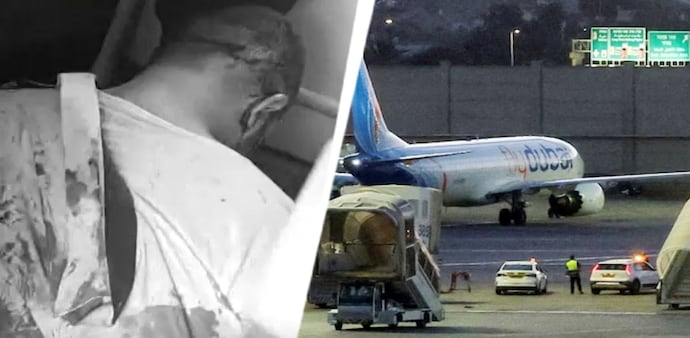
A disaster was averted on flight FZ1073 from Dubai to Tel Aviv after wounded Captain Smit Machchhar managed to open the cockpit door, allowing passengers to enter and subdue the attacker.
During the incident, the flight plunged more than 14,000 feet in less than 30 seconds while flying over Saudi Arabia, according to Flightradar24.
A reserve crew that was already aboard landed the plane, which was carrying 174 passengers and eight crew members, at the Tabuk airport in Saudi Arabia.
Machchhar is currently recovering at a hospital in Abu Dhabi. On Friday, he spoke with Prime Minister Narendra Modi in a video call and described what happened during the attack.
“I had so many wounds. I had fallen down,” he said, his head bandaged, as he broke into sobs. “I was fighting for my life. At one point, I realized that if I didn’t get up … then passengers would lose their lives.”
Flydubai mid-air emergency: The Flydubai co-pilot accused of attacking Indian pilot Smit Machchhar during a mid-air emergency has been identified as 29-year-old Omani national Hamam al-Hammami. He had previously been suspended from flying by Oman Air after being identified as a security risk, ABC News reported, citing senior intelligence and law enforcement officials.
According to officials, al-Hammami was found in possession of extremist materials while working as a co-pilot trainee for Oman Air in 2024. He was, however, allowed to continue working for the airline in an administrative role, according to sources.
Officials are now trying to determine how the 29-year-old was permitted to fly for Flydubai and how he came to be the first officer in the cockpit of a flight headed for Israel, sources added.
On Thursday, al-Hammami was transferred from Saudi Arabia to the United States. He is reportedly "cooperating" with authorities investigating the incident and has indicated that he intended to crash the plane in Israel.
ALSO READ | Flydubai suspends Tel Aviv route after flight deck incident, investigation underway
What Israel said about the Flydubai co-pilot
Israel Prime Minister Benjamin Netanyahu previously said that the co-pilot who stabbed the captain had undergone radical Islamist indoctrination and appeared to be suicidal.
"We know that he underwent Islamist radical indoctrination. That appears to be something we are gathering from his personal information," Israeli Prime Minister Benjamin Netanyahu said in an interview with Fox News.
Two Israeli security officials said that Tel Aviv's initial assessment was that the co-pilot was likely acting alone, as per Reuters. Netanyahu said that it was clear the co-pilot was suicidal.
"It looks very likely that he was going to down the plane," Netanyahu said. Coupled with "the Islamist tendencies, that radicalization that are found in his background, I think that's ... a pretty good clue," he said, without giving further details. "But again, I don't make final conclusions yet. But that's the indications we have now," he added.
DON'T MISS | Flydubai flight incident: Israel to tighten pilot screening measures after mid-air emergency
Will Israel join the investigation?
With the co-pilot now in the UAE, Israeli investigators "can now join the UAE's investigation team and get precisely knowledge of what his motives were, who was behind him, what his plans were," Netanyahu spokesperson David Mencer told Fox News.
Identifying the attacker as an Omani national, Netanyahu said, "We have constraints that say you can't have pilots from countries that don't have diplomatic relations with Israel. So obviously he was able to go through that."
When asked if Iran was involved, the Israeli PM said that it was too early to comment on that.
Israeli Defence Minister Israel Katz said that according to preliminary information, the co-pilot's objective was to crash the plane. He described him as a terrorist, though Netanyahu described it only as "a serious security incident".
How the Flydubai flight emergency unfolded
A disaster was averted on flight FZ1073 from Dubai to Tel Aviv after wounded Captain Smit Machchhar managed to open the cockpit door, allowing passengers to enter and subdue the attacker.
During the incident, the flight plunged more than 14,000 feet in less than 30 seconds while flying over Saudi Arabia, according to Flightradar24.
A reserve crew that was already aboard landed the plane, which was carrying 174 passengers and eight crew members, at the Tabuk airport in Saudi Arabia.
Machchhar is currently recovering at a hospital in Abu Dhabi. On Friday, he spoke with Prime Minister Narendra Modi in a video call and described what happened during the attack.
“I had so many wounds. I had fallen down,” he said, his head bandaged, as he broke into sobs. “I was fighting for my life. At one point, I realized that if I didn’t get up … then passengers would lose their lives.”