
Hormuz flashpoint: Indian Navy steps up vigil after ships targeted, issues advisory
The Navy has issued a fresh advisory to Indian-flagged ships operating in the Persian Gulf, urging them to steer clear of Larak Island and transit the strait only under naval guidance.
- Apr 20, 2026,
- Updated Apr 20, 2026 6:36 PM IST
In the wake of a tense maritime incident involving Iran’s Islamic Revolutionary Guard Corps (IRGC), the Indian Navy has significantly strengthened its security posture near the Strait of Hormuz, one of the world’s most critical oil transit routes.
The move follows an April 18 episode in which IRGC personnel reportedly fired upon two Indian-linked commercial vessels — Jag Arnav and Sanmar Herald — forcing them to abort their passage through the narrow waterway.
Advisory to avoid Larak Island
In response, the Navy has issued a fresh advisory to Indian-flagged ships operating in the Persian Gulf, urging them to steer clear of Larak Island and transit the strait only under naval guidance.
Must read: ‘Not a strategic asset anymore’: Iran attacks trigger debate in UAE on US bases
Larak Island sits at the narrowest stretch of the Hormuz corridor and is a critical node in Iran’s oil infrastructure network. The surrounding waters are heavily militarised, monitored through radar systems and fortified bunkers, making it a highly sensitive zone for international shipping.
According to sources, the Indian Navy is prioritising the safe passage of all Indian vessels awaiting transit. So far, eleven Indian ships have successfully crossed the strait under heightened vigilance.
The last of these, the oil tanker Desh Garima, completed its passage on April 18 — the same day the firing incident occurred, underscoring the volatility of the region.
Shipping traffic slows to a crawl
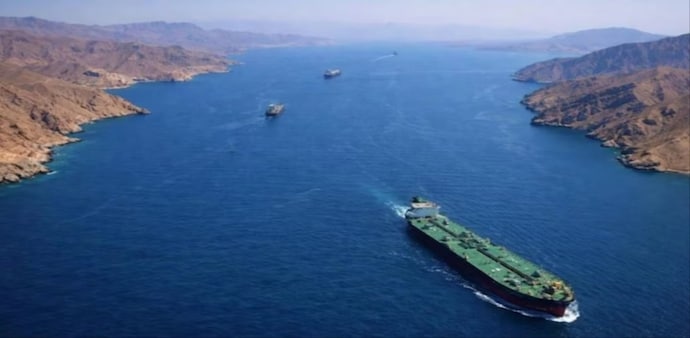
The broader maritime picture remains fragile. Ship-tracking data cited by Reuters indicates that overall shipping movement through the Strait of Hormuz was nearly at a standstill on April 20.
Only one oil products tanker reportedly exited the Gulf via the strait, while two others — a liquefied petroleum gas (LPG) tanker and a chemical tanker — entered the Gulf, reflecting sharply reduced traffic volumes in a corridor that typically sees heavy daily movement.
Must read: Iran rejects talks as Trump issues fresh warning
The Strait of Hormuz handles a substantial portion of the world’s oil shipments, making any disruption a global concern. The latest incident adds to rising tensions in West Asia, where military activity and geopolitical rivalries have increasingly spilled into key maritime routes.
For India, which relies heavily on energy imports from the Gulf, ensuring the safety of its merchant fleet has become an urgent priority. The Indian Navy’s stepped-up presence signals both caution and readiness as the situation continues to evolve.
In the wake of a tense maritime incident involving Iran’s Islamic Revolutionary Guard Corps (IRGC), the Indian Navy has significantly strengthened its security posture near the Strait of Hormuz, one of the world’s most critical oil transit routes.
The move follows an April 18 episode in which IRGC personnel reportedly fired upon two Indian-linked commercial vessels — Jag Arnav and Sanmar Herald — forcing them to abort their passage through the narrow waterway.
Advisory to avoid Larak Island
In response, the Navy has issued a fresh advisory to Indian-flagged ships operating in the Persian Gulf, urging them to steer clear of Larak Island and transit the strait only under naval guidance.
Must read: ‘Not a strategic asset anymore’: Iran attacks trigger debate in UAE on US bases
Larak Island sits at the narrowest stretch of the Hormuz corridor and is a critical node in Iran’s oil infrastructure network. The surrounding waters are heavily militarised, monitored through radar systems and fortified bunkers, making it a highly sensitive zone for international shipping.
According to sources, the Indian Navy is prioritising the safe passage of all Indian vessels awaiting transit. So far, eleven Indian ships have successfully crossed the strait under heightened vigilance.
The last of these, the oil tanker Desh Garima, completed its passage on April 18 — the same day the firing incident occurred, underscoring the volatility of the region.
Shipping traffic slows to a crawl
The broader maritime picture remains fragile. Ship-tracking data cited by Reuters indicates that overall shipping movement through the Strait of Hormuz was nearly at a standstill on April 20.
Only one oil products tanker reportedly exited the Gulf via the strait, while two others — a liquefied petroleum gas (LPG) tanker and a chemical tanker — entered the Gulf, reflecting sharply reduced traffic volumes in a corridor that typically sees heavy daily movement.
Must read: Iran rejects talks as Trump issues fresh warning
The Strait of Hormuz handles a substantial portion of the world’s oil shipments, making any disruption a global concern. The latest incident adds to rising tensions in West Asia, where military activity and geopolitical rivalries have increasingly spilled into key maritime routes.
For India, which relies heavily on energy imports from the Gulf, ensuring the safety of its merchant fleet has become an urgent priority. The Indian Navy’s stepped-up presence signals both caution and readiness as the situation continues to evolve.