
Hormuz flashpoint: Iran’s f(f(O)) > f(O) formula and what it means for global oil markets
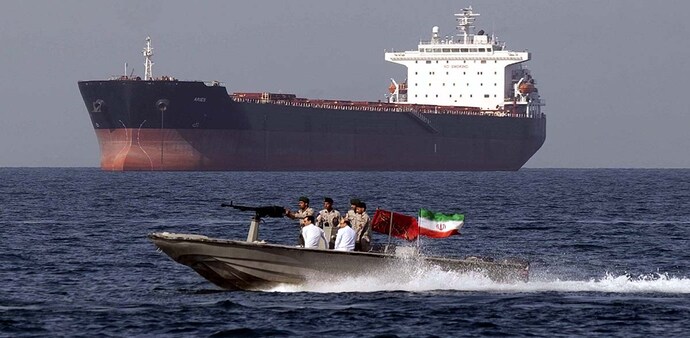
The Strait of Hormuz is one of the world’s most critical energy chokepoints, carrying a significant share of global oil supply. Any disruption here has historically triggered sharp price movements and global economic ripple effects.
- Apr 13, 2026,
- Updated Apr 13, 2026 6:35 PM IST
In an unusual blend of geopolitics and mathematics, Iran has responded to US President Donald Trump’s proposed naval blockade of the Strait of Hormuz with a symbolic equation—one that carries a stark warning for global oil markets and economic stability.
A formula as a warning
At the centre of Iran’s message is a cryptic mathematical expression: f(f(O)) > f(O), shared by Iran’s Parliament Speaker Mohammad Bagher Ghalibaf. The formula is not meant for academic debate but as a strategic signal to Washington.
f(f(O)) > f(O)
What the formula means
- O = Original oil price
- f(O) = Price after the first disruption (for example, a blockade or supply shock)
- f(f(O)) = Price after second-order effects kick in
The inequality suggests that the second wave of impact is greater than the first.
In practical terms, Iran is warning that even a limited disruption could trigger a chain reaction:
- Initial supply shock pushes oil prices higher
- Market panic and speculation intensify the spike
- Logistics, insurance, and supply chains come under stress
- Prices surge further, beyond the original increase
This is a multiplier effect, not a linear rise.
Rising tensions in a critical oil corridor
The warning comes after the collapse of US-Iran talks and Trump’s announcement of a sweeping naval blockade targeting Iranian-linked shipping.
The Strait of Hormuz remains one of the world’s most critical energy corridors, handling a significant share of global oil shipments. Any disruption here has historically triggered sharp volatility in energy markets.
More than math: A political and economic signal
The equation was accompanied by a pointed message from Tehran, suggesting that current fuel prices could look modest if tensions escalate further.
This reflects a broader strategy:
- Economic signaling: Warning global markets of instability
- Psychological pressure: Raising concerns among consumers and policymakers
- Deterrence: Framing escalation as economically self-damaging
Why this matters globally
Iran’s “math warning” underscores a key reality: modern energy markets react non-linearly to shocks.
If tensions escalate further:
- Oil prices could spike sharply
- Inflationary pressures may rise worldwide
- Global supply chains could face renewed disruption
By using mathematics instead of conventional rhetoric, Iran has delivered a message that is both symbolic and strategic. It reframes the conflict not just as a military standoff, but as an economic risk with global consequences.
In an unusual blend of geopolitics and mathematics, Iran has responded to US President Donald Trump’s proposed naval blockade of the Strait of Hormuz with a symbolic equation—one that carries a stark warning for global oil markets and economic stability.
A formula as a warning
At the centre of Iran’s message is a cryptic mathematical expression: f(f(O)) > f(O), shared by Iran’s Parliament Speaker Mohammad Bagher Ghalibaf. The formula is not meant for academic debate but as a strategic signal to Washington.
f(f(O)) > f(O)
What the formula means
- O = Original oil price
- f(O) = Price after the first disruption (for example, a blockade or supply shock)
- f(f(O)) = Price after second-order effects kick in
The inequality suggests that the second wave of impact is greater than the first.
In practical terms, Iran is warning that even a limited disruption could trigger a chain reaction:
- Initial supply shock pushes oil prices higher
- Market panic and speculation intensify the spike
- Logistics, insurance, and supply chains come under stress
- Prices surge further, beyond the original increase
This is a multiplier effect, not a linear rise.
Rising tensions in a critical oil corridor
The warning comes after the collapse of US-Iran talks and Trump’s announcement of a sweeping naval blockade targeting Iranian-linked shipping.
The Strait of Hormuz remains one of the world’s most critical energy corridors, handling a significant share of global oil shipments. Any disruption here has historically triggered sharp volatility in energy markets.
More than math: A political and economic signal
The equation was accompanied by a pointed message from Tehran, suggesting that current fuel prices could look modest if tensions escalate further.
This reflects a broader strategy:
- Economic signaling: Warning global markets of instability
- Psychological pressure: Raising concerns among consumers and policymakers
- Deterrence: Framing escalation as economically self-damaging
Why this matters globally
Iran’s “math warning” underscores a key reality: modern energy markets react non-linearly to shocks.
If tensions escalate further:
- Oil prices could spike sharply
- Inflationary pressures may rise worldwide
- Global supply chains could face renewed disruption
By using mathematics instead of conventional rhetoric, Iran has delivered a message that is both symbolic and strategic. It reframes the conflict not just as a military standoff, but as an economic risk with global consequences.