
Iran strikes Israel's nuclear city: Missile hits Dimona, leaving over 100 in need of urgent care
Israeli Prime Minister Benjamin Netanyahu, who later held talks with Arad's Mayor, another town hit by Iran, Yair Maayan, conveyed his prayers for those injured
- Mar 22, 2026,
- Updated Mar 22, 2026 8:06 AM IST
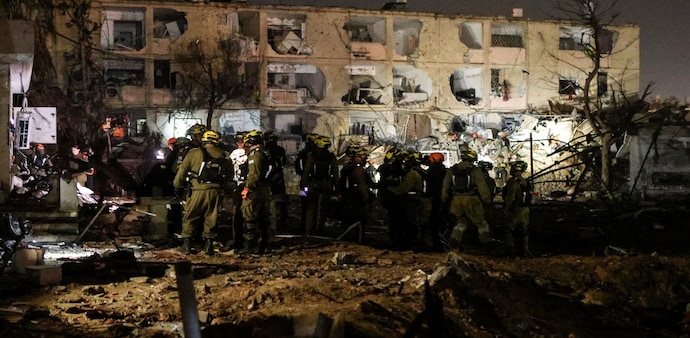
A ballistic missile struck a residential neighbourhood in Dimona, home to Israel's main nuclear research centre, on Saturday evening, wounding over 100 people, including children. Iran said it was hitting back at Israel's nuclear programme, hours after US-Israeli forces allegedly struck its Natanz enrichment complex.
Israeli Prime Minister Benjamin Netanyahu, who later held talks with Arad's Mayor, another town hit by Iran, Yair Maayan, conveyed his prayers for those injured. The Israeli Foreign Ministry said the Iranian regime had deliberately targeted civilians with missiles, devastating both Arad and Dimona.
Israel's national emergency service, Magen David Adom (MDA), treated more than three dozen people in the immediate aftermath, among them victims of shrapnel injuries. "Update from southern Israel: Over 40 people treated by Magen David Adom after ballistic missile hits residential area," it said.
Among the wounded was a 10-year-old boy in moderate condition with shrapnel injuries. Others were hurt rushing to shelters or were treated for acute anxiety triggered by the strike.
The International Atomic Energy Agency said it had received no indication of damage to the Negev nuclear research centre and that regional authorities reported no abnormal radiation levels. It added it was closely monitoring the situation.
Why did Iran strike Dimona?
The Dimona facility, which opened in 1958, sits at the heart of long-standing speculation over Israel's nuclear arsenal, speculation its leaders have never confirmed or denied.
The Dimona strike came after Iranian state media reported that the Shahid Ahmadi-Roshan enrichment complex at Natanz was hit Saturday morning. No radioactive leaks were detected, and nearby residents were not considered at risk. Israel's military denied responsibility for the Natanz attack, while IAEA chief Rafael Mariano Grossi said the agency was investigating. Russia's Foreign Ministry condemned the alleged strike, warning it posed a "real risk of catastrophic disaster throughout the Middle East."
Natanz has now been struck twice during the ongoing conflict, once in its opening days and again during a 12-day war in June last year.
Arad hit too
Around the same time Dimona was struck, Iranian missiles also hit Arad, another city in southern Israel. The Israeli military acknowledged it could not intercept the projectiles in either city, the first time Iranian missiles had penetrated air defences around Dimona. Mayor Maayan said around 150 families had been evacuated from the neighbourhood that bore the brunt of the strike.
Iran's Parliament Speaker Mohammad Bagher Ghalibaf was quick to draw conclusions. "If the Israeli regime is unable to intercept missiles in the heavily protected Dimona area, it is, operationally, a sign of entering a new phase of the battle," he posted on X.
Netanyahu offered a sombre assessment following the Arad strike. "This has been a very difficult evening in the battle for our future," he said.
A ballistic missile struck a residential neighbourhood in Dimona, home to Israel's main nuclear research centre, on Saturday evening, wounding over 100 people, including children. Iran said it was hitting back at Israel's nuclear programme, hours after US-Israeli forces allegedly struck its Natanz enrichment complex.
Israeli Prime Minister Benjamin Netanyahu, who later held talks with Arad's Mayor, another town hit by Iran, Yair Maayan, conveyed his prayers for those injured. The Israeli Foreign Ministry said the Iranian regime had deliberately targeted civilians with missiles, devastating both Arad and Dimona.
Israel's national emergency service, Magen David Adom (MDA), treated more than three dozen people in the immediate aftermath, among them victims of shrapnel injuries. "Update from southern Israel: Over 40 people treated by Magen David Adom after ballistic missile hits residential area," it said.
Among the wounded was a 10-year-old boy in moderate condition with shrapnel injuries. Others were hurt rushing to shelters or were treated for acute anxiety triggered by the strike.
The International Atomic Energy Agency said it had received no indication of damage to the Negev nuclear research centre and that regional authorities reported no abnormal radiation levels. It added it was closely monitoring the situation.
Why did Iran strike Dimona?
The Dimona facility, which opened in 1958, sits at the heart of long-standing speculation over Israel's nuclear arsenal, speculation its leaders have never confirmed or denied.
The Dimona strike came after Iranian state media reported that the Shahid Ahmadi-Roshan enrichment complex at Natanz was hit Saturday morning. No radioactive leaks were detected, and nearby residents were not considered at risk. Israel's military denied responsibility for the Natanz attack, while IAEA chief Rafael Mariano Grossi said the agency was investigating. Russia's Foreign Ministry condemned the alleged strike, warning it posed a "real risk of catastrophic disaster throughout the Middle East."
Natanz has now been struck twice during the ongoing conflict, once in its opening days and again during a 12-day war in June last year.
Arad hit too
Around the same time Dimona was struck, Iranian missiles also hit Arad, another city in southern Israel. The Israeli military acknowledged it could not intercept the projectiles in either city, the first time Iranian missiles had penetrated air defences around Dimona. Mayor Maayan said around 150 families had been evacuated from the neighbourhood that bore the brunt of the strike.
Iran's Parliament Speaker Mohammad Bagher Ghalibaf was quick to draw conclusions. "If the Israeli regime is unable to intercept missiles in the heavily protected Dimona area, it is, operationally, a sign of entering a new phase of the battle," he posted on X.
Netanyahu offered a sombre assessment following the Arad strike. "This has been a very difficult evening in the battle for our future," he said.