
'It would disastrously backfire': Iran warns Trump against blockade in Strait of Hormuz
Expecting Iran to bend is simply hollow, says the Iranian embassy in Japan
- Apr 12, 2026,
- Updated Apr 12, 2026 1:44 PM IST
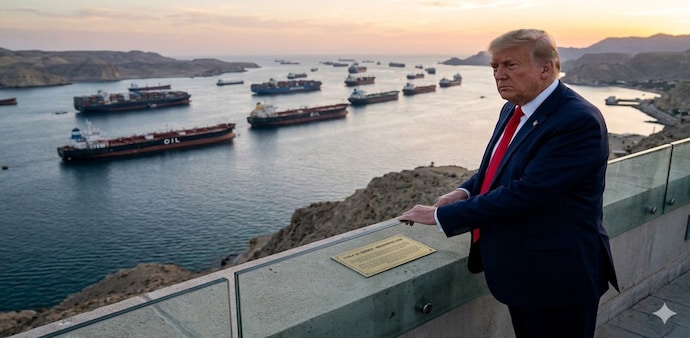
Hours after US President Donald Trump signalled a possible naval blockade of Iran, Tehran warned the move would "disastrously backfire". Iran has escalated the rhetoric after failed talks in Islamabad.
In a statement on X, Iran's embassy in Japan dismissed the naval blockade idea as ineffective and risky. "Perhaps a tactical bluff, perhaps not - but it represents neither a breakthrough nor a magic bullet," it said.
Don't Miss: Iranian oil flows at risk? No deal in Islamabad, Trump hints at naval blockade on Iran
The embassy rejected the premise that pressure would force Tehran to concede. "First, expecting Iran to bend is simply hollow. This only confirms Iran's correct assessment and that of the world that this Admin. views diplomacy as synonymous with capitulation. Iran, of course, negotiated in Islamabad, but it did not bend."
It then warned of wider consequences if such a move were pursued. "A naval blockade is simply a losing hand," the embassy said. "It would disastrously backfire, crippling the Strait of Hormuz traffic, imperiling U.S. forces, sending oil prices skyrocketing, and shattering the global economy."
Trump had earlier today shared an article suggesting a naval blockade as a potential next step if Iran does not accept US terms following the collapse of more than 21 hours of negotiations.
The article outlined how Washington could use naval power to restrict Iran's oil exports - a key source of revenue - and increase pressure on countries such as China and India by cutting off a major source of supply.
It pointed to a previous US strategy against Venezuela, where a naval blockade was used to "bring the economy to its knees" by choking oil revenues.
The report also highlighted the growing US naval presence in the region, including the USS Gerald Ford and USS Abraham Lincoln carrier groups, which could support surveillance and enforcement operations in and around the Strait of Hormuz.
Experts cited in the article said the US Navy could take control of maritime traffic through the strategic waterway. "It would be very easy for the US Navy to exert complete control over what does and does not go up and down the Strait now," national security expert Rebecca Grant told Just The News.
She added that increased naval movement suggested Washington could monitor and potentially restrict vessels passing through the narrow route, including near key points such as Kharg Island.
The direct talks between the US and Iranian delegations collapsed on Sunday.
US Vice President JD Vance said the discussions were "substantive" but failed to produce a breakthrough. "The bad news is that we have not reached an agreement," he said. Vance said Washington had presented its "final and best offer", but Tehran did not accept the terms. "We just could not get to a situation where the Iranians would accept our terms."
He said the US was seeking a commitment from Iran not to pursue nuclear weapons, calling it the "core goal" of the administration.
Hours after US President Donald Trump signalled a possible naval blockade of Iran, Tehran warned the move would "disastrously backfire". Iran has escalated the rhetoric after failed talks in Islamabad.
In a statement on X, Iran's embassy in Japan dismissed the naval blockade idea as ineffective and risky. "Perhaps a tactical bluff, perhaps not - but it represents neither a breakthrough nor a magic bullet," it said.
Don't Miss: Iranian oil flows at risk? No deal in Islamabad, Trump hints at naval blockade on Iran
The embassy rejected the premise that pressure would force Tehran to concede. "First, expecting Iran to bend is simply hollow. This only confirms Iran's correct assessment and that of the world that this Admin. views diplomacy as synonymous with capitulation. Iran, of course, negotiated in Islamabad, but it did not bend."
It then warned of wider consequences if such a move were pursued. "A naval blockade is simply a losing hand," the embassy said. "It would disastrously backfire, crippling the Strait of Hormuz traffic, imperiling U.S. forces, sending oil prices skyrocketing, and shattering the global economy."
Trump had earlier today shared an article suggesting a naval blockade as a potential next step if Iran does not accept US terms following the collapse of more than 21 hours of negotiations.
The article outlined how Washington could use naval power to restrict Iran's oil exports - a key source of revenue - and increase pressure on countries such as China and India by cutting off a major source of supply.
It pointed to a previous US strategy against Venezuela, where a naval blockade was used to "bring the economy to its knees" by choking oil revenues.
The report also highlighted the growing US naval presence in the region, including the USS Gerald Ford and USS Abraham Lincoln carrier groups, which could support surveillance and enforcement operations in and around the Strait of Hormuz.
Experts cited in the article said the US Navy could take control of maritime traffic through the strategic waterway. "It would be very easy for the US Navy to exert complete control over what does and does not go up and down the Strait now," national security expert Rebecca Grant told Just The News.
She added that increased naval movement suggested Washington could monitor and potentially restrict vessels passing through the narrow route, including near key points such as Kharg Island.
The direct talks between the US and Iranian delegations collapsed on Sunday.
US Vice President JD Vance said the discussions were "substantive" but failed to produce a breakthrough. "The bad news is that we have not reached an agreement," he said. Vance said Washington had presented its "final and best offer", but Tehran did not accept the terms. "We just could not get to a situation where the Iranians would accept our terms."
He said the US was seeking a commitment from Iran not to pursue nuclear weapons, calling it the "core goal" of the administration.