
'It’s very normal...': Pak defence minister says China sharing satellite intel on India after Operation Sindoor
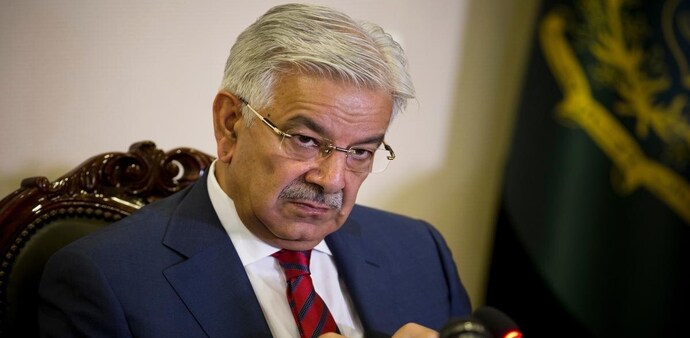
Pakistan’s Defence Minister Khawaja Asif has confirmed that China has been sharing intelligence on India with Islamabad. The statement, made amid simmering tensions and heightened military alertness, signals a deepening of the China-Pakistan nexus against a backdrop of regional instability.
- Jun 26, 2025,
- Updated Jun 27, 2025 3:21 PM IST
In a rare public admission, Pakistan’s Defence Minister Khawaja Asif has confirmed that China has been sharing intelligence on India with Islamabad, underscoring the evolving strategic equations in South Asia following Operation Sindoor. The statement, made amid simmering tensions and heightened military alertness, signals a deepening of the China-Pakistan nexus against a backdrop of regional instability.
Speaking to Arab News, Asif said intelligence sharing between allied nations was a standard practice, especially when mutual concerns align. “These days, countries that are close to each other do share intelligence. It’s very normal if we are sharing any information we have,” he said.
He elaborated that such exchanges were particularly relevant in the context of China’s own disputes with India. “It’s very normal if we are sharing any information that could pose a threat to us or the Chinese, because the Chinese also have issues with India. So I think it’s very natural to share intelligence gathered through satellites or other means.”
Asif also confirmed that Pakistan remains on high alert since what he termed a "short conflict" with India. “Pakistan, since our conflict or this short war with India, has been on alert. We have not lowered our guards. I can confirm that we’ve maintained this alert status for over a month now,” he said.
While the situation has since de-escalated, Asif acknowledged the fragile peace. “The conflict is over, there is a ceasefire, and we hope things remain calm.”
The ceasefire agreement, reached more than a month ago, followed intensified hostilities sparked by the Pahalgam attack and India’s launch of Operation Sindoor. Although Islamabad agreed to the truce unconditionally, India has continued to implement punitive measures in its aftermath.
The agreement was brokered through direct talks between Indian and Pakistani officials, with Islamabad accepting the ceasefire on terms of “no preconditions, no postconditions, and no links to other issues.”
In a rare public admission, Pakistan’s Defence Minister Khawaja Asif has confirmed that China has been sharing intelligence on India with Islamabad, underscoring the evolving strategic equations in South Asia following Operation Sindoor. The statement, made amid simmering tensions and heightened military alertness, signals a deepening of the China-Pakistan nexus against a backdrop of regional instability.
Speaking to Arab News, Asif said intelligence sharing between allied nations was a standard practice, especially when mutual concerns align. “These days, countries that are close to each other do share intelligence. It’s very normal if we are sharing any information we have,” he said.
He elaborated that such exchanges were particularly relevant in the context of China’s own disputes with India. “It’s very normal if we are sharing any information that could pose a threat to us or the Chinese, because the Chinese also have issues with India. So I think it’s very natural to share intelligence gathered through satellites or other means.”
Asif also confirmed that Pakistan remains on high alert since what he termed a "short conflict" with India. “Pakistan, since our conflict or this short war with India, has been on alert. We have not lowered our guards. I can confirm that we’ve maintained this alert status for over a month now,” he said.
While the situation has since de-escalated, Asif acknowledged the fragile peace. “The conflict is over, there is a ceasefire, and we hope things remain calm.”
The ceasefire agreement, reached more than a month ago, followed intensified hostilities sparked by the Pahalgam attack and India’s launch of Operation Sindoor. Although Islamabad agreed to the truce unconditionally, India has continued to implement punitive measures in its aftermath.
The agreement was brokered through direct talks between Indian and Pakistani officials, with Islamabad accepting the ceasefire on terms of “no preconditions, no postconditions, and no links to other issues.”