
Next Alaska? How climate change and great power politics made Greenland critical asset for US
As Arctic ice retreats, new sea lanes are opening that allow ships to move between the Atlantic and Pacific Oceans through the Arctic. These routes can cut travel time by weeks, reduce fuel costs, and bypass chokepoints vulnerable to conflict.
- Jan 10, 2026,
- Updated Jan 10, 2026 4:21 PM IST
For decades, Greenland barely registered in global power politics. It was frozen, remote, sparsely populated, and economically marginal. Today, that has changed — dramatically. Climate change, great-power rivalry, and a race for critical resources have turned the world’s largest island into one of Washington’s most valuable strategic assets.
Until recently, the Arctic was largely irrelevant to global trade. Thick ice made sea routes unusable, and commercial shipping stuck to traditional paths like the Suez and Panama canals.
That reality is melting — literally.
As Arctic ice retreats, new sea lanes are opening that allow ships to move between the Atlantic and Pacific Oceans through the Arctic. These routes can cut travel time by weeks, reduce fuel costs, and bypass chokepoints vulnerable to conflict.
The Arctic is fast becoming a new global highway. And Greenland sits right at its center.
Geography shocker most miss
One of the most misunderstood facts about Greenland is its proximity.
Greenland is much closer to the United States than to Denmark, which technically controls it. The distance from Washington DC to Nuuk (Greenland’s capital) is shorter than the distance from Nuuk to Copenhagen.
For Washington, this changes everything.
From a US perspective, Greenland is not some distant European outpost it is part of America’s immediate security neighborhood. Denmark is far away. The US is next door.
China-Russia factor
Greenland’s rising importance is inseparable from great-power competition.
- China already has partial ownership in a Greenland mining company and has shown interest in Arctic trade routes and infrastructure projects.
- Russia, an Arctic neighbor, has a long-standing military presence in the polar region and is expanding Arctic bases and icebreaker fleets.
As the Arctic opens up, Washington fears China entering what it views as its strategic backyard. In that scenario, Greenland becomes the choke point — the place that determines who controls access, surveillance, and influence across the Arctic.
US already defends Greenland
This isn’t a new obsession. In 1951, the United States and Denmark signed a treaty making Washington responsible for Greenland’s defense. Since then, Washington has treated Greenland as a critical military asset.
The US operates the Pituffik Space Base (formerly Thule Air Base), a key node in the NORAD missile warning and space surveillance system. It plays a central role in detecting missile launches and tracking objects in space.
In practice, the US already behaves as if Greenland is strategic territory. What it lacks is formal control.
A Cold War history
Greenland’s strategic role goes back to the Cold War — and includes some disturbing episodes.
- Denmark had officially banned nuclear weapons on its soil.
- It later emerged that the U.S. had secretly stationed nuclear weapons in Greenland.
- In 1968, a US B-52 bomber carrying four hydrogen bombs crashed near Thule.
- One of the bombs was never recovered, and radioactive contamination spread across the area.
These incidents underline one fact: Greenland has long been embedded in America’s nuclear and defense strategy, even when that reality was politically inconvenient.
Greenland’s True Size
Greenland is routinely underestimated.
- Greenland’s area: 21.6 lakh sq km
- India’s area: 32.8 lakh sq km
That makes Greenland about two-thirds the size of India—and larger than India’s 10 biggest states combined. Yet only about 56,000 people live there.
It is the largest island in the world, with enormous strategic depth and room for military, resource, and infrastructure development.
Hidden strategic gold
Perhaps Greenland’s biggest long-term value lies beneath its ice.
Greenland is believed to contain 25 of the world’s 34 critical minerals, essential for:
- Advanced weapons systems
- EV batteries
- Semiconductors and chips
- Renewable energy technologies
For decades, ice made extraction prohibitively expensive. Now, melting ice means easier access and lower costs. In a world racing to secure supply chains independent of China, Greenland looks like a strategic treasure chest.
Greenland’s political opening
Greenland is formally part of Denmark — but with significant autonomy.
- 1979: Home rule established
- 2009: Greenland granted the right to declare independence via referendum
Today, Greenland has its own parliament, own government and growing independence sentiment
There is a real possibility that Greenland could vote on independence in the near future. That creates a narrow but critical window of opportunity.
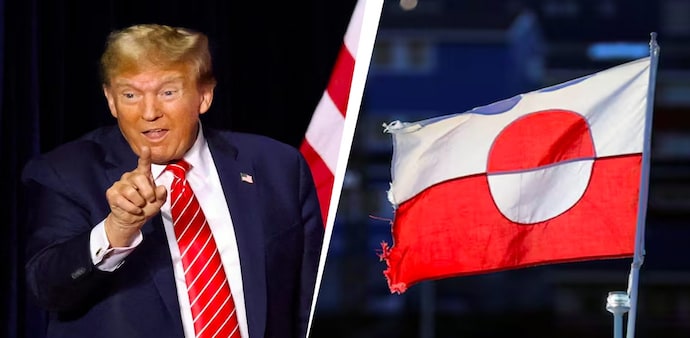
Trump’s calculation: The next Alaska?
Donald Trump’s controversial interest in Greenland wasn’t as impulsive as it seemed.
From his perspective:
- Denmark’s control is weak and distant
- Greenland wants independence
- China is edging in
- The Arctic is opening
If the US pays Denmark, it looks colonial. But if the US pays Greenlanders directly, every citizen could become a multimillionaire. Some estimates place the island’s value as high as $1.7 trillion.
This approach fits American history.
The US once bought Louisiana from France and Alaska from Russia — a deal mocked at the time. Today, Alaska is one of America’s most valuable strategic assets.
Trump sees Greenland as the next Alaska.
Greenland matters because:
- Climate change has reshaped global trade routes
- Great-power rivalry is intensifying in the Arctic
- Critical minerals are becoming as important as oil once was
- Political change is opening a rare strategic window
What once looked like an icy wilderness is now a geopolitical prize — and for Washington, Greenland may be too important to leave to chance.
For decades, Greenland barely registered in global power politics. It was frozen, remote, sparsely populated, and economically marginal. Today, that has changed — dramatically. Climate change, great-power rivalry, and a race for critical resources have turned the world’s largest island into one of Washington’s most valuable strategic assets.
Until recently, the Arctic was largely irrelevant to global trade. Thick ice made sea routes unusable, and commercial shipping stuck to traditional paths like the Suez and Panama canals.
That reality is melting — literally.
As Arctic ice retreats, new sea lanes are opening that allow ships to move between the Atlantic and Pacific Oceans through the Arctic. These routes can cut travel time by weeks, reduce fuel costs, and bypass chokepoints vulnerable to conflict.
The Arctic is fast becoming a new global highway. And Greenland sits right at its center.
Geography shocker most miss
One of the most misunderstood facts about Greenland is its proximity.
Greenland is much closer to the United States than to Denmark, which technically controls it. The distance from Washington DC to Nuuk (Greenland’s capital) is shorter than the distance from Nuuk to Copenhagen.
For Washington, this changes everything.
From a US perspective, Greenland is not some distant European outpost it is part of America’s immediate security neighborhood. Denmark is far away. The US is next door.
China-Russia factor
Greenland’s rising importance is inseparable from great-power competition.
- China already has partial ownership in a Greenland mining company and has shown interest in Arctic trade routes and infrastructure projects.
- Russia, an Arctic neighbor, has a long-standing military presence in the polar region and is expanding Arctic bases and icebreaker fleets.
As the Arctic opens up, Washington fears China entering what it views as its strategic backyard. In that scenario, Greenland becomes the choke point — the place that determines who controls access, surveillance, and influence across the Arctic.
US already defends Greenland
This isn’t a new obsession. In 1951, the United States and Denmark signed a treaty making Washington responsible for Greenland’s defense. Since then, Washington has treated Greenland as a critical military asset.
The US operates the Pituffik Space Base (formerly Thule Air Base), a key node in the NORAD missile warning and space surveillance system. It plays a central role in detecting missile launches and tracking objects in space.
In practice, the US already behaves as if Greenland is strategic territory. What it lacks is formal control.
A Cold War history
Greenland’s strategic role goes back to the Cold War — and includes some disturbing episodes.
- Denmark had officially banned nuclear weapons on its soil.
- It later emerged that the U.S. had secretly stationed nuclear weapons in Greenland.
- In 1968, a US B-52 bomber carrying four hydrogen bombs crashed near Thule.
- One of the bombs was never recovered, and radioactive contamination spread across the area.
These incidents underline one fact: Greenland has long been embedded in America’s nuclear and defense strategy, even when that reality was politically inconvenient.
Greenland’s True Size
Greenland is routinely underestimated.
- Greenland’s area: 21.6 lakh sq km
- India’s area: 32.8 lakh sq km
That makes Greenland about two-thirds the size of India—and larger than India’s 10 biggest states combined. Yet only about 56,000 people live there.
It is the largest island in the world, with enormous strategic depth and room for military, resource, and infrastructure development.
Hidden strategic gold
Perhaps Greenland’s biggest long-term value lies beneath its ice.
Greenland is believed to contain 25 of the world’s 34 critical minerals, essential for:
- Advanced weapons systems
- EV batteries
- Semiconductors and chips
- Renewable energy technologies
For decades, ice made extraction prohibitively expensive. Now, melting ice means easier access and lower costs. In a world racing to secure supply chains independent of China, Greenland looks like a strategic treasure chest.
Greenland’s political opening
Greenland is formally part of Denmark — but with significant autonomy.
- 1979: Home rule established
- 2009: Greenland granted the right to declare independence via referendum
Today, Greenland has its own parliament, own government and growing independence sentiment
There is a real possibility that Greenland could vote on independence in the near future. That creates a narrow but critical window of opportunity.
Trump’s calculation: The next Alaska?
Donald Trump’s controversial interest in Greenland wasn’t as impulsive as it seemed.
From his perspective:
- Denmark’s control is weak and distant
- Greenland wants independence
- China is edging in
- The Arctic is opening
If the US pays Denmark, it looks colonial. But if the US pays Greenlanders directly, every citizen could become a multimillionaire. Some estimates place the island’s value as high as $1.7 trillion.
This approach fits American history.
The US once bought Louisiana from France and Alaska from Russia — a deal mocked at the time. Today, Alaska is one of America’s most valuable strategic assets.
Trump sees Greenland as the next Alaska.
Greenland matters because:
- Climate change has reshaped global trade routes
- Great-power rivalry is intensifying in the Arctic
- Critical minerals are becoming as important as oil once was
- Political change is opening a rare strategic window
What once looked like an icy wilderness is now a geopolitical prize — and for Washington, Greenland may be too important to leave to chance.