
Not China or India, this Asian country faces the highest risk from Hormuz closure
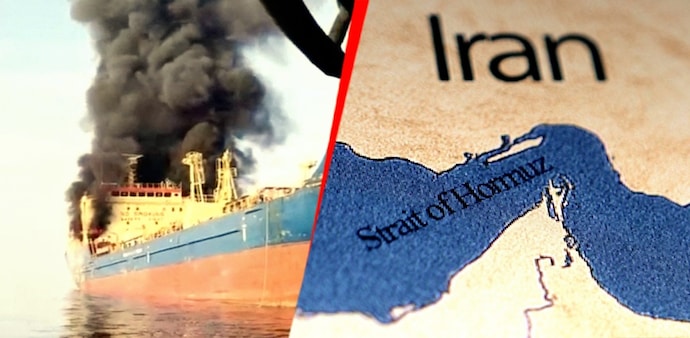
The Strait of Hormuz is a narrow, curved waterway roughly 21 miles wide at its tightest point. It links the Persian Gulf to the Gulf of Oman and onward to global sea lanes
- Mar 3, 2026,
- Updated Mar 3, 2026 2:10 PM IST
Iran's declaration that the Strait of Hormuz is "closed" has sent shockwaves through energy markets and raised urgent questions about which economies stand most exposed to supply disruption.
Also read: Why Trump picks weekends for military actions; Iran timing ominous for India?
On Monday, Iran's Islamic Revolutionary Guard Corps (IRGC) announced that shipping traffic through the strategic waterway would not be allowed. Brigadier General Sardar Ebrahim Jabari, a senior adviser to the Guards commander-in-chief, warned: "The strait is closed. If anyone tries to pass, the heroes of the Revolutionary Guards and the regular navy will set those ships ablaze."
Also read: Beyond Strait of Hormuz: How China-Iran rail system countered US threat
The Strait of Hormuz is a narrow, curved waterway roughly 33 kilometres (21 miles) wide at its tightest point. It links the Persian Gulf to the Gulf of Oman and onward to global sea lanes. Though Iran and Oman control territorial waters along the passage, it is widely recognised as an international waterway through which commercial ships transit.
The shipping lanes in the strait are only two miles wide in each direction, yet about 20 per cent of the world's oil and liquified natural gas (LNG) passes through them. The chokepoint is the primary export route for oil from Saudi Arabia, Iraq and Iran, and the only outlet for LNG from Qatar and the UAE to global markets.
Asian economies are particularly exposed.
According to international research group Zero Carbon Analytics, Japan faces the highest direct risk from disruptions in the Strait of Hormuz, followed by South Korea and India.
"Around 20 per cent of the world's oil and LNG passes through the two-mile-wide shipping lanes in the Strait of Hormuz, making it a major chokepoint in global energy supply," the research group said.
"Iran may disrupt or block the shipping route. Four Asian countries -- China, India, Japan and South Korea -- account for 75 per cent of oil and 59 per cent of LNG flows through the strait. China and India are the largest single destinations for oil and LNG travelling through the strait."
Yet the size of imports does not equate to vulnerability.
"Of the top countries that import oil and gas via the Strait of Hormuz, Japan faces the most direct risk of disruption, due to its high share of oil and gas trade through the shipping route and its reliance on imported oil and gas. South Korea ranks second most at risk, India third and China fourth," the research group added.
Data from Ember, a global energy think tank, illustrates the structural dependence. About 87 per cent of Japan's and 81 per cent of South Korea's total energy usage comes from imported fossil fuels, compared with 20 per cent for China and 35 per cent for India.
Japan and South Korea also rely heavily on oil and gas within their import mix. Oil and gas account for 71 per cent of Japan's fossil-fuel imports and 78 per cent of South Korea's.
Japan's heavy reliance on imported fossil fuels could complicate its broader national-security strategy, which seeks to "ensure the self-reliance of its economic structure."
Other Asian economies also face exposure.
Anne-Sophie Corbeau of the Centre on Global Energy Policy at Columbia University said: "Taiwan is also heavily exposed as it is entirely reliant on imported gas and one-third of its LNG travels through the strait. While it does produce some gas domestically, Pakistan is in a similar position."
Iran's declaration that the Strait of Hormuz is "closed" has sent shockwaves through energy markets and raised urgent questions about which economies stand most exposed to supply disruption.
Also read: Why Trump picks weekends for military actions; Iran timing ominous for India?
On Monday, Iran's Islamic Revolutionary Guard Corps (IRGC) announced that shipping traffic through the strategic waterway would not be allowed. Brigadier General Sardar Ebrahim Jabari, a senior adviser to the Guards commander-in-chief, warned: "The strait is closed. If anyone tries to pass, the heroes of the Revolutionary Guards and the regular navy will set those ships ablaze."
Also read: Beyond Strait of Hormuz: How China-Iran rail system countered US threat
The Strait of Hormuz is a narrow, curved waterway roughly 33 kilometres (21 miles) wide at its tightest point. It links the Persian Gulf to the Gulf of Oman and onward to global sea lanes. Though Iran and Oman control territorial waters along the passage, it is widely recognised as an international waterway through which commercial ships transit.
The shipping lanes in the strait are only two miles wide in each direction, yet about 20 per cent of the world's oil and liquified natural gas (LNG) passes through them. The chokepoint is the primary export route for oil from Saudi Arabia, Iraq and Iran, and the only outlet for LNG from Qatar and the UAE to global markets.
Asian economies are particularly exposed.
According to international research group Zero Carbon Analytics, Japan faces the highest direct risk from disruptions in the Strait of Hormuz, followed by South Korea and India.
"Around 20 per cent of the world's oil and LNG passes through the two-mile-wide shipping lanes in the Strait of Hormuz, making it a major chokepoint in global energy supply," the research group said.
"Iran may disrupt or block the shipping route. Four Asian countries -- China, India, Japan and South Korea -- account for 75 per cent of oil and 59 per cent of LNG flows through the strait. China and India are the largest single destinations for oil and LNG travelling through the strait."
Yet the size of imports does not equate to vulnerability.
"Of the top countries that import oil and gas via the Strait of Hormuz, Japan faces the most direct risk of disruption, due to its high share of oil and gas trade through the shipping route and its reliance on imported oil and gas. South Korea ranks second most at risk, India third and China fourth," the research group added.
Data from Ember, a global energy think tank, illustrates the structural dependence. About 87 per cent of Japan's and 81 per cent of South Korea's total energy usage comes from imported fossil fuels, compared with 20 per cent for China and 35 per cent for India.
Japan and South Korea also rely heavily on oil and gas within their import mix. Oil and gas account for 71 per cent of Japan's fossil-fuel imports and 78 per cent of South Korea's.
Japan's heavy reliance on imported fossil fuels could complicate its broader national-security strategy, which seeks to "ensure the self-reliance of its economic structure."
Other Asian economies also face exposure.
Anne-Sophie Corbeau of the Centre on Global Energy Policy at Columbia University said: "Taiwan is also heavily exposed as it is entirely reliant on imported gas and one-third of its LNG travels through the strait. While it does produce some gas domestically, Pakistan is in a similar position."