
‘Not there yet’: G7 stops short of releasing emergency oil stockpiles as prices surge
The bloc — comprising the United States, United Kingdom, Canada, France, Germany, Italy and Japan — concluded that the situation does not yet warrant tapping strategic petroleum reserves, though the option remains on the table.
- Mar 9, 2026,
- Updated Mar 9, 2026 8:49 PM IST
Global economic powers are holding back from using their emergency oil stockpiles for now, even as markets remain volatile due to the escalating conflict involving Iran and its wider regional implications.
Catch live coverage of West Asia conflict here
Finance ministers from the Group of Seven (G7) met to assess the economic fallout of the crisis and the surge in crude prices. The bloc — comprising the United States, United Kingdom, Canada, France, Germany, Italy and Japan — concluded that the situation does not yet warrant tapping strategic petroleum reserves, though the option remains on the table.
“We’re not there yet,” France’s industry and energy minister Roland Lescure said after chairing the meeting in Brussels.
“We are ready to take necessary and coordinated steps in order to stabilize markets, such as strategic stockpiling,” he told reporters.
Oil markets on edge
The discussions come as crude prices have surged above $100 per barrel amid fears that the widening conflict in West Asia could disrupt global energy supplies. Benchmark Brent crude briefly climbed as high as about $116-119 a barrel before easing, reflecting deep uncertainty in the market. (The Guardian)
The crisis has raised concerns about shipping through the Strait of Hormuz — a vital artery for global energy trade that carries roughly one-fifth of the world’s oil supply. Disruptions to tanker movements and output cuts from some Gulf producers have already rattled financial markets and pushed energy stocks higher while dragging airline and transport shares lower. (The Guardian)
Stock markets across Asia and Europe have also reacted nervously, with investors increasingly worried about the inflationary impact of higher fuel costs.
Strategic reserves remain an option
The idea of releasing emergency reserves was actively discussed during the G7 talks and has been encouraged by the International Energy Agency (IEA), which coordinates emergency responses among major consuming nations. (Reuters)
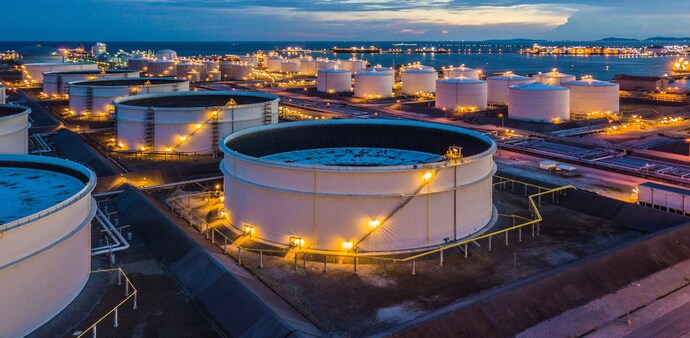
IEA member countries collectively hold around 1.2 billion barrels of oil in strategic reserves, designed specifically to cushion supply shocks or extreme price spikes. Analysts say a coordinated release of 300–400 million barrels — roughly a quarter of these reserves — has been floated as a possible response if the crisis worsens. (Business Standard)
The strategic reserve system was created after the 1973 oil embargo and requires members to maintain emergency stocks equivalent to at least 90 days of net oil imports to ensure energy security during crises. (The New Indian Express)
A wait-and-watch approach
Despite the spike in prices, G7 officials signalled that the market is still functioning and that immediate intervention may not yet be necessary. Policymakers appear to be adopting a wait-and-watch approach while monitoring supply flows and geopolitical developments closely.
Energy analysts note that strategic reserves are typically used only during severe disruptions — such as after the 2011 Libya crisis or the coordinated release in 2022 following Russia’s invasion of Ukraine.
For now, the G7’s message is clear: emergency oil reserves remain a powerful tool, but the world’s richest economies are not ready to deploy it just yet.
Global economic powers are holding back from using their emergency oil stockpiles for now, even as markets remain volatile due to the escalating conflict involving Iran and its wider regional implications.
Catch live coverage of West Asia conflict here
Finance ministers from the Group of Seven (G7) met to assess the economic fallout of the crisis and the surge in crude prices. The bloc — comprising the United States, United Kingdom, Canada, France, Germany, Italy and Japan — concluded that the situation does not yet warrant tapping strategic petroleum reserves, though the option remains on the table.
“We’re not there yet,” France’s industry and energy minister Roland Lescure said after chairing the meeting in Brussels.
“We are ready to take necessary and coordinated steps in order to stabilize markets, such as strategic stockpiling,” he told reporters.
Oil markets on edge
The discussions come as crude prices have surged above $100 per barrel amid fears that the widening conflict in West Asia could disrupt global energy supplies. Benchmark Brent crude briefly climbed as high as about $116-119 a barrel before easing, reflecting deep uncertainty in the market. (The Guardian)
The crisis has raised concerns about shipping through the Strait of Hormuz — a vital artery for global energy trade that carries roughly one-fifth of the world’s oil supply. Disruptions to tanker movements and output cuts from some Gulf producers have already rattled financial markets and pushed energy stocks higher while dragging airline and transport shares lower. (The Guardian)
Stock markets across Asia and Europe have also reacted nervously, with investors increasingly worried about the inflationary impact of higher fuel costs.
Strategic reserves remain an option
The idea of releasing emergency reserves was actively discussed during the G7 talks and has been encouraged by the International Energy Agency (IEA), which coordinates emergency responses among major consuming nations. (Reuters)
IEA member countries collectively hold around 1.2 billion barrels of oil in strategic reserves, designed specifically to cushion supply shocks or extreme price spikes. Analysts say a coordinated release of 300–400 million barrels — roughly a quarter of these reserves — has been floated as a possible response if the crisis worsens. (Business Standard)
The strategic reserve system was created after the 1973 oil embargo and requires members to maintain emergency stocks equivalent to at least 90 days of net oil imports to ensure energy security during crises. (The New Indian Express)
A wait-and-watch approach
Despite the spike in prices, G7 officials signalled that the market is still functioning and that immediate intervention may not yet be necessary. Policymakers appear to be adopting a wait-and-watch approach while monitoring supply flows and geopolitical developments closely.
Energy analysts note that strategic reserves are typically used only during severe disruptions — such as after the 2011 Libya crisis or the coordinated release in 2022 following Russia’s invasion of Ukraine.
For now, the G7’s message is clear: emergency oil reserves remain a powerful tool, but the world’s richest economies are not ready to deploy it just yet.