
'Point of no return': IEA chief says fossil fuel era won't recover after global oil shock
Renewables, particularly solar energy, are emerging as both a cost-effective and strategic alternative, even for developing economies. The crisis is expected to accelerate the global transition toward cleaner energy sources.
- Apr 25, 2026,
- Updated Apr 25, 2026 3:14 PM IST
The global oil crisis triggered by escalating geopolitical tensions has fundamentally altered the future of fossil fuels, with the world unlikely to return to previous energy norms, according to the head of the International Energy Agency (IEA).
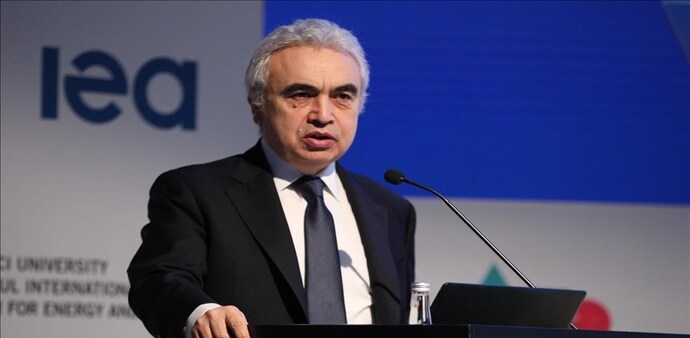
In an interview with The Guardian, IEA executive director Fatih Birol delivered a stark assessment: the shock to global energy systems is not temporary but structural, marking a turning point in how countries perceive oil and gas.
‘The damage is done’
Birol warned that the disruption has shattered long-held assumptions about the reliability of fossil fuels. He indicated that the confidence underpinning global oil and gas markets has been irreversibly weakened.
The crisis has exposed the fragility of energy systems dependent on fossil fuels, particularly through disruptions in key global supply routes. The resulting uncertainty has forced governments and industries to rethink their dependence on traditional energy sources.
A crisis bigger than past shocks
According to the IEA, the current disruption is more significant than previous energy crises, including those of the 1970s and the post-pandemic recovery period. Sharp supply constraints and price volatility have sent shockwaves through global markets, intensifying inflationary pressures and economic uncertainty.
The surge in oil prices, driven by supply disruptions and geopolitical risks, has further strained economies already dealing with fragile growth conditions.
Accelerating the shift to clean energy
One of the most consequential outcomes of the crisis, Birol told The Guardian, is a rapid reassessment of national energy strategies. Governments are increasingly turning to renewable energy, nuclear power, and electrification to reduce exposure to volatile fossil fuel markets.
Renewables, particularly solar energy, are emerging as both a cost-effective and strategic alternative, even for developing economies. The crisis is expected to accelerate the global transition toward cleaner energy sources.
Policy implications and industry impact
Birol also cautioned against expanding new oil and gas projects in response to the crisis. He argued that such investments may not enhance long-term energy security or significantly reduce consumer costs, urging policymakers to focus instead on managing existing resources and scaling up clean energy deployment.
His remarks come amid intensifying debates over balancing immediate energy demands with long-term climate commitments. The fallout from the crisis is likely to shape global energy policy for years to come, influencing decisions at international forums and national governments alike.
The global oil crisis triggered by escalating geopolitical tensions has fundamentally altered the future of fossil fuels, with the world unlikely to return to previous energy norms, according to the head of the International Energy Agency (IEA).
In an interview with The Guardian, IEA executive director Fatih Birol delivered a stark assessment: the shock to global energy systems is not temporary but structural, marking a turning point in how countries perceive oil and gas.
‘The damage is done’
Birol warned that the disruption has shattered long-held assumptions about the reliability of fossil fuels. He indicated that the confidence underpinning global oil and gas markets has been irreversibly weakened.
The crisis has exposed the fragility of energy systems dependent on fossil fuels, particularly through disruptions in key global supply routes. The resulting uncertainty has forced governments and industries to rethink their dependence on traditional energy sources.
A crisis bigger than past shocks
According to the IEA, the current disruption is more significant than previous energy crises, including those of the 1970s and the post-pandemic recovery period. Sharp supply constraints and price volatility have sent shockwaves through global markets, intensifying inflationary pressures and economic uncertainty.
The surge in oil prices, driven by supply disruptions and geopolitical risks, has further strained economies already dealing with fragile growth conditions.
Accelerating the shift to clean energy
One of the most consequential outcomes of the crisis, Birol told The Guardian, is a rapid reassessment of national energy strategies. Governments are increasingly turning to renewable energy, nuclear power, and electrification to reduce exposure to volatile fossil fuel markets.
Renewables, particularly solar energy, are emerging as both a cost-effective and strategic alternative, even for developing economies. The crisis is expected to accelerate the global transition toward cleaner energy sources.
Policy implications and industry impact
Birol also cautioned against expanding new oil and gas projects in response to the crisis. He argued that such investments may not enhance long-term energy security or significantly reduce consumer costs, urging policymakers to focus instead on managing existing resources and scaling up clean energy deployment.
His remarks come amid intensifying debates over balancing immediate energy demands with long-term climate commitments. The fallout from the crisis is likely to shape global energy policy for years to come, influencing decisions at international forums and national governments alike.