
'Reckless & ineffective': Mojtaba Khamenei slams Trump, says Iran's military would stay strong
Khamenei sharply criticized both the US and Israel, blaming them for escalating the conflict with military strikes and the targeted killings of key Iranian commanders.
- Apr 6, 2026,
- Updated Apr 6, 2026 11:23 PM IST
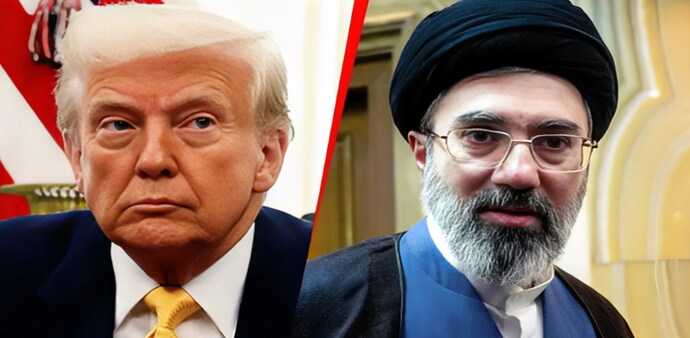
Iran’s Supreme Leader Mojtaba Khamenei on Monday has strongly rejected US President Donald Trump's recent threats, calling them reckless and ineffective attempts to weaken Iran.
The reaction came hours after Tehran turned down a ceasefire proposal from Washington.
Khamenei sharply criticized both the US and Israel, blaming them for escalating the conflict with military strikes and the targeted killings of key Iranian commanders.
In a message on Telegram, Khamenei condemned the killing of Major General Majid Khademi, head of intelligence for Iran's Revolutionary Guard Corps (IRGC), and Asghar Bakeri, leader of the Quds Force. Israel's defense minister confirmed the deaths, increasing the tension between the countries.
Khamenei dismissed Trump's warning that the US could push Iran “back to the Stone Age,” calling it "reckless." He accused the US and Israel of attacking civilian infrastructure like bridges, power plants, and schools, labeling these actions as "crimes against humanity" by the US government and Israel.
"The enemy is recklessly saying that it wants to return Iran to the Stone Age through its attacks," Khamenei said, adding that Iran's military strength would stay strong despite these pressures.
He also criticized the silence of international institutions, which he believes are either indifferent or complicit in the aggression.
"It is a pity that they are beating the drum of war, threats, and destruction more and more every day," he said.
Khamenei's comments come amid rising military actions and a deadlock in diplomatic efforts
How the current war began
The current phase of the conflict began on February 28, when US and Israeli forces carried out coordinated strikes on Iranian military and nuclear-linked sites. The strikes killed several senior figures, including top commanders of Iran’s Islamic Revolutionary Guard Corps and nuclear scientists, according to reports by international agencies including AP, Reuters and AFP.
Iran responded with missile and drone attacks targeting US bases, Israeli-linked infrastructure and shipping routes across West Asia. Cities such as Riyadh and areas near US military installations have faced repeated attacks, though many incoming missiles have been intercepted.
The conflict has since expanded beyond direct military targets.
Attacks on commercial shipping in the Gulf and the Red Sea have disrupted global trade routes, while parts of the Strait of Hormuz — a key energy corridor — have seen disruptions. Oil prices have surged sharply amid fears of supply shocks.
Iran’s Supreme Leader Mojtaba Khamenei on Monday has strongly rejected US President Donald Trump's recent threats, calling them reckless and ineffective attempts to weaken Iran.
The reaction came hours after Tehran turned down a ceasefire proposal from Washington.
Khamenei sharply criticized both the US and Israel, blaming them for escalating the conflict with military strikes and the targeted killings of key Iranian commanders.
In a message on Telegram, Khamenei condemned the killing of Major General Majid Khademi, head of intelligence for Iran's Revolutionary Guard Corps (IRGC), and Asghar Bakeri, leader of the Quds Force. Israel's defense minister confirmed the deaths, increasing the tension between the countries.
Khamenei dismissed Trump's warning that the US could push Iran “back to the Stone Age,” calling it "reckless." He accused the US and Israel of attacking civilian infrastructure like bridges, power plants, and schools, labeling these actions as "crimes against humanity" by the US government and Israel.
"The enemy is recklessly saying that it wants to return Iran to the Stone Age through its attacks," Khamenei said, adding that Iran's military strength would stay strong despite these pressures.
He also criticized the silence of international institutions, which he believes are either indifferent or complicit in the aggression.
"It is a pity that they are beating the drum of war, threats, and destruction more and more every day," he said.
Khamenei's comments come amid rising military actions and a deadlock in diplomatic efforts
How the current war began
The current phase of the conflict began on February 28, when US and Israeli forces carried out coordinated strikes on Iranian military and nuclear-linked sites. The strikes killed several senior figures, including top commanders of Iran’s Islamic Revolutionary Guard Corps and nuclear scientists, according to reports by international agencies including AP, Reuters and AFP.
Iran responded with missile and drone attacks targeting US bases, Israeli-linked infrastructure and shipping routes across West Asia. Cities such as Riyadh and areas near US military installations have faced repeated attacks, though many incoming missiles have been intercepted.
The conflict has since expanded beyond direct military targets.
Attacks on commercial shipping in the Gulf and the Red Sea have disrupted global trade routes, while parts of the Strait of Hormuz — a key energy corridor — have seen disruptions. Oil prices have surged sharply amid fears of supply shocks.