
'Saudis are disappointed': Israeli expert explains why Riyadh turned to Pakistan, Turkey
Iran war has exposed that there is no GCC. There are Gulf countries, but they're not united, says Israeli intelligence expert Danny Citrinowicz
- Aug 11, 2026,
- Updated Aug 11, 2026 4:22 PM IST
Saudi Arabia's disappointment with the United States and its concerns over Iranian and Houthi threats are pushing it to look beyond Washington for security support, according to Israeli intelligence expert Danny Citrinowicz.
Citrinowicz said the recent war with Iran had exposed divisions within the Gulf Cooperation Council (GCC). "This (Iran) war has exposed that there is no GCC. There are Gulf countries, but they're not united," said Citrinowicz, a senior researcher at the Institute for National Security Studies, during Fareed Zakaria's weekly program on CNN.
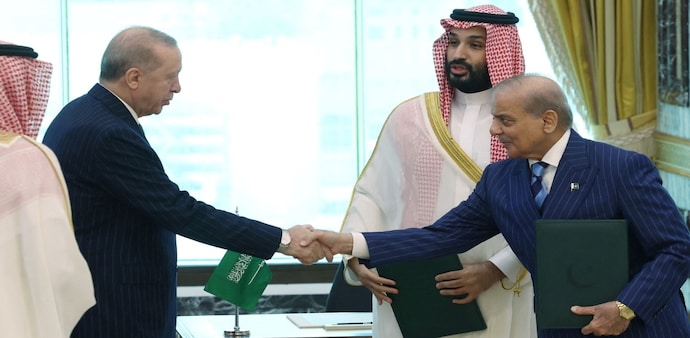
Last week, Saudi Arabia, Turkey and Pakistan signed a NATO-like defence agreement in Mecca. The trilateral pact is aimed at strengthening collective deterrence against aggression. Under the agreement, an armed attack against any one of the three countries would be regarded as an attack against all three.
Must Read: 'More symbolic than substantive': Husain Haqqani plays down Saudi-Turkey-Pakistan defence pact
'SAUDIS FEEL EXPOSED'
Citrinowicz said Gulf countries are taking different approaches to Iran.
He said Qatar and some elements in Saudi Arabia want to maintain engagement with Tehran because "you cannot push Iran into a corner". Bahrain, however, is more supportive of Israel and interested in expanding pressure on Iran.
The differences also reflect tensions between Saudi Crown Prince Mohammed bin Salman and UAE President Mohammed bin Zayed, he said.
But a bigger factor is the Gulf states' changing assessment of US security support. "The Saudis are quite disappointed, and they're feeling exposed to the Iranian and Houthi threat," Citrinowicz said. "So they need other elements like Pakistan and Turkey to help them."
He said the Mecca pact was part of a broader diversification of security arrangements in the Gulf.
Ever since the war began, Iran has targeted US bases and its allies, including Saudi Arabia, in West Asia.
Tehran struck areas including Riyadh, Prince Sultan Air Base, King Khalid International Airport and major oil facilities such as Ras Tanura and Yanbu. The attacks, along with the threat from Iran-backed Houthis, have heightened concerns in Riyadh about how well its critical infrastructure can be protected.
In Case You Missed It: 6th-gen fighter tech: India turns to French-led European consortium to ensure air force doesn't lag
SAUDI ARABIA AS 'SWING VOTER'
Harvard professor Tarek Masoud, who was also part of the discussion, said the current war had also exposed the lack of a unified Gulf position, but argued that the Saudi-UAE divide was driven less by ideology than by how the US had conducted the war.
He described Saudi Arabia as the "swing voter" between the harder-line positions of the UAE and Bahrain and the more cautious approaches of Qatar and Oman.
Masoud said Saudi Arabia would have supported a more aggressive US campaign against Iran if Washington had been willing to commit troops and pursue regime change.
"If the United States had been willing to go in and go in hard and commit troops and basically fulfill the most expansive version of the dream to hit Iran, the Saudis would have fallen in line," the professor said. But the US approach, he added, had instead pushed Riyadh towards de-escalation.
"The fact that the US hasn't done that has caused the Saudis to think, okay, we need to de-escalate. We need to lean into what we did in 2023 when we came to detente with Iran."
'SECOND BEST OPTION'
The professor said the Saudi position was essentially a choice between two options: a major US-led campaign against Iran or accommodation with Tehran.
"So, the Saudi view is either you should have gone in big and destroyed the regime completely or you should make some accommodation with it," Zakaria observed.
"That's my read," Masoud replied. "This is definitely the second best option for them right now. But if the US had been willing to go in big, I think the Saudis would have been there."
Citrinowicz, however, said that it remains unclear how the new security arrangements would work in a real crisis. He questioned whether the new partners would actually respond together if Iran or the Houthis attacked Saudi Arabia.
Saudi Arabia's disappointment with the United States and its concerns over Iranian and Houthi threats are pushing it to look beyond Washington for security support, according to Israeli intelligence expert Danny Citrinowicz.
Citrinowicz said the recent war with Iran had exposed divisions within the Gulf Cooperation Council (GCC). "This (Iran) war has exposed that there is no GCC. There are Gulf countries, but they're not united," said Citrinowicz, a senior researcher at the Institute for National Security Studies, during Fareed Zakaria's weekly program on CNN.
Last week, Saudi Arabia, Turkey and Pakistan signed a NATO-like defence agreement in Mecca. The trilateral pact is aimed at strengthening collective deterrence against aggression. Under the agreement, an armed attack against any one of the three countries would be regarded as an attack against all three.
Must Read: 'More symbolic than substantive': Husain Haqqani plays down Saudi-Turkey-Pakistan defence pact
'SAUDIS FEEL EXPOSED'
Citrinowicz said Gulf countries are taking different approaches to Iran.
He said Qatar and some elements in Saudi Arabia want to maintain engagement with Tehran because "you cannot push Iran into a corner". Bahrain, however, is more supportive of Israel and interested in expanding pressure on Iran.
The differences also reflect tensions between Saudi Crown Prince Mohammed bin Salman and UAE President Mohammed bin Zayed, he said.
But a bigger factor is the Gulf states' changing assessment of US security support. "The Saudis are quite disappointed, and they're feeling exposed to the Iranian and Houthi threat," Citrinowicz said. "So they need other elements like Pakistan and Turkey to help them."
He said the Mecca pact was part of a broader diversification of security arrangements in the Gulf.
Ever since the war began, Iran has targeted US bases and its allies, including Saudi Arabia, in West Asia.
Tehran struck areas including Riyadh, Prince Sultan Air Base, King Khalid International Airport and major oil facilities such as Ras Tanura and Yanbu. The attacks, along with the threat from Iran-backed Houthis, have heightened concerns in Riyadh about how well its critical infrastructure can be protected.
In Case You Missed It: 6th-gen fighter tech: India turns to French-led European consortium to ensure air force doesn't lag
SAUDI ARABIA AS 'SWING VOTER'
Harvard professor Tarek Masoud, who was also part of the discussion, said the current war had also exposed the lack of a unified Gulf position, but argued that the Saudi-UAE divide was driven less by ideology than by how the US had conducted the war.
He described Saudi Arabia as the "swing voter" between the harder-line positions of the UAE and Bahrain and the more cautious approaches of Qatar and Oman.
Masoud said Saudi Arabia would have supported a more aggressive US campaign against Iran if Washington had been willing to commit troops and pursue regime change.
"If the United States had been willing to go in and go in hard and commit troops and basically fulfill the most expansive version of the dream to hit Iran, the Saudis would have fallen in line," the professor said. But the US approach, he added, had instead pushed Riyadh towards de-escalation.
"The fact that the US hasn't done that has caused the Saudis to think, okay, we need to de-escalate. We need to lean into what we did in 2023 when we came to detente with Iran."
'SECOND BEST OPTION'
The professor said the Saudi position was essentially a choice between two options: a major US-led campaign against Iran or accommodation with Tehran.
"So, the Saudi view is either you should have gone in big and destroyed the regime completely or you should make some accommodation with it," Zakaria observed.
"That's my read," Masoud replied. "This is definitely the second best option for them right now. But if the US had been willing to go in big, I think the Saudis would have been there."
Citrinowicz, however, said that it remains unclear how the new security arrangements would work in a real crisis. He questioned whether the new partners would actually respond together if Iran or the Houthis attacked Saudi Arabia.