


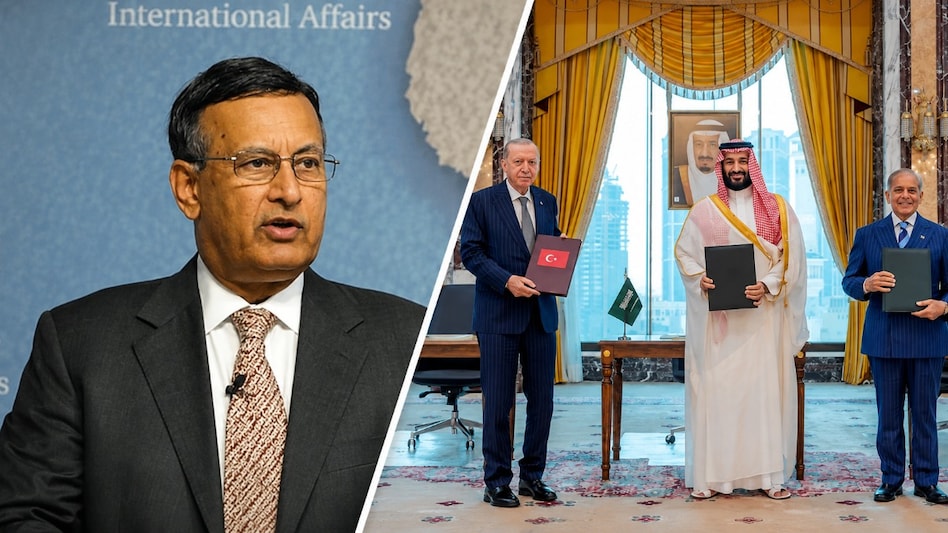
 Saudi-Turkey-Pakistan pact ‘more symbolic than substantive’, says former envoy Husain Haqqani
The Saudi-Turkey-Pakistan mutual defence agreement is "more symbolic than substantive" and will not lead to a "Muslim NATO", former Pakistan ambassador to the US Husain Haqqani said on Sunday.
Haqqani said the pact could boost defence cooperation, including intelligence sharing and joint production of munitions. But he argued that it lacks the key element of a military alliance - a common enemy.

 Subhash Chandra booked by CBI in alleged ₹1,322 crore LIC Housing Finance fraud case: Report
 Crude oil could crash to $40 after Iran war ends, says US Treasury Secretary Scott Bessent
 Tata Sons chairman race heats up: T V Narendran, Saurabh Agrawal, NSE's Ashish Chauhan in contention
 We have been overestimating GDP growth...: Former Chief Statistician Pronab Sen
 Festive season revival? Indian airlines' capacity continues to shrink
 Money & Marriage: How Couples Can Divide Household Expenses, Track Spending And Stay On Budget
 Parag Parikh Flexi Cap Fund Underperformance: Is Fund Size Becoming A Major Challenge For Investors?
 Midcap, Smallcap Funds: Strong Profit Growth Could Keep Investor Flows Robust, But Valuations Matter
 Travel Insurance Guide: Where To Buy, How Much Cover You Need & When To Get It
 MINI Countryman C Tech Overview | Tech Gear EP 17 | ASUS Jelly75 Keyboard | Business Today
 Tata Power stock: Choice Broking expects recovery, assigns two price targets
  IPO rush next week: 11 issues eye to raise Rs 7,055 crore; 6 IPOs to open on same day, check details
 600% dividend stock: Check dividend per share, record date, payment date and other key details
 56% rally in TBZ stock: Upper circuit led to record high today; here's why
  Sensex, Nifty snap four sessions of losing streak; RIL, Tata Steel, Bajaj Finance boost sentiment
  CM Rekha Gupta felicitates 116 teachers, says Delhi education reform must begin with basic facilities
 India’s drug regulator flags rabies vaccine batch as substandard, raising fake dose fears: ReportMoney & Marriage: How Couples Can Divide Household Expenses, Track Spending And Stay On Budget
 Bihar flood alert: Ganga surpasses highest flood mark in Patna as 10.26 lakh people affected
 PMKVY records just 7% placement rate, highlighting India’s skilling-employment gap












