
Schrödinger’s Hormuz: Is there a 20% fee on ships transiting the strait or not?
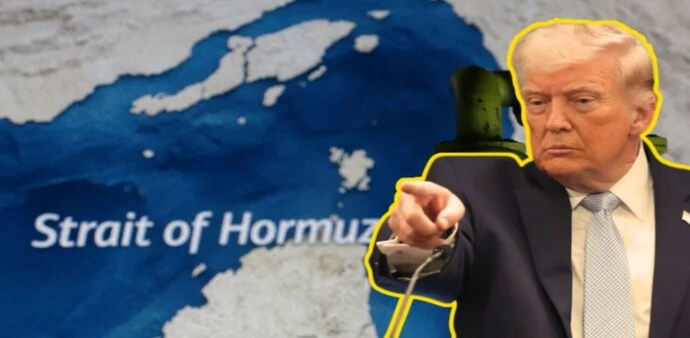
Donald Trump said the US should be reimbursed for protecting the strait, but he also said he does not think a fee should be charged for ships transiting the waterway.
- Jul 15, 2026,
- Updated Jul 15, 2026 11:38 AM IST
Donald Trump said he did not think anyone should be able to charge a fee for ships transiting the Strait of Hormuz, but he also said the US would charge a 20 per cent cargo fee on all cargo shipped through the strait.
So, at the risk of sounding like Schrödinger’s cat paradox, the question that now emerges is whether there is a 20 per cent fee on ships transiting the Strait of Hormuz or not. Or like the cat, whether the ships would discover the reality only once they enter the pathway. Who can tell? Surely, not Trump.
MUST READ | Trump announces full blockade on Iranian shipping, drops 20% Hormuz toll plan
To answer the question to the best of our ability, as per the latest, Trump said that he has decided to “replace the 20% United States Reimbursement Fee with Trade and Investment Deals that the various Gulf States will be making into the United States”. He said that these investments will be massive but will also be “extraordinarily good for them and their future”.
However, only a day prior, Trump had insisted that the US must be reimbursed for protecting the strait. He, in fact, went to call the US ‘guardians of the Hormuz strait’. He said it was a matter of fairness that the US is reimbursed at the rate of 20 per cent on all cargoes shipped. On Monday he said he doesn’t like the concept of a fee but doesn’t feel it is fair that the US is protecting the strait for the entire world.
His statements raised concerns about the import and energy bills of nations that largely depend on the Strait of Hormuz.
Come Wednesday, Trump said the US had “highly productive conversations with Middle East leadership” before deciding to not impose the 20 per cent fee. “Strait of Hormuz is open to ALL Ship traffic except for Iran — and that is because of their lying, violent, malicious leadership, which is taking them down the path of TOTAL DESTRUCTION. We will therefore have a FULL Blockade, but only on Ships coming to and from Iranian ports, or carrying anything have to do with Iranian cargo,” he said.
As this back and forth ensued, the conflict continued to escalate, leaving ships and seafarers onboard in the lurch.
Meanwhile, the Islamic Revolutionary Guard Corps (IRGC) has said that the Strait of Hormuz will remain closed till the “end of America’s evil deeds”. Contrary to what the IRGC is saying, Trump has also maintained that the strait is open. He had said that the strait would continue to remain open with or without Iran.
DON'T MISS | Trump declares US guardian of Strait of Hormuz and mandates 20% global cargo fee
The conflicting statements have brought about a sense of uncertainty to the strait that has now become a centre piece of the war. Vessel crossings plunged from 93 on June 24 to just 17 on July 13, as per S&P Global data. Although there is a slight increase in vessel crossings from 11 on July 12 to 17 on July 13, activity remains well below normal levels.
Donald Trump said he did not think anyone should be able to charge a fee for ships transiting the Strait of Hormuz, but he also said the US would charge a 20 per cent cargo fee on all cargo shipped through the strait.
So, at the risk of sounding like Schrödinger’s cat paradox, the question that now emerges is whether there is a 20 per cent fee on ships transiting the Strait of Hormuz or not. Or like the cat, whether the ships would discover the reality only once they enter the pathway. Who can tell? Surely, not Trump.
MUST READ | Trump announces full blockade on Iranian shipping, drops 20% Hormuz toll plan
To answer the question to the best of our ability, as per the latest, Trump said that he has decided to “replace the 20% United States Reimbursement Fee with Trade and Investment Deals that the various Gulf States will be making into the United States”. He said that these investments will be massive but will also be “extraordinarily good for them and their future”.
However, only a day prior, Trump had insisted that the US must be reimbursed for protecting the strait. He, in fact, went to call the US ‘guardians of the Hormuz strait’. He said it was a matter of fairness that the US is reimbursed at the rate of 20 per cent on all cargoes shipped. On Monday he said he doesn’t like the concept of a fee but doesn’t feel it is fair that the US is protecting the strait for the entire world.
His statements raised concerns about the import and energy bills of nations that largely depend on the Strait of Hormuz.
Come Wednesday, Trump said the US had “highly productive conversations with Middle East leadership” before deciding to not impose the 20 per cent fee. “Strait of Hormuz is open to ALL Ship traffic except for Iran — and that is because of their lying, violent, malicious leadership, which is taking them down the path of TOTAL DESTRUCTION. We will therefore have a FULL Blockade, but only on Ships coming to and from Iranian ports, or carrying anything have to do with Iranian cargo,” he said.
As this back and forth ensued, the conflict continued to escalate, leaving ships and seafarers onboard in the lurch.
Meanwhile, the Islamic Revolutionary Guard Corps (IRGC) has said that the Strait of Hormuz will remain closed till the “end of America’s evil deeds”. Contrary to what the IRGC is saying, Trump has also maintained that the strait is open. He had said that the strait would continue to remain open with or without Iran.
DON'T MISS | Trump declares US guardian of Strait of Hormuz and mandates 20% global cargo fee
The conflicting statements have brought about a sense of uncertainty to the strait that has now become a centre piece of the war. Vessel crossings plunged from 93 on June 24 to just 17 on July 13, as per S&P Global data. Although there is a slight increase in vessel crossings from 11 on July 12 to 17 on July 13, activity remains well below normal levels.