
Second flydubai flight to Tel Aviv sparks diversion scare hours after FZ1073 incident: Report
The flight, FZ1081, was initially reported as having diverted and returned to Dubai. However, the latest information indicates that the flight is continuing on its normal course and has not diverted from its planned route.
- Sep 30, 2026,
- Updated Sep 30, 2026 4:51 PM IST
Hours after flydubai flight FZ1073 was diverted to Saudi Arabia following a mid-air incident involving its pilots, an erroneous flight-tracking update briefly sparked reports of another flydubai flight to Tel Aviv turning back to Dubai, Reuters reported on Wednesday.
The flight, FZ1081, was initially reported as having diverted and returned to Dubai. However, the latest information indicates that the flight is continuing on its normal course and has not diverted from its planned route.
The incorrect flight-tracking data led to reports of a second diversion involving a flydubai service operating from Dubai to Tel Aviv, adding to heightened attention around flights on the route following the earlier FZ1073 incident.
What happened with FZ1081?
The apparent diversion of FZ1081 was the result of an error in flight-tracking data. There is currently no indication that the Boeing 737 operating the flight actually turned back to Dubai or diverted from its scheduled route.
The flight is continuing towards Tel Aviv based on the latest available information.
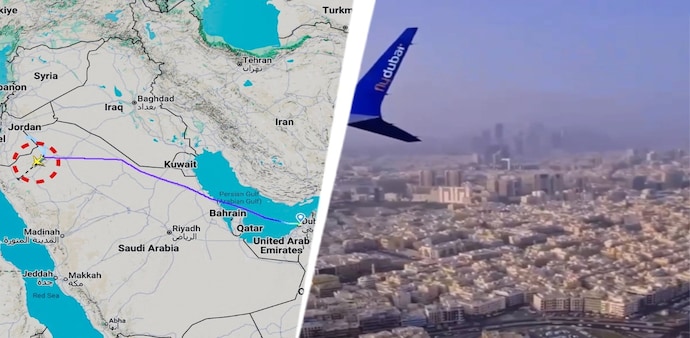
The confusion emerged only hours after FZ1073, another flydubai service operating from Dubai to Tel Aviv, experienced a serious onboard incident and was diverted to Tabuk, Saudi Arabia.
MUST READ: Flydubai Dubai-Israel flight diverted to Saudi Arabia after pilots get into physical fight: Report
What happened on Flydubai Dubai-Israel flight
Flydubai flight FZ1073 departed Dubai at 03:05 UTC and climbed to a cruising altitude of 34,000 feet. The flight was travelling towards Tel Aviv when passengers reportedly heard screams coming from the cockpit.
According to Israeli media reports, passengers later saw blood and were told that one of the pilots had allegedly been stabbed with a pocketknife. Passenger accounts cited by Israeli media said people onboard moved to assist crew members during the confrontation.
One passenger reportedly told Channel 12 that passengers heard screaming before the cockpit door opened and that blood was visible. The precise sequence of events inside the cockpit has not been independently established.
Did one pilot try to crash the aircraft?
One of the most serious allegations is that a pilot may have attempted to take control of the aircraft and deliberately crash it.
Israeli media reports, citing officials and passenger accounts, said there were indications that the copilot may have attempted to seize control of the aircraft. Another version of events said the other pilot resisted and passengers helped during the struggle.
A senior Israeli official reportedly told Channel 12 that a major disaster may have been prevented and that the copilot was being investigated.
However, these remain allegations. Flydubai has not publicly confirmed that a pilot attempted to crash the aircraft, nor has it provided a detailed account of what happened inside the cockpit.
ALSO READ: Flydubai flight plunged 14,000 feet in seconds before Saudi diversion; what happened onboard?
Flight data shows dramatic altitude changes
According to Flightradar24 data, the aircraft began a steep descent at around 05:21 UTC, followed by a sharp ascent and another steep descent.
By approximately 05:33 UTC, the aircraft had centred its flight around 15,000 feet. Its altitude continued to oscillate around that level, while its ground speed also varied significantly for the remainder of the flight.
The aircraft then transmitted emergency codes during the incident. At 05:28:48 UTC, it began squawking 7700, the internationally standardised code for a general emergency, while flying near the Saudi-Jordanian border.
At 05:35 UTC, the flight switched to 7500, the internationally standardised code for unlawful interference. It then turned west and briefly entered Jordanian airspace before making a 180-degree turn and heading southwest towards Tabuk.
Why did the flight trigger a hijacking alert?
The Code 7500 transmission raised the possibility of a hijacking or other unlawful interference. Israeli authorities reportedly scrambled fighter jets while attempting to establish what was happening aboard the aircraft.
The flight later switched back to 7700 as it approached Tabuk. The last ADS-B data received by Flightradar24 indicated that the aircraft landed safely, with its final ADS-B message received at 06:58 UTC.
ALSO READ: India-Mongolia direct flights begin, cut New Delhi-Ulaanbaatar travel time to 5 hours
How did the emergency end?
The Boeing 737 was diverted from its original route and landed at Tabuk Airport in Saudi Arabia. Flydubai confirmed that an incident had occurred during the flight and said all passengers and crew were safe and accounted for.
The reported pilot confrontation, alleged stabbing and claims that one pilot attempted to crash the aircraft remain subject to investigation.
Hours after flydubai flight FZ1073 was diverted to Saudi Arabia following a mid-air incident involving its pilots, an erroneous flight-tracking update briefly sparked reports of another flydubai flight to Tel Aviv turning back to Dubai, Reuters reported on Wednesday.
The flight, FZ1081, was initially reported as having diverted and returned to Dubai. However, the latest information indicates that the flight is continuing on its normal course and has not diverted from its planned route.
The incorrect flight-tracking data led to reports of a second diversion involving a flydubai service operating from Dubai to Tel Aviv, adding to heightened attention around flights on the route following the earlier FZ1073 incident.
What happened with FZ1081?
The apparent diversion of FZ1081 was the result of an error in flight-tracking data. There is currently no indication that the Boeing 737 operating the flight actually turned back to Dubai or diverted from its scheduled route.
The flight is continuing towards Tel Aviv based on the latest available information.
The confusion emerged only hours after FZ1073, another flydubai service operating from Dubai to Tel Aviv, experienced a serious onboard incident and was diverted to Tabuk, Saudi Arabia.
MUST READ: Flydubai Dubai-Israel flight diverted to Saudi Arabia after pilots get into physical fight: Report
What happened on Flydubai Dubai-Israel flight
Flydubai flight FZ1073 departed Dubai at 03:05 UTC and climbed to a cruising altitude of 34,000 feet. The flight was travelling towards Tel Aviv when passengers reportedly heard screams coming from the cockpit.
According to Israeli media reports, passengers later saw blood and were told that one of the pilots had allegedly been stabbed with a pocketknife. Passenger accounts cited by Israeli media said people onboard moved to assist crew members during the confrontation.
One passenger reportedly told Channel 12 that passengers heard screaming before the cockpit door opened and that blood was visible. The precise sequence of events inside the cockpit has not been independently established.
Did one pilot try to crash the aircraft?
One of the most serious allegations is that a pilot may have attempted to take control of the aircraft and deliberately crash it.
Israeli media reports, citing officials and passenger accounts, said there were indications that the copilot may have attempted to seize control of the aircraft. Another version of events said the other pilot resisted and passengers helped during the struggle.
A senior Israeli official reportedly told Channel 12 that a major disaster may have been prevented and that the copilot was being investigated.
However, these remain allegations. Flydubai has not publicly confirmed that a pilot attempted to crash the aircraft, nor has it provided a detailed account of what happened inside the cockpit.
ALSO READ: Flydubai flight plunged 14,000 feet in seconds before Saudi diversion; what happened onboard?
Flight data shows dramatic altitude changes
According to Flightradar24 data, the aircraft began a steep descent at around 05:21 UTC, followed by a sharp ascent and another steep descent.
By approximately 05:33 UTC, the aircraft had centred its flight around 15,000 feet. Its altitude continued to oscillate around that level, while its ground speed also varied significantly for the remainder of the flight.
The aircraft then transmitted emergency codes during the incident. At 05:28:48 UTC, it began squawking 7700, the internationally standardised code for a general emergency, while flying near the Saudi-Jordanian border.
At 05:35 UTC, the flight switched to 7500, the internationally standardised code for unlawful interference. It then turned west and briefly entered Jordanian airspace before making a 180-degree turn and heading southwest towards Tabuk.
Why did the flight trigger a hijacking alert?
The Code 7500 transmission raised the possibility of a hijacking or other unlawful interference. Israeli authorities reportedly scrambled fighter jets while attempting to establish what was happening aboard the aircraft.
The flight later switched back to 7700 as it approached Tabuk. The last ADS-B data received by Flightradar24 indicated that the aircraft landed safely, with its final ADS-B message received at 06:58 UTC.
ALSO READ: India-Mongolia direct flights begin, cut New Delhi-Ulaanbaatar travel time to 5 hours
How did the emergency end?
The Boeing 737 was diverted from its original route and landed at Tabuk Airport in Saudi Arabia. Flydubai confirmed that an incident had occurred during the flight and said all passengers and crew were safe and accounted for.
The reported pilot confrontation, alleged stabbing and claims that one pilot attempted to crash the aircraft remain subject to investigation.