
Smoke near UAE energy hub after Kharg strike raises fears of wider attacks on Gulf oil facilities
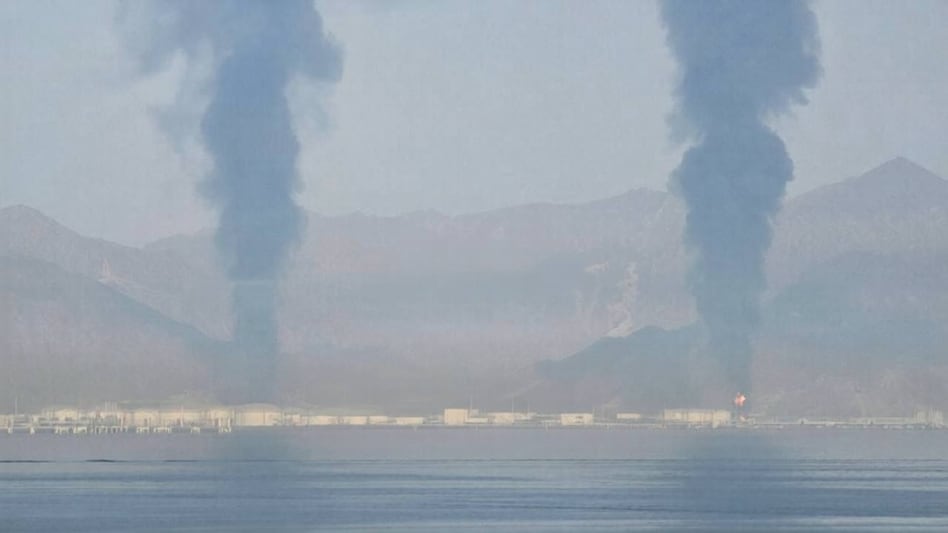
Videos circulating online showed thick black smoke rising near Fujairah, a coastal city that hosts one of the UAE’s most important ports and oil export terminals. The port plays a crucial role in regional oil trade and is a major storage and shipping centre for crude and refined products.
- Mar 14, 2026,
- Updated Mar 14, 2026 6:26 PM IST
Dark smoke was seen rising on Saturday from the direction of a major energy installation in the United Arab Emirates, hours after the United States carried out airstrikes on Iran’s Kharg Island, a key hub for the country’s oil exports. The incident has raised fresh concerns that the conflict is spreading to vital energy infrastructure across the Gulf region.
Videos circulating online showed thick black smoke rising near Fujairah, a coastal city that hosts one of the UAE’s most important ports and oil export terminals. The port plays a crucial role in regional oil trade and is a major storage and shipping centre for crude and refined products.
Local authorities said the fire was caused by debris that fell after an incoming drone was intercepted by air defence systems. In an official statement, UAE officials said falling fragments triggered a blaze, but did not specify the exact location of the impact. The Ministry of Defence said its air defence units were actively responding to Iranian ballistic missiles, cruise missiles and drones targeting the region.
The developments come shortly after US President Donald Trump confirmed that American forces had bombed targets on Iran’s Kharg Island, the country’s main oil export terminal that handles nearly all of its crude shipments. Trump said the strikes targeted military installations but warned that oil infrastructure could also be hit if Iran continues to threaten shipping in the Strait of Hormuz.
Energy facilities have increasingly become targets since the US-Israel conflict with Iran began on February 28. Earlier strikes hit oil depots in Tehran, while retaliatory attacks have targeted major energy sites across the Gulf, including facilities in Saudi Arabia, Qatar and the UAE.
Key installations such as the Ras Tanura refinery in Saudi Arabia, the Ras Laffan gas processing complex in Qatar and the Ruwais refinery in the UAE have all been placed on high alert amid fears of further escalation.
The conflict has also disrupted traffic through the Strait of Hormuz, one of the world’s most critical shipping routes. Before the fighting began, nearly 20% of global oil and liquefied natural gas supplies passed through the narrow waterway. With tanker movements slowing and military activity increasing, markets fear that any prolonged disruption could tighten global supply and push energy prices sharply higher.
Dark smoke was seen rising on Saturday from the direction of a major energy installation in the United Arab Emirates, hours after the United States carried out airstrikes on Iran’s Kharg Island, a key hub for the country’s oil exports. The incident has raised fresh concerns that the conflict is spreading to vital energy infrastructure across the Gulf region.
Videos circulating online showed thick black smoke rising near Fujairah, a coastal city that hosts one of the UAE’s most important ports and oil export terminals. The port plays a crucial role in regional oil trade and is a major storage and shipping centre for crude and refined products.
Local authorities said the fire was caused by debris that fell after an incoming drone was intercepted by air defence systems. In an official statement, UAE officials said falling fragments triggered a blaze, but did not specify the exact location of the impact. The Ministry of Defence said its air defence units were actively responding to Iranian ballistic missiles, cruise missiles and drones targeting the region.
The developments come shortly after US President Donald Trump confirmed that American forces had bombed targets on Iran’s Kharg Island, the country’s main oil export terminal that handles nearly all of its crude shipments. Trump said the strikes targeted military installations but warned that oil infrastructure could also be hit if Iran continues to threaten shipping in the Strait of Hormuz.
Energy facilities have increasingly become targets since the US-Israel conflict with Iran began on February 28. Earlier strikes hit oil depots in Tehran, while retaliatory attacks have targeted major energy sites across the Gulf, including facilities in Saudi Arabia, Qatar and the UAE.
Key installations such as the Ras Tanura refinery in Saudi Arabia, the Ras Laffan gas processing complex in Qatar and the Ruwais refinery in the UAE have all been placed on high alert amid fears of further escalation.
The conflict has also disrupted traffic through the Strait of Hormuz, one of the world’s most critical shipping routes. Before the fighting began, nearly 20% of global oil and liquefied natural gas supplies passed through the narrow waterway. With tanker movements slowing and military activity increasing, markets fear that any prolonged disruption could tighten global supply and push energy prices sharply higher.