
The call that changed the course of geopolitics: How Netanyahu persuaded Trump to jointly attack Iran
West Asia conflict: At the time of the call, Trump had approved the idea of a military operation against Iran but had not decided on the timing or scope of US involvement.
- Mar 24, 2026,
- Updated Mar 24, 2026 8:07 AM IST
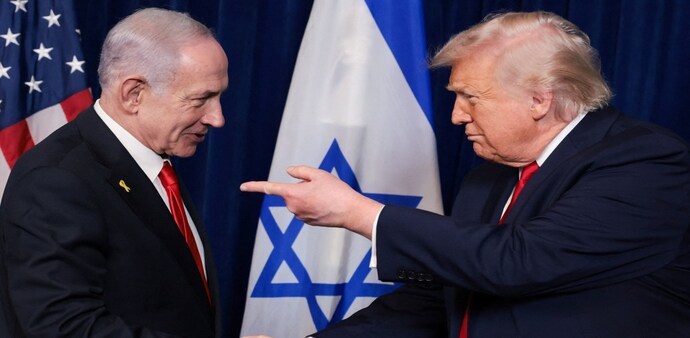
Less than 48 hours before the US-Israeli strike on Iran began, Prime Minister Benjamin Netanyahu spoke by phone to President Donald Trump about the reasons for launching the complex operation. The call focused on the timing and justification for the military action, which Trump had previously campaigned against, as per a report.
Both leaders had been briefed earlier in the week that Iranian Supreme Leader Ayatollah Ali Khamenei and his key lieutenants would meet at his Tehran compound, making them vulnerable to a "decapitation strike". This type of attack targets a country's top leaders and is more commonly used by Israel than the United States, said a report in Reuters.
New intelligence suggested the meeting was moved forward to Saturday morning from Saturday night. Netanyahu, who had long supported an operation of this kind, argued to Trump that this might be the best opportunity to kill Khamenei. He also cited previous Iranian attempts to assassinate Trump, including a murder-for-hire plot allegedly orchestrated by Iran in 2024 while Trump was a candidate.
The Justice Department has accused a Pakistani man of attempting to recruit individuals in the US for this plot, which was seen as retaliation for the killing of Qassem Soleimani, the Islamic Revolutionary Guard Corps' top commander.
At the time of the call, Trump had approved the idea of a military operation against Iran but had not decided on the timing or scope of US involvement. The US military had been building up forces in the region for weeks, with the timing of the strike influenced by factors such as weather.
Sources familiar with the call said Netanyahu’s arguments, combined with intelligence about the narrowing window to target Iran’s leader, influenced Trump’s final decision. On February 27, Trump ordered the military to proceed with Operation Epic Fury, the report said.
Netanyahu told Trump that the strike could be historic, potentially leading to the overthrow of Iran’s theocratic system, which has governed since 1979. The first bombs struck on the morning of February 28, and Trump announced that Khamenei was dead later that day.
White House spokeswoman Anna Kelly stated the operation aimed to destroy Iran’s ballistic missile and production capabilities, eliminate its naval forces, end its ability to arm proxies, and prevent it from obtaining nuclear weapons.
Netanyahu dismissed claims that Israel pressured the US into the conflict, and Trump has said the decision to strike was his alone. Defence Secretary Pete Hegseth suggested revenge was a motive, saying, "Iran tried to kill President Trump, and President Trump got the last laugh." Neither Netanyahu’s office nor Iran’s UN representative responded to requests for comment.
Less than 48 hours before the US-Israeli strike on Iran began, Prime Minister Benjamin Netanyahu spoke by phone to President Donald Trump about the reasons for launching the complex operation. The call focused on the timing and justification for the military action, which Trump had previously campaigned against, as per a report.
Both leaders had been briefed earlier in the week that Iranian Supreme Leader Ayatollah Ali Khamenei and his key lieutenants would meet at his Tehran compound, making them vulnerable to a "decapitation strike". This type of attack targets a country's top leaders and is more commonly used by Israel than the United States, said a report in Reuters.
New intelligence suggested the meeting was moved forward to Saturday morning from Saturday night. Netanyahu, who had long supported an operation of this kind, argued to Trump that this might be the best opportunity to kill Khamenei. He also cited previous Iranian attempts to assassinate Trump, including a murder-for-hire plot allegedly orchestrated by Iran in 2024 while Trump was a candidate.
The Justice Department has accused a Pakistani man of attempting to recruit individuals in the US for this plot, which was seen as retaliation for the killing of Qassem Soleimani, the Islamic Revolutionary Guard Corps' top commander.
At the time of the call, Trump had approved the idea of a military operation against Iran but had not decided on the timing or scope of US involvement. The US military had been building up forces in the region for weeks, with the timing of the strike influenced by factors such as weather.
Sources familiar with the call said Netanyahu’s arguments, combined with intelligence about the narrowing window to target Iran’s leader, influenced Trump’s final decision. On February 27, Trump ordered the military to proceed with Operation Epic Fury, the report said.
Netanyahu told Trump that the strike could be historic, potentially leading to the overthrow of Iran’s theocratic system, which has governed since 1979. The first bombs struck on the morning of February 28, and Trump announced that Khamenei was dead later that day.
White House spokeswoman Anna Kelly stated the operation aimed to destroy Iran’s ballistic missile and production capabilities, eliminate its naval forces, end its ability to arm proxies, and prevent it from obtaining nuclear weapons.
Netanyahu dismissed claims that Israel pressured the US into the conflict, and Trump has said the decision to strike was his alone. Defence Secretary Pete Hegseth suggested revenge was a motive, saying, "Iran tried to kill President Trump, and President Trump got the last laugh." Neither Netanyahu’s office nor Iran’s UN representative responded to requests for comment.