
'They better behave': Trump threatens energy targets as US hits Iran twice in one day near Hormuz
After the strikes, Iran's top negotiator and Parliament Speaker Mohammad Baqer Qalibaf said, "We are in an essential and existential war with America," he said in a statement
- Jul 16, 2026,
- Updated Jul 16, 2026 7:36 AM IST
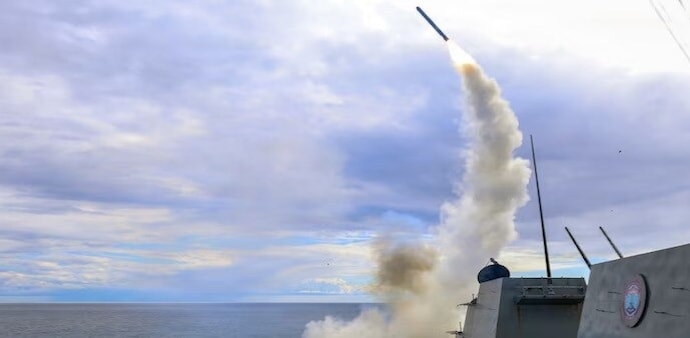
The United States launched a second round of military strikes against Iran on Wednesday, targeting coastal defence systems, cruise missile storage facilities and other military assets on Greater Tunb Island near the Strait of Hormuz. The operation began at 6 am ET and lasted approximately 90 minutes, according to US Central Command. It came hours after an earlier round of American attacks, two strike waves in a single day, as both sides signalled they were prepared for a prolonged confrontation.
After the strikes, Iran's top negotiator and Parliament Speaker Mohammad Baqer Qalibaf said, "We are in an essential and existential war with America," he said in a statement.
Also read: After Hormuz, Iran has eyes set on another waterway: Bab el-Mandeb, gateway to the Red Sea
The Pentagon said the strikes were ordered by President Donald Trump to hold Iran accountable for threatening freedom of navigation through one of the world's most critical maritime corridors. Iran's Mehr news agency separately reported that US projectiles struck Hengam Island, another strategically positioned landmass near the strait.
Trump's warnings and Washington's objectives
Trump has been clear about where this campaign is heading if Iran refuses to return to the negotiating table. "I'll save the energy targets for last, but ultimately we'll hit energy targets," he said on Tuesday. Asked on Wednesday whether Iran faced a deadline before the US targeted infrastructure such as bridges, he replied: "I don't like giving deadlines, but they pretty much know, they know the story... they better behave."
US officials told Reuters that the current military campaign is designed to achieve two parallel goals, reopening the Strait of Hormuz to commercial traffic and degrading Iranian military capabilities that could threaten future US operations in the region. Trump also said Washington had communicated with Iranian negotiators, urging Tehran to resume talks before the situation escalates further.
Energy markets react
The strategic stakes of the conflict are visible in commodity prices. Before the fighting intensified, nearly one-fifth of the world's oil and LNG shipments passed through the Strait of Hormuz. Shipping traffic through the waterway has since fallen sharply. Brent crude closed at a one-month high of $84.95 a barrel on Wednesday as traders priced in the deepening instability.
Iran threatens to widen the disruption
As Washington stepped up its military pressure, Tehran signalled it was prepared to extend the conflict beyond the Strait of Hormuz. The Islamic Revolutionary Guard Corps claimed to have launched attacks on US military installations in Bahrain, Kuwait and Jordan, and issued a pointed warning: the United States "must brace for the closure of all other export corridors that benefit the US and its allies."
Analysts believe Iran may attempt to activate its Houthi allies in Yemen to threaten shipping through the Bab el-Mandeb Strait, the critical chokepoint linking the Red Sea with the Gulf of Aden. If realised, that would place two of the world's most important energy routes under simultaneous pressure.
Meanwhile, Iranian government spokesperson Fatemeh Mohajerani said at least 30 civilians had been killed in recent US strikes on southern Iran. The US has accused Iran of attacking seven commercial ships over the past week, leaving close to a dozen crew members dead, injured or missing.
Ceasefire hopes collapse
The renewed fighting has effectively buried the interim ceasefire agreement reached last month, which was intended to set the stage for negotiations on Iran's nuclear programme and a broader peace framework. Iranian Foreign Ministry spokesperson Esmaeil Baghaei told Tasnim news agency: "We have no plans for negotiations at the moment and are focused on defence."
Qalibaf questioned the continued relevance of Tehran's memorandum of understanding with Washington. "If Iran did not benefit from its memorandum of understanding with the US, we have no reason to adhere to such an understanding," he said. He added, however, that Iran should not abandon diplomacy entirely, warning that depending solely on either negotiations or military action would be a strategic error.
The United States launched a second round of military strikes against Iran on Wednesday, targeting coastal defence systems, cruise missile storage facilities and other military assets on Greater Tunb Island near the Strait of Hormuz. The operation began at 6 am ET and lasted approximately 90 minutes, according to US Central Command. It came hours after an earlier round of American attacks, two strike waves in a single day, as both sides signalled they were prepared for a prolonged confrontation.
After the strikes, Iran's top negotiator and Parliament Speaker Mohammad Baqer Qalibaf said, "We are in an essential and existential war with America," he said in a statement.
Also read: After Hormuz, Iran has eyes set on another waterway: Bab el-Mandeb, gateway to the Red Sea
The Pentagon said the strikes were ordered by President Donald Trump to hold Iran accountable for threatening freedom of navigation through one of the world's most critical maritime corridors. Iran's Mehr news agency separately reported that US projectiles struck Hengam Island, another strategically positioned landmass near the strait.
Trump's warnings and Washington's objectives
Trump has been clear about where this campaign is heading if Iran refuses to return to the negotiating table. "I'll save the energy targets for last, but ultimately we'll hit energy targets," he said on Tuesday. Asked on Wednesday whether Iran faced a deadline before the US targeted infrastructure such as bridges, he replied: "I don't like giving deadlines, but they pretty much know, they know the story... they better behave."
US officials told Reuters that the current military campaign is designed to achieve two parallel goals, reopening the Strait of Hormuz to commercial traffic and degrading Iranian military capabilities that could threaten future US operations in the region. Trump also said Washington had communicated with Iranian negotiators, urging Tehran to resume talks before the situation escalates further.
Energy markets react
The strategic stakes of the conflict are visible in commodity prices. Before the fighting intensified, nearly one-fifth of the world's oil and LNG shipments passed through the Strait of Hormuz. Shipping traffic through the waterway has since fallen sharply. Brent crude closed at a one-month high of $84.95 a barrel on Wednesday as traders priced in the deepening instability.
Iran threatens to widen the disruption
As Washington stepped up its military pressure, Tehran signalled it was prepared to extend the conflict beyond the Strait of Hormuz. The Islamic Revolutionary Guard Corps claimed to have launched attacks on US military installations in Bahrain, Kuwait and Jordan, and issued a pointed warning: the United States "must brace for the closure of all other export corridors that benefit the US and its allies."
Analysts believe Iran may attempt to activate its Houthi allies in Yemen to threaten shipping through the Bab el-Mandeb Strait, the critical chokepoint linking the Red Sea with the Gulf of Aden. If realised, that would place two of the world's most important energy routes under simultaneous pressure.
Meanwhile, Iranian government spokesperson Fatemeh Mohajerani said at least 30 civilians had been killed in recent US strikes on southern Iran. The US has accused Iran of attacking seven commercial ships over the past week, leaving close to a dozen crew members dead, injured or missing.
Ceasefire hopes collapse
The renewed fighting has effectively buried the interim ceasefire agreement reached last month, which was intended to set the stage for negotiations on Iran's nuclear programme and a broader peace framework. Iranian Foreign Ministry spokesperson Esmaeil Baghaei told Tasnim news agency: "We have no plans for negotiations at the moment and are focused on defence."
Qalibaf questioned the continued relevance of Tehran's memorandum of understanding with Washington. "If Iran did not benefit from its memorandum of understanding with the US, we have no reason to adhere to such an understanding," he said. He added, however, that Iran should not abandon diplomacy entirely, warning that depending solely on either negotiations or military action would be a strategic error.