
US Navy P-8A Poseidon transits Taiwan Strait as China tracks aircraft: Report
The U.S. 7th Fleet said the aircraft operated in accordance with international law and that the transit upheld the navigational rights and freedoms of all nations.
- Aug 22, 2026,
- Updated Aug 22, 2026 7:55 AM IST
A U.S. Navy P-8A Poseidon maritime patrol and reconnaissance aircraft transited the Taiwan Strait in international airspace on Friday, in a move the U.S. 7th Fleet said underscored Washington’s commitment to maintaining a free and open Indo-Pacific, Reuters reported.
The U.S. 7th Fleet said the aircraft operated in accordance with international law and that the transit upheld the navigational rights and freedoms of all nations. “The aircraft's transit of the Taiwan Strait demonstrates the United States' commitment to a free and open Indo-Pacific,” the fleet said in a statement.
“The United States military flies, sails, and operates anywhere international law allows,” it added.
China’s military tracked and monitored the U.S. aircraft throughout its transit, the state-backed Global Times reported, citing a military source. The source said the situation remained under control.
U.S. military ships and aircraft regularly pass through or operate over the Taiwan Strait, which separates Taiwan from mainland China. Such missions are a recurring source of tension with Beijing, which objects to U.S. military activity in the area.
China claims sovereignty over Taiwan, a democratically governed island, and says it has jurisdiction over the Taiwan Strait. Taiwan and the United States, however, maintain that the strait is an international waterway and that navigation through it is protected under international law.
Beijing has repeatedly described the Taiwan issue as an internal Chinese matter and a core national interest. Chinese authorities have also called Taiwan a red line that must not be crossed or trampled on.
Taiwan rejects China’s sovereignty claims and maintains that the future of the island can be decided only by its people.
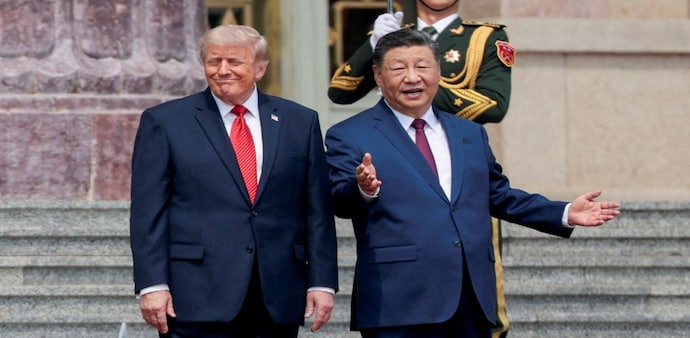
The latest U.S. military transit comes as Washington and Beijing seek to stabilise relations that have been strained by disagreements over Taiwan, trade and technology restrictions. Chinese President Xi Jinping is expected to visit the United States next month for talks with U.S. President Donald Trump, adding significance to the timing of the military operation.
While such U.S. transits have become a regular feature of Washington’s regional military presence, they remain politically sensitive because of the competing claims over the Taiwan Strait. The United States says its operations are conducted in accordance with international law, while Beijing continues to regard U.S. military activity around Taiwan as interference in its internal affairs.
The latest patrol therefore highlights the continuing security tensions around Taiwan even as the two major powers work to repair and stabilise their broader relationship.
ALSO READ: Iran vows devastating response as US warns Tehran's commercial allies: Who are its trading partners?
A U.S. Navy P-8A Poseidon maritime patrol and reconnaissance aircraft transited the Taiwan Strait in international airspace on Friday, in a move the U.S. 7th Fleet said underscored Washington’s commitment to maintaining a free and open Indo-Pacific, Reuters reported.
The U.S. 7th Fleet said the aircraft operated in accordance with international law and that the transit upheld the navigational rights and freedoms of all nations. “The aircraft's transit of the Taiwan Strait demonstrates the United States' commitment to a free and open Indo-Pacific,” the fleet said in a statement.
“The United States military flies, sails, and operates anywhere international law allows,” it added.
China’s military tracked and monitored the U.S. aircraft throughout its transit, the state-backed Global Times reported, citing a military source. The source said the situation remained under control.
U.S. military ships and aircraft regularly pass through or operate over the Taiwan Strait, which separates Taiwan from mainland China. Such missions are a recurring source of tension with Beijing, which objects to U.S. military activity in the area.
China claims sovereignty over Taiwan, a democratically governed island, and says it has jurisdiction over the Taiwan Strait. Taiwan and the United States, however, maintain that the strait is an international waterway and that navigation through it is protected under international law.
Beijing has repeatedly described the Taiwan issue as an internal Chinese matter and a core national interest. Chinese authorities have also called Taiwan a red line that must not be crossed or trampled on.
Taiwan rejects China’s sovereignty claims and maintains that the future of the island can be decided only by its people.
The latest U.S. military transit comes as Washington and Beijing seek to stabilise relations that have been strained by disagreements over Taiwan, trade and technology restrictions. Chinese President Xi Jinping is expected to visit the United States next month for talks with U.S. President Donald Trump, adding significance to the timing of the military operation.
While such U.S. transits have become a regular feature of Washington’s regional military presence, they remain politically sensitive because of the competing claims over the Taiwan Strait. The United States says its operations are conducted in accordance with international law, while Beijing continues to regard U.S. military activity around Taiwan as interference in its internal affairs.
The latest patrol therefore highlights the continuing security tensions around Taiwan even as the two major powers work to repair and stabilise their broader relationship.
ALSO READ: Iran vows devastating response as US warns Tehran's commercial allies: Who are its trading partners?