
What is Iran’s mosquito fleet? The swarm tactic behind Hormuz crisis and Trump’s ‘Shoot-to-Kill’ order
These vessels include fast attack craft, mine-laying boats, and drone-enabled platforms. The idea is not to win conventional naval battles, but to exploit speed, numbers, and surprise.
- Apr 23, 2026,
- Updated Apr 23, 2026 7:55 PM IST
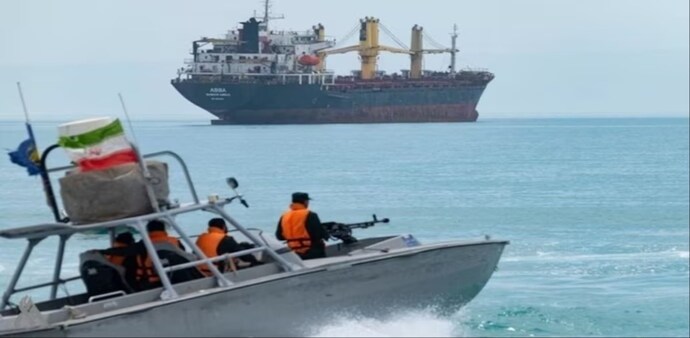
At the heart of the escalating tensions in the Strait of Hormuz is a deceptively simple but highly effective naval concept: Iran’s “mosquito fleet.” Instead of competing with large warships, Iran — primarily through its Islamic Revolutionary Guard Corps (IRGC) Navy — relies on swarms of small, fast, and heavily armed boats designed to overwhelm bigger adversaries.
It is a flotilla of small, fast, agile boats designed to harass shipping mimicking a swarm of mosquitos that harass a bigger animal and escapes major retaliations. It forms the heart of the naval forces deployed by the IRGC in the Strait of Hormuz.
These vessels include fast attack craft, mine-laying boats, and drone-enabled platforms. The idea is not to win conventional naval battles, but to exploit speed, numbers, and surprise.
Why Hormuz is the perfect battleground
The strategy is particularly potent in the Strait of Hormuz, one of the world’s most critical energy chokepoints. A large share of global oil flows through this narrow passage, where ships have limited room to manoeuvre.
In such conditions, even a small number of fast boats can:
- Close in on large vessels quickly
- Disrupt shipping lanes without direct confrontation
- Create panic that drives up global oil and insurance costs
The objective is simple: raise the risk of transit to a level where economic pressure does the rest.
Don't miss: Trump shares letter on birthright citizenship that calls India, China ‘hellhole’
“Hollywood-style” ship seizures
Recent developments show how this doctrine is playing out in real time. Iran has released dramatic footage of commandos boarding commercial vessels in the strait.
Key elements of these operations include:
- Small boats rapidly approaching and surrounding a target vessel
- Armed personnel boarding using ladders or fast-rope techniques
- Seizures justified on alleged navigation or regulatory violations
- Reports of gunfire and explosives during boarding
At least one of the ships targeted was reportedly bound for India, underlining the direct regional implications. These operations reflect a classic mosquito fleet tactic: isolate, swarm, and seize before external forces can intervene.
Trump’s “shoot and kill” warning
The growing threat has triggered a sharp response from the United States. Donald Trump has warned that US forces will “shoot and kill” any boat found laying mines in the strait.
This marks a significant escalation because:
- Mine-laying is a core mosquito fleet tactic
- Small boats can deploy mines quickly and discreetly
- Mines are cheap but can shut down major shipping routes
The warning signals a shift toward pre-emptive action, raising the risk of direct naval clashes in already tense waters.
How the strategy reshapes naval warfare
Iran’s approach is less about firepower and more about asymmetry. By leveraging small, agile platforms, it can challenge far more advanced navies.
Tactical advantages include:
- Swarming: Overwhelming targets with numbers
- Ambiguity: Difficulty distinguishing civilian from military craft
- Low cost: Inexpensive boats versus billion-dollar warships
- Disruption: The ability to halt shipping without full-scale conflict
Globally, even limited disruptions can ripple across markets. What makes the situation especially volatile is the combination of real-time seizures, aggressive military posturing, and the geography of a narrow chokepoint.
At the heart of the escalating tensions in the Strait of Hormuz is a deceptively simple but highly effective naval concept: Iran’s “mosquito fleet.” Instead of competing with large warships, Iran — primarily through its Islamic Revolutionary Guard Corps (IRGC) Navy — relies on swarms of small, fast, and heavily armed boats designed to overwhelm bigger adversaries.
It is a flotilla of small, fast, agile boats designed to harass shipping mimicking a swarm of mosquitos that harass a bigger animal and escapes major retaliations. It forms the heart of the naval forces deployed by the IRGC in the Strait of Hormuz.
These vessels include fast attack craft, mine-laying boats, and drone-enabled platforms. The idea is not to win conventional naval battles, but to exploit speed, numbers, and surprise.
Why Hormuz is the perfect battleground
The strategy is particularly potent in the Strait of Hormuz, one of the world’s most critical energy chokepoints. A large share of global oil flows through this narrow passage, where ships have limited room to manoeuvre.
In such conditions, even a small number of fast boats can:
- Close in on large vessels quickly
- Disrupt shipping lanes without direct confrontation
- Create panic that drives up global oil and insurance costs
The objective is simple: raise the risk of transit to a level where economic pressure does the rest.
Don't miss: Trump shares letter on birthright citizenship that calls India, China ‘hellhole’
“Hollywood-style” ship seizures
Recent developments show how this doctrine is playing out in real time. Iran has released dramatic footage of commandos boarding commercial vessels in the strait.
Key elements of these operations include:
- Small boats rapidly approaching and surrounding a target vessel
- Armed personnel boarding using ladders or fast-rope techniques
- Seizures justified on alleged navigation or regulatory violations
- Reports of gunfire and explosives during boarding
At least one of the ships targeted was reportedly bound for India, underlining the direct regional implications. These operations reflect a classic mosquito fleet tactic: isolate, swarm, and seize before external forces can intervene.
Trump’s “shoot and kill” warning
The growing threat has triggered a sharp response from the United States. Donald Trump has warned that US forces will “shoot and kill” any boat found laying mines in the strait.
This marks a significant escalation because:
- Mine-laying is a core mosquito fleet tactic
- Small boats can deploy mines quickly and discreetly
- Mines are cheap but can shut down major shipping routes
The warning signals a shift toward pre-emptive action, raising the risk of direct naval clashes in already tense waters.
How the strategy reshapes naval warfare
Iran’s approach is less about firepower and more about asymmetry. By leveraging small, agile platforms, it can challenge far more advanced navies.
Tactical advantages include:
- Swarming: Overwhelming targets with numbers
- Ambiguity: Difficulty distinguishing civilian from military craft
- Low cost: Inexpensive boats versus billion-dollar warships
- Disruption: The ability to halt shipping without full-scale conflict
Globally, even limited disruptions can ripple across markets. What makes the situation especially volatile is the combination of real-time seizures, aggressive military posturing, and the geography of a narrow chokepoint.