
‘Won’t even be a fleeting gain…’: Economist Kaushik Basu on US’ threats to block Hormuz
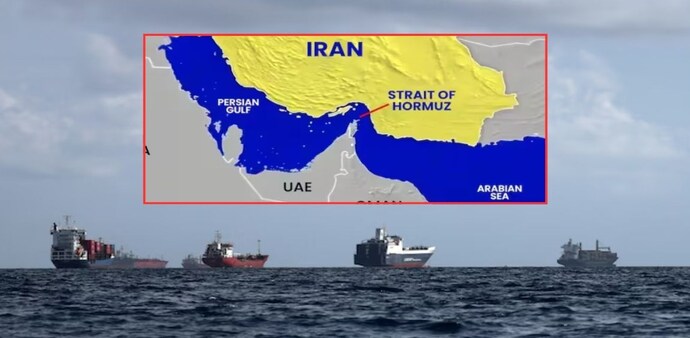
Trump declared that the United States would take action starting Monday to enforce a blockade on all maritime traffic entering and exiting Iranian ports, effective from 10 am ET.
- Apr 13, 2026,
- Updated Apr 13, 2026 11:25 AM IST
West Asia war: The blockade of Hormuz won’t yield even a fleeting gain, said Kaushik Basu, Professor of Economics, Cornell University, and former Chief Economist of the World Bank and Chief Economic Adviser to the Indian government.
His remarks come after Trump said on Sunday that the US Navy would start blockading the Strait of Hormuz after the peace talks, held in Islamabad over the weekend, failed to reach a deal.
“There won’t be even a fleeting gain. If the US blocks Hormuz, China & India will turn to other markets for oil. This will trigger oil price rise worldwide & fuel US inflation. Historically, the US was good at working out these economic fallouts & avoided such mistakes. Let’s see,” he said.
Basu had shared Fareed Zakaria’s video, analysing the Hormuz obstruction, and saying, “For most of America's history, freedom of navigation has been treated not as a privilege to be sold, but as a right to be defended. To abandon that now in the Strait of Hormuz, as President Trump has suggested, is to trade a durable advantage for a fleeting gain.”
DON'T MISS | $115 oil in sight: Markets rattle as US-Iran tensions spike over Strait of Hormuz
Zakaria said in his video that in Trump’s view, the Strait of Hormuz is not a global artery but an asset, something to be monetised. “Why provide security as a public good, when it can be turned into a business venture? Why underwrite a system when you can charge admission?” he asked, adding that Trump sees international relations less as the management of shared order and values and more as a series of transactions. “In that world, every commitment is negotiable, every alliance conditional, every public good a potential profit centre,” he said.
Trump declared that the United States would take action starting Monday to enforce a blockade on all maritime traffic entering and exiting Iranian ports, effective from 10 am ET (7:30 pm IST). The blockade would apply impartially to vessels of all nations accessing Iranian ports on the Arabian Gulf and Gulf of Oman.
The US Central Command (CENTCOM) clarified that freedom of navigation would not be impeded for vessels transiting the Strait of Hormuz to and from non-Iranian ports. Additional information for commercial mariners would be issued through a formal notice before the blockade begins.
Iran's Revolutionary Guards responded by warning that any military vessels approaching the Strait would be considered a breach of the ceasefire and dealt with firmly. This indicates a risk of escalation in the region.
Mohammad Baqer Qalibaf, Iran's Parliamentary Speaker, who led the country's delegation in recent talks, said Trump's threats would not affect Iran. He stated that Iran would respond with force if attacked, but would also engage with logic if approached reasonably.
West Asia war: The blockade of Hormuz won’t yield even a fleeting gain, said Kaushik Basu, Professor of Economics, Cornell University, and former Chief Economist of the World Bank and Chief Economic Adviser to the Indian government.
His remarks come after Trump said on Sunday that the US Navy would start blockading the Strait of Hormuz after the peace talks, held in Islamabad over the weekend, failed to reach a deal.
“There won’t be even a fleeting gain. If the US blocks Hormuz, China & India will turn to other markets for oil. This will trigger oil price rise worldwide & fuel US inflation. Historically, the US was good at working out these economic fallouts & avoided such mistakes. Let’s see,” he said.
Basu had shared Fareed Zakaria’s video, analysing the Hormuz obstruction, and saying, “For most of America's history, freedom of navigation has been treated not as a privilege to be sold, but as a right to be defended. To abandon that now in the Strait of Hormuz, as President Trump has suggested, is to trade a durable advantage for a fleeting gain.”
DON'T MISS | $115 oil in sight: Markets rattle as US-Iran tensions spike over Strait of Hormuz
Zakaria said in his video that in Trump’s view, the Strait of Hormuz is not a global artery but an asset, something to be monetised. “Why provide security as a public good, when it can be turned into a business venture? Why underwrite a system when you can charge admission?” he asked, adding that Trump sees international relations less as the management of shared order and values and more as a series of transactions. “In that world, every commitment is negotiable, every alliance conditional, every public good a potential profit centre,” he said.
Trump declared that the United States would take action starting Monday to enforce a blockade on all maritime traffic entering and exiting Iranian ports, effective from 10 am ET (7:30 pm IST). The blockade would apply impartially to vessels of all nations accessing Iranian ports on the Arabian Gulf and Gulf of Oman.
The US Central Command (CENTCOM) clarified that freedom of navigation would not be impeded for vessels transiting the Strait of Hormuz to and from non-Iranian ports. Additional information for commercial mariners would be issued through a formal notice before the blockade begins.
Iran's Revolutionary Guards responded by warning that any military vessels approaching the Strait would be considered a breach of the ceasefire and dealt with firmly. This indicates a risk of escalation in the region.
Mohammad Baqer Qalibaf, Iran's Parliamentary Speaker, who led the country's delegation in recent talks, said Trump's threats would not affect Iran. He stated that Iran would respond with force if attacked, but would also engage with logic if approached reasonably.