
Referendum on Trump? US votes for midterm elections to decide whether the Republicans retain control
US midterms: Trump acknowledged the historical tendency for the president’s party to lose ground in midterms.
- Nov 3, 2026,
- Updated Nov 3, 2026 8:48 AM IST
US President Donald Trump’s Republican Party is facing the prospect of losing control of Congress in Tuesday’s midterm elections, with opinion polls and nonpartisan analysts favouring Democrats to win the House of Representatives, while the Senate remains a more competitive battleground.
The elections, widely seen as a referendum on Trump’s presidency, will decide all 435 House seats and 37 of the 100 Senate seats. A Democratic victory in either chamber would constrain Trump’s ability to push his agenda during the final two years of his second term and could open the door to investigations of his administration.
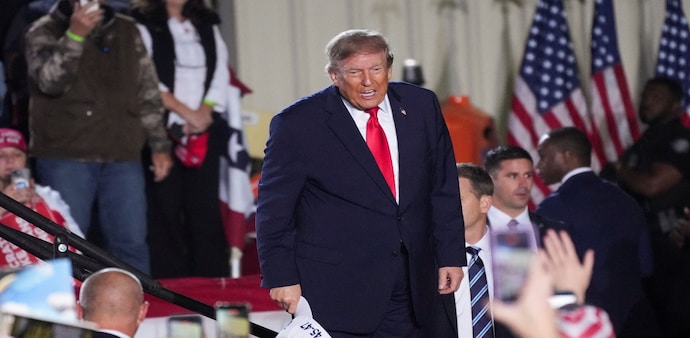
Trump acknowledged the challenge, pointing to the historical tendency for the president’s party to lose ground in midterms. “For some reason, the sitting president doesn’t win the midterms,” he said during his final major campaign speech on Monday. “But we gave this a very strong shot.”
MUST READ | US Midterm Elections 2026: Why November 3 vote could reshape Trump's presidency
The president’s approval rating stands at 32%, near a career low, according to a Reuters/Ipsos poll. Voters have identified the cost of living as their main concern, with energy prices rising sharply since the US-Israeli war with Iran began.
Yet Trump’s final speech focused largely on renovations to the Lincoln Memorial Reflecting Pool and other Washington projects, rather than economic concerns. The 54-minute address included remarks on the pool’s pipes, paint, algae and new features, as well as plans for a triumphal arch and a golf course overhaul.
Republican strategists had privately wanted Trump to focus on issues affecting household budgets. The president, however, has made a nationwide campaign push, addressing rallies across 19 states since October 1.
Democrats are seeking to flip seven Senate seats – in Michigan, Maine, Ohio, Kansas, Texas, Iowa and Alaska – to gain a majority. Losing control of the Senate could also allow Democrats to block Trump’s nominees to federal courts, including the Supreme Court.
Former president Barack Obama has campaigned for Democrats in Ohio, Michigan and Georgia, calling the election “our last, best chance” to rein in the administration.
Trump has indicated he would not allow a Democratic Congress to halt his agenda, telling the New York Post’s Pod Force One podcast that he could become “Mr Veto” if Republicans lose both chambers.
More than 57 million ballots had been cast in 47 states and Washington DC by Monday, compared with fewer than 44.5 million in 49 states and DC in 2022.