
Trump plans $12 billion ‘Project Vault’ to secure America’s critical minerals supply: Report
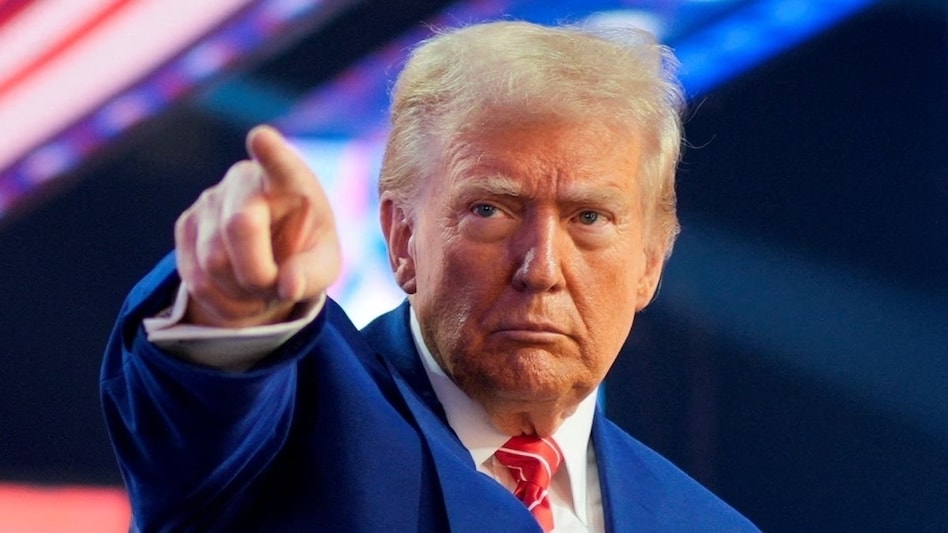
Under President Donald Trump, the administration has taken the rare step of investing directly in domestic mining and processing companies to boost US-based production of rare earths and other critical minerals.
- Feb 2, 2026,
- Updated Feb 2, 2026 7:11 PM IST
The United States is preparing to launch a first-of-its-kind strategic stockpile of critical minerals aimed at protecting civilian industries from supply shocks and geopolitical pressure, according to a Bloomberg report.
The initiative, internally dubbed Project Vault, would deploy $12 billion in seed funding to procure and store minerals essential to modern manufacturing — from smartphones and electric vehicles to jet engines and advanced defence systems, the report added. The proposal combines $1.67 billion in private capital with a $10 billion loan from the US Export-Import Bank, marking an unusually direct federal role in stabilising supply chains for the private sector.
Senior administration officials said the stockpile is designed to function much like the US Strategic Petroleum Reserve, but with a focus on minerals such as gallium, cobalt and rare earth elements, materials whose prices are volatile and whose supply chains are heavily concentrated outside the United States, the report added.
While the US already maintains a national mineral stockpile to support its defence-industrial base, Project Vault would represent the first strategic reserve tailored specifically for civilian manufacturers, including automakers, technology firms and energy companies.
The move reflects growing concern in Washington over America’s dependence on foreign suppliers — particularly China — for materials that underpin both economic competitiveness and national security. According to government data, the US imported 80% of the rare earth elements it consumed in 2024, leaving key industries exposed to export controls and geopolitical retaliation.
Under President Donald Trump, the administration has taken the rare step of investing directly in domestic mining and processing companies to boost US-based production of rare earths and other critical minerals. Project Vault would extend that strategy by acting as a buffer against supply disruptions and price spikes.
The announcement comes ahead of a high-level summit in Washington this week, where ministers from the US, EU, UK, Japan, Australia and New Zealand will discuss forming a strategic alliance on critical minerals. Officials see the talks as an attempt to strengthen transatlantic cooperation and coordinate efforts to “de-risk” supply chains away from China. Parallel discussions are also expected on steel and other strategic commodities.
Australia has already moved in this direction. Last week, Canberra announced plans to establish a A$1.2 billion strategic mineral reserve, citing concerns over potential supply disruptions from China. The decision follows Beijing’s restrictions on rare earth exports last April, imposed in response to Trump’s so-called “liberation day” tariffs.
The Washington summit — the second on critical minerals in less than a month — is expected to include around 20 countries, among them all G7 members as well as India, South Korea, Mexico, Australia, New Zealand and possibly Argentina.
The urgency behind these initiatives is underscored by new findings from the US Geological Survey, which recently released a draft 2025 Critical Minerals List. The updated list adds 10 new materials, including copper, uranium, silicon, silver and metallurgical coal, reflecting revised methods, interagency input and public feedback.
The United States is preparing to launch a first-of-its-kind strategic stockpile of critical minerals aimed at protecting civilian industries from supply shocks and geopolitical pressure, according to a Bloomberg report.
The initiative, internally dubbed Project Vault, would deploy $12 billion in seed funding to procure and store minerals essential to modern manufacturing — from smartphones and electric vehicles to jet engines and advanced defence systems, the report added. The proposal combines $1.67 billion in private capital with a $10 billion loan from the US Export-Import Bank, marking an unusually direct federal role in stabilising supply chains for the private sector.
Senior administration officials said the stockpile is designed to function much like the US Strategic Petroleum Reserve, but with a focus on minerals such as gallium, cobalt and rare earth elements, materials whose prices are volatile and whose supply chains are heavily concentrated outside the United States, the report added.
While the US already maintains a national mineral stockpile to support its defence-industrial base, Project Vault would represent the first strategic reserve tailored specifically for civilian manufacturers, including automakers, technology firms and energy companies.
The move reflects growing concern in Washington over America’s dependence on foreign suppliers — particularly China — for materials that underpin both economic competitiveness and national security. According to government data, the US imported 80% of the rare earth elements it consumed in 2024, leaving key industries exposed to export controls and geopolitical retaliation.
Under President Donald Trump, the administration has taken the rare step of investing directly in domestic mining and processing companies to boost US-based production of rare earths and other critical minerals. Project Vault would extend that strategy by acting as a buffer against supply disruptions and price spikes.
The announcement comes ahead of a high-level summit in Washington this week, where ministers from the US, EU, UK, Japan, Australia and New Zealand will discuss forming a strategic alliance on critical minerals. Officials see the talks as an attempt to strengthen transatlantic cooperation and coordinate efforts to “de-risk” supply chains away from China. Parallel discussions are also expected on steel and other strategic commodities.
Australia has already moved in this direction. Last week, Canberra announced plans to establish a A$1.2 billion strategic mineral reserve, citing concerns over potential supply disruptions from China. The decision follows Beijing’s restrictions on rare earth exports last April, imposed in response to Trump’s so-called “liberation day” tariffs.
The Washington summit — the second on critical minerals in less than a month — is expected to include around 20 countries, among them all G7 members as well as India, South Korea, Mexico, Australia, New Zealand and possibly Argentina.
The urgency behind these initiatives is underscored by new findings from the US Geological Survey, which recently released a draft 2025 Critical Minerals List. The updated list adds 10 new materials, including copper, uranium, silicon, silver and metallurgical coal, reflecting revised methods, interagency input and public feedback.