
What did Trump agree on Greenland after dropping tariff threat on Europe? Inside US-NATO agreement
The arrangement is designed to formalise Washington’s military presence while stopping short of outright annexation of the semi-autonomous Danish territory
- Jan 22, 2026,
- Updated Jan 22, 2026 8:03 AM IST
US President Donald Trump dropped his threat to impose tariffs on European allies, but the decision has raised a sharper question: What exactly did Washington agree to in return for Greenland?
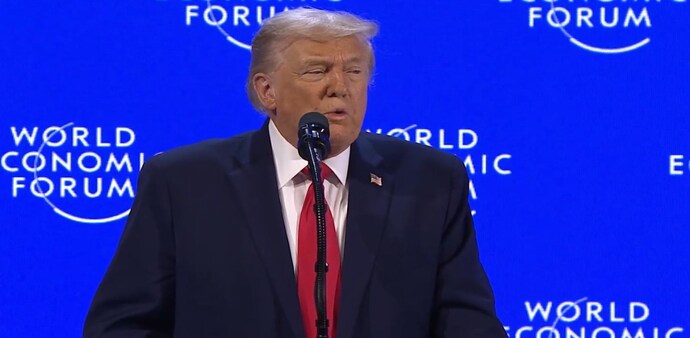
Speaking after a bilateral meeting with NATO Secretary General Mark Rutte on the sidelines of the World Economic Forum in Davos, Trump said tariffs scheduled for February 1 would no longer go ahead, citing a new “framework” deal covering Greenland and Arctic security. While the move eased immediate trade tensions, details of the arrangement and the extent of US concessions or gains remain opaque.
What exactly that framework entails is now becoming clearer.
A deal takes shape after Davos talks
According to a report by The Telegraph, the proposed agreement would allow the United States to take control of parts of Greenland by designating them as sovereign base areas, effectively treating American military installations there as US territory.
The arrangement, the report said, is designed to formalise Washington’s military presence while stopping short of outright annexation of the semi-autonomous Danish territory.
“The idea was to give Trump a deal,” a diplomatic source told The Telegraph.
Borrowing from Britain’s Cyprus playbook
The framework reportedly mirrors Britain’s long-standing agreement with Cyprus, under which the UK retains sovereign control over military bases on the island while Cyprus remains an independent state.
Under the Greenland proposal, the United States would be able to carry out military operations, intelligence gathering and training without seeking permission from Denmark. The framework would also allow limited local development, including potential mining of rare earth minerals.
American bases would be recognised as US territory in the Arctic, a move aimed at easing Danish fears that Washington was preparing to formally acquire Greenland, the report said.
Trump links framework to tariff rollback
Trump publicly tied the proposed arrangement to his decision to abandon tariff threats against European allies, arguing that economic pressure was no longer necessary.
“Based upon this understanding, I will not be imposing the tariffs that were scheduled to go into effect,” Trump wrote on Truth Social, after earlier insisting that the United States sought “right, title and ownership” of Greenland and warning NATO allies not to stand in the way.
When pressed later for details, Trump declined to outline the precise terms of the agreement, describing the ownership issue as “a little complex.”
Strategic access and Arctic resources in focus
The Telegraph reported that the framework closely follows the UK’s sovereign base model in Cyprus, which grants Britain full sovereignty over two strategic military zones while allowing local residents rights similar to those elsewhere in the country.
At present, the United States already operates military facilities in Greenland and enjoys broad freedom of movement across designated defence zones by air, land and sea. The proposed framework would go further by formalising sovereignty over specific areas and potentially expanding access to mineral-rich regions, an issue Trump has repeatedly framed as strategically critical.
US President Donald Trump dropped his threat to impose tariffs on European allies, but the decision has raised a sharper question: What exactly did Washington agree to in return for Greenland?
Speaking after a bilateral meeting with NATO Secretary General Mark Rutte on the sidelines of the World Economic Forum in Davos, Trump said tariffs scheduled for February 1 would no longer go ahead, citing a new “framework” deal covering Greenland and Arctic security. While the move eased immediate trade tensions, details of the arrangement and the extent of US concessions or gains remain opaque.
What exactly that framework entails is now becoming clearer.
A deal takes shape after Davos talks
According to a report by The Telegraph, the proposed agreement would allow the United States to take control of parts of Greenland by designating them as sovereign base areas, effectively treating American military installations there as US territory.
The arrangement, the report said, is designed to formalise Washington’s military presence while stopping short of outright annexation of the semi-autonomous Danish territory.
“The idea was to give Trump a deal,” a diplomatic source told The Telegraph.
Borrowing from Britain’s Cyprus playbook
The framework reportedly mirrors Britain’s long-standing agreement with Cyprus, under which the UK retains sovereign control over military bases on the island while Cyprus remains an independent state.
Under the Greenland proposal, the United States would be able to carry out military operations, intelligence gathering and training without seeking permission from Denmark. The framework would also allow limited local development, including potential mining of rare earth minerals.
American bases would be recognised as US territory in the Arctic, a move aimed at easing Danish fears that Washington was preparing to formally acquire Greenland, the report said.
Trump links framework to tariff rollback
Trump publicly tied the proposed arrangement to his decision to abandon tariff threats against European allies, arguing that economic pressure was no longer necessary.
“Based upon this understanding, I will not be imposing the tariffs that were scheduled to go into effect,” Trump wrote on Truth Social, after earlier insisting that the United States sought “right, title and ownership” of Greenland and warning NATO allies not to stand in the way.
When pressed later for details, Trump declined to outline the precise terms of the agreement, describing the ownership issue as “a little complex.”
Strategic access and Arctic resources in focus
The Telegraph reported that the framework closely follows the UK’s sovereign base model in Cyprus, which grants Britain full sovereignty over two strategic military zones while allowing local residents rights similar to those elsewhere in the country.
At present, the United States already operates military facilities in Greenland and enjoys broad freedom of movement across designated defence zones by air, land and sea. The proposed framework would go further by formalising sovereignty over specific areas and potentially expanding access to mineral-rich regions, an issue Trump has repeatedly framed as strategically critical.