
Delhi's auto-rickshaws are going electric: What it means for your daily commute
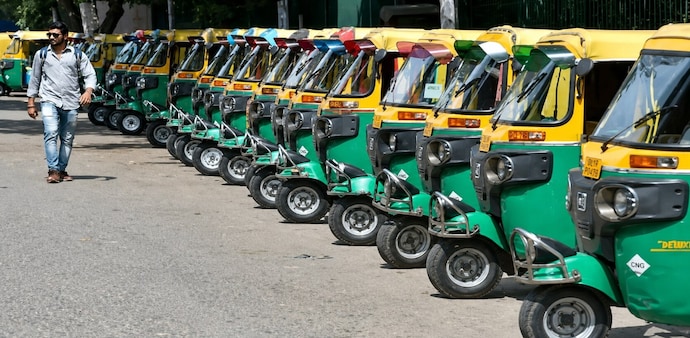
Under Delhi's new EV Policy, only electric auto-rickshaws will be eligible for new registrations from January 1, 2027.
- Jul 2, 2026,
- Updated Jul 2, 2026 5:54 PM IST
Delhi is preparing for its biggest public transport transition in more than two decades as the government moves to replace ageing CNG auto-rickshaws with electric vehicles (EVs). While many drivers agree that the shift is necessary, they say its success will depend on whether charging infrastructure is ready before the rollout.
For 58-year-old auto driver Rama Shankar Shukla, the move brings back memories of Delhi's difficult switch from petrol and diesel to compressed natural gas (CNG) in the early 2000s.
"I've been driving an auto in Delhi for nearly 30 years. In all that time, the biggest change I saw was the shift from petrol and diesel autos to CNG in the early 2000s. Now, the move to electric vehicles feels like another such turning point," Shukla told NDTV.
Don't Miss: Bought these stocks? Here's how a ₹144 crore pump-and-dump scam fooled retail investors
For thousands of auto drivers, the debate over electric mobility is not just about reducing pollution. It is also about affordability, charging facilities, repairs and whether Delhi has learnt from its past mistakes.
Drivers remember the CNG struggle
Shukla recalls the CNG transition as one of the toughest phases for drivers.
"When the CNG transition began, there was a lot of uncertainty. CNG would arrive in tankers, and drivers would rush to fill their tanks because nobody knew if fuel would be available the next day. Long queues at filling stations became normal."
"It took years for things to settle. More CNG stations came up, the supply improved, and by around 2005-06, people had accepted the new system."
Delhi's move to CNG followed a landmark Supreme Court order in the MC Mehta case to tackle the city's worsening air pollution. But the supporting infrastructure was not ready. Drivers often spent eight to ten hours waiting to refuel as there were too few CNG stations and fuel supplies remained erratic. Public transport was disrupted before the network gradually expanded.
The Same uncertainty is back
Nearly 25 years later, Shukla says drivers are facing a different challenge, but with similar concerns.
"Today, the same uncertainty is back. Only now, instead of worrying about CNG, drivers are worried about charging stations, battery life, charging time and where they'll get repairs done."
He also says running a CNG auto has become more expensive.
"CNG is no longer as economical as it used to be. Prices have gone up significantly, but passengers aren't paying higher fares. Our earnings are getting squeezed."
According to him, growing competition from app-based cabs and bike taxis has further affected drivers' earnings.
"App-based cabs and bike taxis have reduced our business, while the number of auto permits has remained the same."
Despite these concerns, Shukla believes electric vehicles are the future.
"Every major transport transition takes time. Just like CNG eventually became normal, electric vehicles will also need proper infrastructure before drivers can fully accept the change."
What Delhi's new EV Policy says
Under Delhi's new EV Policy, only electric auto-rickshaws will be eligible for new registrations from January 1, 2027.
Existing CNG autos can continue operating until the end of their permitted lifespan, but any replacement vehicle must be electric.
To encourage the transition, the government is offering purchase incentives of up to ₹50,000 for electric three-wheelers. EVs will also continue to enjoy exemptions from road tax and registration charges. The policy also proposes installing 30,000 public charging points across the city.
The government expects around 40,000 to 50,000 ageing auto-rickshaws to be replaced over the coming years.
Permit cap remains a major challenge
Even though Delhi is one of India's leading EV markets, almost no new passenger electric auto-rickshaws have been registered in the city for more than a year.
Senior Transport Department officials say fresh registrations have remained frozen because Delhi has already reached its permit limit of around one lakh passenger auto-rickshaws.
Officials say the situation should improve as older CNG autos are gradually replaced by electric vehicles. The government is also exploring legal options to raise the permit ceiling.
However, auto unions believe the permit cap is slowing down the transition.
Rajendra Soni, General Secretary of the Delhi Auto Rickshaw Sangh, said:
"Delhi's population has increased significantly, but the permit ceiling remains the same. Because of that, new electric auto registrations have not been happening for more than a year."
Transport Department data shows that 1,426 passenger electric auto-rickshaws were registered in 2024. Registrations have effectively stopped since the permit limit was reached.
Experts say Delhi is better prepared this time
Industry experts believe the comparison with the CNG transition is natural, but say Delhi is in a much stronger position today.
Vinkesh Gulati, Chairperson of the Automotive Skill Development Council (ASDC), said:
"I would say Delhi has crossed the experimentation stage and is entering the acceleration phase, but we are not yet at full-scale adoption."
According to him, electric two-wheelers, three-wheelers and buses have already gained momentum in the capital. The next stage will depend on charging infrastructure, stable government policies and making EVs more affordable.
"We are approaching a tipping point, but reaching mass adoption will depend on three things: reliable charging infrastructure, stable policy, and continued technological improvements that make EVs more affordable and practical. I feel the new policy takes care of all these points."
He said the biggest difference from the CNG era is that charging is no longer limited to dedicated fuel stations.
"During the CNG transition, infrastructure lagged far behind demand. Vehicles were available before fuelling stations were ready, which led to long queues and inconvenience. With EVs, charging can happen at homes, offices, workplaces and public stations, making the ecosystem inherently more distributed."
"The good news is that we already know what went wrong during the CNG era. The CNG transition taught us that infrastructure should lead demand, not chase it."
He added that public confidence would be equally important.
"Customers don't buy technology, they buy confidence and convenience."
At the same time, Gulati said charging stations alone will not ensure a smooth transition.
"Successful transitions are ecosystem-led, not regulation-led."
He said financing, trained EV technicians, spare parts, battery recycling, dealership readiness and consumer awareness must all develop together.
A familiar transition, new challenges
Electric auto-rickshaws promise lower running costs, but many drivers remain concerned about charging availability, battery replacement costs, repair facilities and resale value.
For drivers like Rama Shankar Shukla, the shift to EVs feels similar to Delhi's move to CNG two decades ago. The technology may have changed, but the biggest question remains the same — whether the supporting infrastructure will be ready before drivers are asked to make the switch.
Delhi is preparing for its biggest public transport transition in more than two decades as the government moves to replace ageing CNG auto-rickshaws with electric vehicles (EVs). While many drivers agree that the shift is necessary, they say its success will depend on whether charging infrastructure is ready before the rollout.
For 58-year-old auto driver Rama Shankar Shukla, the move brings back memories of Delhi's difficult switch from petrol and diesel to compressed natural gas (CNG) in the early 2000s.
"I've been driving an auto in Delhi for nearly 30 years. In all that time, the biggest change I saw was the shift from petrol and diesel autos to CNG in the early 2000s. Now, the move to electric vehicles feels like another such turning point," Shukla told NDTV.
Don't Miss: Bought these stocks? Here's how a ₹144 crore pump-and-dump scam fooled retail investors
For thousands of auto drivers, the debate over electric mobility is not just about reducing pollution. It is also about affordability, charging facilities, repairs and whether Delhi has learnt from its past mistakes.
Drivers remember the CNG struggle
Shukla recalls the CNG transition as one of the toughest phases for drivers.
"When the CNG transition began, there was a lot of uncertainty. CNG would arrive in tankers, and drivers would rush to fill their tanks because nobody knew if fuel would be available the next day. Long queues at filling stations became normal."
"It took years for things to settle. More CNG stations came up, the supply improved, and by around 2005-06, people had accepted the new system."
Delhi's move to CNG followed a landmark Supreme Court order in the MC Mehta case to tackle the city's worsening air pollution. But the supporting infrastructure was not ready. Drivers often spent eight to ten hours waiting to refuel as there were too few CNG stations and fuel supplies remained erratic. Public transport was disrupted before the network gradually expanded.
The Same uncertainty is back
Nearly 25 years later, Shukla says drivers are facing a different challenge, but with similar concerns.
"Today, the same uncertainty is back. Only now, instead of worrying about CNG, drivers are worried about charging stations, battery life, charging time and where they'll get repairs done."
He also says running a CNG auto has become more expensive.
"CNG is no longer as economical as it used to be. Prices have gone up significantly, but passengers aren't paying higher fares. Our earnings are getting squeezed."
According to him, growing competition from app-based cabs and bike taxis has further affected drivers' earnings.
"App-based cabs and bike taxis have reduced our business, while the number of auto permits has remained the same."
Despite these concerns, Shukla believes electric vehicles are the future.
"Every major transport transition takes time. Just like CNG eventually became normal, electric vehicles will also need proper infrastructure before drivers can fully accept the change."
What Delhi's new EV Policy says
Under Delhi's new EV Policy, only electric auto-rickshaws will be eligible for new registrations from January 1, 2027.
Existing CNG autos can continue operating until the end of their permitted lifespan, but any replacement vehicle must be electric.
To encourage the transition, the government is offering purchase incentives of up to ₹50,000 for electric three-wheelers. EVs will also continue to enjoy exemptions from road tax and registration charges. The policy also proposes installing 30,000 public charging points across the city.
The government expects around 40,000 to 50,000 ageing auto-rickshaws to be replaced over the coming years.
Permit cap remains a major challenge
Even though Delhi is one of India's leading EV markets, almost no new passenger electric auto-rickshaws have been registered in the city for more than a year.
Senior Transport Department officials say fresh registrations have remained frozen because Delhi has already reached its permit limit of around one lakh passenger auto-rickshaws.
Officials say the situation should improve as older CNG autos are gradually replaced by electric vehicles. The government is also exploring legal options to raise the permit ceiling.
However, auto unions believe the permit cap is slowing down the transition.
Rajendra Soni, General Secretary of the Delhi Auto Rickshaw Sangh, said:
"Delhi's population has increased significantly, but the permit ceiling remains the same. Because of that, new electric auto registrations have not been happening for more than a year."
Transport Department data shows that 1,426 passenger electric auto-rickshaws were registered in 2024. Registrations have effectively stopped since the permit limit was reached.
Experts say Delhi is better prepared this time
Industry experts believe the comparison with the CNG transition is natural, but say Delhi is in a much stronger position today.
Vinkesh Gulati, Chairperson of the Automotive Skill Development Council (ASDC), said:
"I would say Delhi has crossed the experimentation stage and is entering the acceleration phase, but we are not yet at full-scale adoption."
According to him, electric two-wheelers, three-wheelers and buses have already gained momentum in the capital. The next stage will depend on charging infrastructure, stable government policies and making EVs more affordable.
"We are approaching a tipping point, but reaching mass adoption will depend on three things: reliable charging infrastructure, stable policy, and continued technological improvements that make EVs more affordable and practical. I feel the new policy takes care of all these points."
He said the biggest difference from the CNG era is that charging is no longer limited to dedicated fuel stations.
"During the CNG transition, infrastructure lagged far behind demand. Vehicles were available before fuelling stations were ready, which led to long queues and inconvenience. With EVs, charging can happen at homes, offices, workplaces and public stations, making the ecosystem inherently more distributed."
"The good news is that we already know what went wrong during the CNG era. The CNG transition taught us that infrastructure should lead demand, not chase it."
He added that public confidence would be equally important.
"Customers don't buy technology, they buy confidence and convenience."
At the same time, Gulati said charging stations alone will not ensure a smooth transition.
"Successful transitions are ecosystem-led, not regulation-led."
He said financing, trained EV technicians, spare parts, battery recycling, dealership readiness and consumer awareness must all develop together.
A familiar transition, new challenges
Electric auto-rickshaws promise lower running costs, but many drivers remain concerned about charging availability, battery replacement costs, repair facilities and resale value.
For drivers like Rama Shankar Shukla, the shift to EVs feels similar to Delhi's move to CNG two decades ago. The technology may have changed, but the biggest question remains the same — whether the supporting infrastructure will be ready before drivers are asked to make the switch.