
From mass hero to political Thalapathy: How Vijay broke Tamil Nadu’s old order
Vijay’s TVK has emerged as the biggest disruptor in Tamil Nadu, leading the 2026 Assembly trends and reshaping the state’s political order. The actor-turned-politician’s debut has translated mass appeal into a decisive electoral breakthrough.
- May 4, 2026,
- Updated May 4, 2026 2:09 PM IST
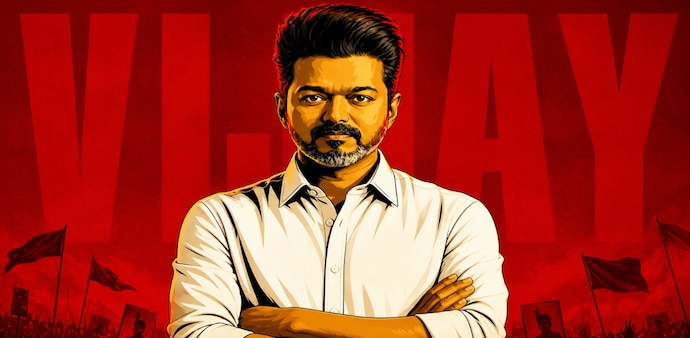
Actor-turned-politician Vijay has delivered one of the most consequential upsets in Tamil Nadu’s electoral history, with his Tamilaga Vettri Kazhagam (TVK) emerging as the single-largest party in early trends of the 2026 Assembly elections. In a state long dominated by the DMK and AIADMK, Vijay’s breakthrough marks not just a victory, but a structural reset of Dravidian-era politics.
According to early Election Commission trends, TVK is leading with close to 100 seats, decisively ahead of the AIADMK and pushing the ruling DMK into a distant third position. The scale and speed of this rise have stunned political observers, especially given that this is Vijay’s first full-fledged electoral outing.
What makes this outcome remarkable is not just the numbers, but the context. Tamil Nadu has historically been resistant to overnight political ascents, even for film superstars. M.G. Ramachandran (MGR), often cited as the gold standard of cinema-to-politics success, took decades to convert popularity into power. Vijay, by contrast, appears to have compressed that trajectory dramatically.
DO READ | Tamil Nadu Election Results 2026: How top 10 richest candidates are faring
The Making of ‘Thalapathy’
Born Joseph Vijay Chandrasekhar in Chennai in 1974, Vijay’s journey began far from the political spotlight. The son of filmmaker S.A. Chandrasekhar, he entered cinema as a child artist before transitioning into lead roles in the early 1990s. His initial years were marked by modest success and industry skepticism, but persistence and careful role selection gradually built his credibility.
His breakthrough came with Ghilli, a film that transformed him from a familiar face into a mass phenomenon. What followed was a meticulously calibrated career, balancing action, emotion, and social messaging, that turned Vijay into one of Tamil cinema’s most bankable stars.
Don't Miss | ELECTIONS 2026 | WEST BENGAL RESULTS | TAMIL NADU RESULTS | KERALA RESULTS | ASSAM RESULTS | PUDUCHERRY RESULTS
Unlike some contemporaries, Vijay’s appeal was rooted in relatability. He was not an untouchable superstar from the outset but someone audiences grew with. Over time, his screen persona evolved from a romantic lead to a “mass hero” who took on systemic injustices—corruption, corporate exploitation, governance failures—often mirroring real-world grievances.
This transition proved crucial. Long before his political debut, Vijay’s films had begun functioning as vehicles of soft political messaging, embedding themes of social justice, accountability, and public welfare into mainstream entertainment.
DO CHECKOUT | What is Polymarket, and why is it trending more than Phalodi Satta Bazaar ahead of Assembly election results?
From fans to politics
Vijay’s political rise was not an impulsive pivot but the culmination of years of groundwork. His fan network, institutionalised through Vijay Makkal Iyakkam, evolved into a grassroots structure capable of mobilising voters, managing campaigns, and sustaining local engagement.
When he formally launched TVK in 2024 and announced his exit from cinema to focus on politics, it signalled intent rather than experimentation. His messaging—centred on governance, anti-corruption, and people-centric development—aligned closely with the narratives he had cultivated on screen.
Crucially, he entered politics with what can be described as a substantial “emotional capital reserve”—a three-decade relationship with audiences that translated into trust, recall, and voter resonance.
DO CHECKOUT | Kerala Election Results 2026: Dharmadam, Nemom, Palakkad - key battlegrounds this election
The 2026 elections
The current election trends suggest that this emotional capital has now converted into electoral currency. TVK’s surge has not only disrupted the DMK’s incumbency but also fractured the traditional bipolar contest with the AIADMK.
Reports indicate that Vijay’s party has breached key strongholds of both major Dravidian parties, signalling cross-sectional appeal across urban and rural constituencies. This is particularly significant in a state where political loyalties have historically been deeply entrenched.
The victory also reflects a broader anti-incumbency wave against the DMK, driven by governance concerns, corruption allegations, and voter fatigue. However, reducing TVK’s performance solely to anti-incumbency would be analytically incomplete. What Vijay has achieved is not just the consolidation of protest votes, but the creation of a viable third force that has quickly become the primary pole.
DON'T MISS | West Bengal assembly election 2026: Mamata Banerjee, Suvendu Adhikari, other key candidates to watch
A new chapter in Tamil Nadu
Vijay’s ascent raises larger questions about the evolving nature of political mobilisation in India. His campaign leveraged not just traditional outreach but also narrative continuity — where his cinematic identity seamlessly transitioned into political messaging.
With TVK now positioned at the centre of Tamil Nadu’s power matrix, the state appears to be entering a new political phase —one where legacy parties face a credible, mass-backed challenger with both cultural influence and organisational depth.
For Vijay, the transition from “Thalapathy” of cinema to a central figure in governance is no longer speculative. If current trends hold, he is not merely participating in politics — he is redefining its competitive structure in Tamil Nadu.
Actor-turned-politician Vijay has delivered one of the most consequential upsets in Tamil Nadu’s electoral history, with his Tamilaga Vettri Kazhagam (TVK) emerging as the single-largest party in early trends of the 2026 Assembly elections. In a state long dominated by the DMK and AIADMK, Vijay’s breakthrough marks not just a victory, but a structural reset of Dravidian-era politics.
According to early Election Commission trends, TVK is leading with close to 100 seats, decisively ahead of the AIADMK and pushing the ruling DMK into a distant third position. The scale and speed of this rise have stunned political observers, especially given that this is Vijay’s first full-fledged electoral outing.
What makes this outcome remarkable is not just the numbers, but the context. Tamil Nadu has historically been resistant to overnight political ascents, even for film superstars. M.G. Ramachandran (MGR), often cited as the gold standard of cinema-to-politics success, took decades to convert popularity into power. Vijay, by contrast, appears to have compressed that trajectory dramatically.
DO READ | Tamil Nadu Election Results 2026: How top 10 richest candidates are faring
The Making of ‘Thalapathy’
Born Joseph Vijay Chandrasekhar in Chennai in 1974, Vijay’s journey began far from the political spotlight. The son of filmmaker S.A. Chandrasekhar, he entered cinema as a child artist before transitioning into lead roles in the early 1990s. His initial years were marked by modest success and industry skepticism, but persistence and careful role selection gradually built his credibility.
His breakthrough came with Ghilli, a film that transformed him from a familiar face into a mass phenomenon. What followed was a meticulously calibrated career, balancing action, emotion, and social messaging, that turned Vijay into one of Tamil cinema’s most bankable stars.
Don't Miss | ELECTIONS 2026 | WEST BENGAL RESULTS | TAMIL NADU RESULTS | KERALA RESULTS | ASSAM RESULTS | PUDUCHERRY RESULTS
Unlike some contemporaries, Vijay’s appeal was rooted in relatability. He was not an untouchable superstar from the outset but someone audiences grew with. Over time, his screen persona evolved from a romantic lead to a “mass hero” who took on systemic injustices—corruption, corporate exploitation, governance failures—often mirroring real-world grievances.
This transition proved crucial. Long before his political debut, Vijay’s films had begun functioning as vehicles of soft political messaging, embedding themes of social justice, accountability, and public welfare into mainstream entertainment.
DO CHECKOUT | What is Polymarket, and why is it trending more than Phalodi Satta Bazaar ahead of Assembly election results?
From fans to politics
Vijay’s political rise was not an impulsive pivot but the culmination of years of groundwork. His fan network, institutionalised through Vijay Makkal Iyakkam, evolved into a grassroots structure capable of mobilising voters, managing campaigns, and sustaining local engagement.
When he formally launched TVK in 2024 and announced his exit from cinema to focus on politics, it signalled intent rather than experimentation. His messaging—centred on governance, anti-corruption, and people-centric development—aligned closely with the narratives he had cultivated on screen.
Crucially, he entered politics with what can be described as a substantial “emotional capital reserve”—a three-decade relationship with audiences that translated into trust, recall, and voter resonance.
DO CHECKOUT | Kerala Election Results 2026: Dharmadam, Nemom, Palakkad - key battlegrounds this election
The 2026 elections
The current election trends suggest that this emotional capital has now converted into electoral currency. TVK’s surge has not only disrupted the DMK’s incumbency but also fractured the traditional bipolar contest with the AIADMK.
Reports indicate that Vijay’s party has breached key strongholds of both major Dravidian parties, signalling cross-sectional appeal across urban and rural constituencies. This is particularly significant in a state where political loyalties have historically been deeply entrenched.
The victory also reflects a broader anti-incumbency wave against the DMK, driven by governance concerns, corruption allegations, and voter fatigue. However, reducing TVK’s performance solely to anti-incumbency would be analytically incomplete. What Vijay has achieved is not just the consolidation of protest votes, but the creation of a viable third force that has quickly become the primary pole.
DON'T MISS | West Bengal assembly election 2026: Mamata Banerjee, Suvendu Adhikari, other key candidates to watch
A new chapter in Tamil Nadu
Vijay’s ascent raises larger questions about the evolving nature of political mobilisation in India. His campaign leveraged not just traditional outreach but also narrative continuity — where his cinematic identity seamlessly transitioned into political messaging.
With TVK now positioned at the centre of Tamil Nadu’s power matrix, the state appears to be entering a new political phase —one where legacy parties face a credible, mass-backed challenger with both cultural influence and organisational depth.
For Vijay, the transition from “Thalapathy” of cinema to a central figure in governance is no longer speculative. If current trends hold, he is not merely participating in politics — he is redefining its competitive structure in Tamil Nadu.