
We've held our own': Kunal Bahl breaks down Snapdeal's strategy when competing with Amazon, Flipkart
Bahl, who is also the founder of VC firm Titan Capital, emphasised the importance of differentiation in a highly competitive e-commerce market, stating that being clear about what a company stands for and how it differentiates itself from other market players is crucial.
- Apr 21, 2023,
- Updated May 13, 2023 2:09 PM IST
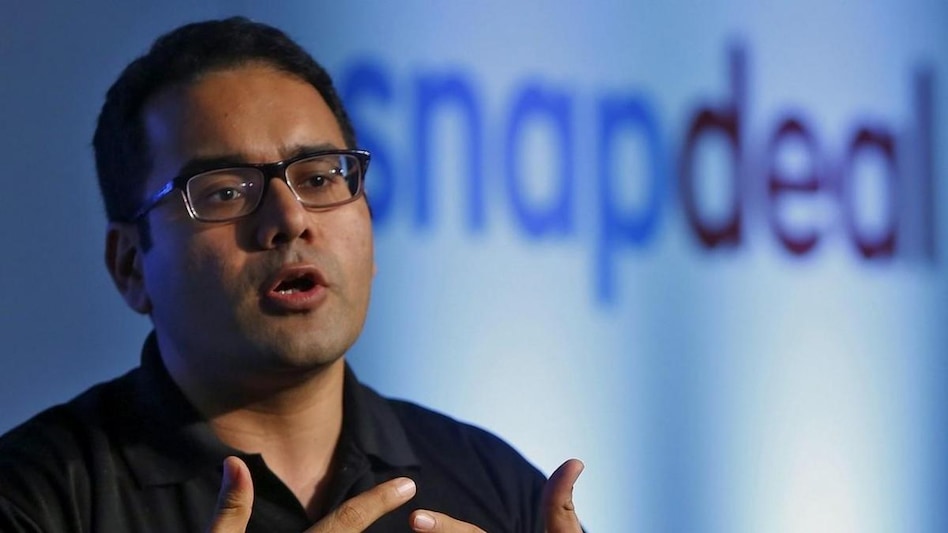
Despite the rapidly expanding e-commerce market in India, once promising player Snapdeal has been displaying muted growth as compared to other companies in the same segment, be it well funded giants or new entrants. The company's latest financials revealed that their revenue from operations grew 14 per cent, far below other e-commerce players. Moreover, their losses widened four-fold. In spite of this, co-founder and CEO Kunal Bahl remains optimistic on the prospects of the company. In an interview with Business Today, the CEO spoke at length about the strategy his company is employing while competing with well-funded giants like Amazon and Flipkart. He also highlighted the reasons behind the postponement of Snapdeal' IPO.
Bahl acknowledged that the Indian e-commerce market has dominant, well-funded players, who are positioned far better than Snapdeal, but he argued that there is still space for other companies to succeed. He said, "Despite the competition in the ecosystem for many years, we have held our own and have millions of customers who buy from Snapdeal every month because our proposition to that audience is very sharp."
"Being focused and disciplined on who we are solving for, how we are solving it, and how we are setting up our capabilities to win in that segment is what differentiates a company," Bahl said
The co-founder of the e-commerce company brought up the example of software company Unicommerce, a subsidiary of Snapdeal. He noted that while there are many software and IT companies that provide similar products, Unicommerce has been able to set itself apart by differentiating itself from the competition, a strategy Snapdeal is also trying to apply. Bahl said, "For example, Unicommerce has already processed over 700 million e-commerce orders a year and has been profitable for the last four or five years of its existence, even though there are many players in the space. This is because it is specialised and focused on solving problems better than anyone else in the market for the customers who want it." "Therefore, I do not subscribe to the line of thought that there will only be two players left in the space, one global and one national player, regardless of how we position ourselves," the CEO said.
Bahl also explained the reasons behind the postponement of Snapdeal's IPO. Firstly, he noted that the current macroeconomic conditions have imposed constraints on the amount of capital companies can raise. "It is not just that private equity players are becoming tight-fisted, but also public markets. There is a cap on how much money companies are able to tap from the equity market right now."
He further added that he would want Snapdeal to be valuable in terms of cash flows and profitability to the public markets before listing.
"Also, I feel the answer is in when will the company be ready with generating enough cashflows, enough profits, that the public markets find it more enduring and valuable." It is worth noting that despite the fanfare that several new age digital companies received when they listed on the Indian stock markets, they are now being scrutinized for profitability and cash flows.
Snapdeal is not alone in postponing its IPO due to market conditions. Many other Indian companies, like the content to commerce platform Good Glamm Group, hotel aggregator OYO, jewelry chain Joyallukas, wearables brand boAt, and many others have done the same.
Also Read: TCS, Infosys, Wipro: Are huge bench sizes dragging down Indian IT majors? - BusinessToday
Despite the rapidly expanding e-commerce market in India, once promising player Snapdeal has been displaying muted growth as compared to other companies in the same segment, be it well funded giants or new entrants. The company's latest financials revealed that their revenue from operations grew 14 per cent, far below other e-commerce players. Moreover, their losses widened four-fold. In spite of this, co-founder and CEO Kunal Bahl remains optimistic on the prospects of the company. In an interview with Business Today, the CEO spoke at length about the strategy his company is employing while competing with well-funded giants like Amazon and Flipkart. He also highlighted the reasons behind the postponement of Snapdeal' IPO.
Bahl acknowledged that the Indian e-commerce market has dominant, well-funded players, who are positioned far better than Snapdeal, but he argued that there is still space for other companies to succeed. He said, "Despite the competition in the ecosystem for many years, we have held our own and have millions of customers who buy from Snapdeal every month because our proposition to that audience is very sharp."
"Being focused and disciplined on who we are solving for, how we are solving it, and how we are setting up our capabilities to win in that segment is what differentiates a company," Bahl said
The co-founder of the e-commerce company brought up the example of software company Unicommerce, a subsidiary of Snapdeal. He noted that while there are many software and IT companies that provide similar products, Unicommerce has been able to set itself apart by differentiating itself from the competition, a strategy Snapdeal is also trying to apply. Bahl said, "For example, Unicommerce has already processed over 700 million e-commerce orders a year and has been profitable for the last four or five years of its existence, even though there are many players in the space. This is because it is specialised and focused on solving problems better than anyone else in the market for the customers who want it." "Therefore, I do not subscribe to the line of thought that there will only be two players left in the space, one global and one national player, regardless of how we position ourselves," the CEO said.
Bahl also explained the reasons behind the postponement of Snapdeal's IPO. Firstly, he noted that the current macroeconomic conditions have imposed constraints on the amount of capital companies can raise. "It is not just that private equity players are becoming tight-fisted, but also public markets. There is a cap on how much money companies are able to tap from the equity market right now."
He further added that he would want Snapdeal to be valuable in terms of cash flows and profitability to the public markets before listing.
"Also, I feel the answer is in when will the company be ready with generating enough cashflows, enough profits, that the public markets find it more enduring and valuable." It is worth noting that despite the fanfare that several new age digital companies received when they listed on the Indian stock markets, they are now being scrutinized for profitability and cash flows.
Snapdeal is not alone in postponing its IPO due to market conditions. Many other Indian companies, like the content to commerce platform Good Glamm Group, hotel aggregator OYO, jewelry chain Joyallukas, wearables brand boAt, and many others have done the same.
Also Read: TCS, Infosys, Wipro: Are huge bench sizes dragging down Indian IT majors? - BusinessToday