
BT India@100 | Mumbai went vertical, Gurgaon built a private metro: DLF's Aakash Ohri on what Indian cities must do before 2047
Aakash Ohri emphasises sustainable development, public-private partnerships, and accountable leadership as essential for shaping India's urban future by 2047
- Aug 21, 2026,
- Updated Aug 21, 2026 3:38 PM IST
BT India @ 100: India is urbanising at roughly 1% of its population every year. By 2030, urban India is projected to house 580 million people, up from 340 million when a McKinsey report first mapped this trajectory in 2008. The country currently has six metros to absorb that migration. That, says Aakash Ohri, Managing Director of DLF Home Developers, is simply not enough.
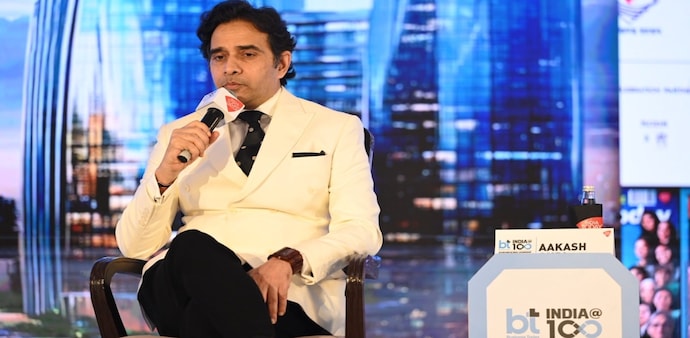
Speaking at Business Today's India at 100 event, Ohri made the case that the cities India builds over the next decade will define where the country stands at independence's centenary. The conversation ranged from satellite towns and private metros to tree transplantation exercises and whether corporate executives should have sustainability targets tied to their bonuses.
The urbanisation problem, and why it cannot be ignored
Ohri was direct about the scale of what India is facing. Urbanisation is not a choice, he argued; it is already happening.
"Now, urbanization, is in-inevitable. You know, it's the development which is a choice as to how we kind of do this.Because today, when you look at it, with the kind of migration that is happening, uh, on one hand we are talking about India being a trillion economy, on the other hand, we only have six metros to talk about. So I feel, um, how this is going to work is that, yes, there will be a certain set of people who live there, but they will also have to have these satellite, uh, feeder units with strong mobility, uh, and, uh, great infrastructure for people to move in and out," he said.
The real question is whether the country manages it well or badly. With only six metros to serve as migration destinations, the current infrastructure is inadequate for the numbers heading toward cities over the next two decades.
His prescription was not to resist the trend but to build around it. Cities need satellite feeder towns with strong mobility links and physical infrastructure, he said, pointing to what developed nations already understand, that good infrastructure does not follow economic growth, it drives it.
ALSO READ: DLF eyes Rs ₹2,000 crore from senior living project in Gurugram
The PPP models that work
Ohri pointed to international examples as proof that public-private partnerships can deliver at scale. Hudson Yard in New York, Canary Wharf in London and Singapore's private-led development model all demonstrate what is possible when both sides of the partnership are committed to long-term outcomes.
DLF has pursued its own version of this in Gurgaon. Ohri cited the Ragvendra Marg project and DLF's private metro network within Gurgaon as examples of what a developer can do when civic ambition outpaces government pace. The challenge, he noted, is that urban infrastructure ultimately requires political will, and planning horizons that stretch 30 to 50 years out, well beyond most electoral cycles.
Governance, waste and the gap between intent and execution
On the subject of urban governance, Ohri was measured but pointed. He acknowledged that good civil servants exist across Indian cities, but said consistent execution remains the gap. Waste segregation, he noted, is already happening at the doorstep level in condominiums, but last-mile collection continues to let the system down. Basic services like waste management need embedded processes and policies, not just periodic effort.
Strong governance, he argued, is what separates cities that maintain themselves from those that fall apart.
DLF's green record and what it signals about intent
Ohri was particularly animated on the question of green infrastructure, where DLF has a track record that predates the current sustainability conversation. The company has incorporated parks into every sector it has developed since the 1990s. In 2012, it undertook a large-scale tree transplantation exercise that achieved a success rate of over 99%, a figure that he said reflected both technical effort and organisational commitment.
Green cover and sustainability, he said, are not add-ons to DLF's philosophy. They are central to it.
DON'T MISS: Big opportunity for homebuyers? DLF plans ₹60,000 crore launches as approvals hold up projects
Mumbai, verticality and what other cities can learn
On Mumbai's transformation, Ohri was clear that the city's investment in transport infrastructure has had a direct and measurable impact on real estate values, and on the quality of life for residents. Mumbai, constrained by geography, has had to go vertical. Other cities with more space need not follow the same path, but all of them, he said, must prioritise open spaces, parks, clean air and systems for recycled water.
"Unlike Mumbai, there are a lot of, cities in India which don't need to go vertical. But I say, say this again, and I say this very emphatically, that urban areas, urban infrastructure, just open areas, parks, you know, clean air, recycled water, looking at these things for the future is what is going to make these cities."
Who is responsible and how to make them accountable
Ohri ended with what was perhaps his most pointed observation: the corporate sector cannot claim to care about sustainability without being held to it. Children, he noted, are growing up with environmental consciousness baked in through education. Adults in positions of authority, executives included, need the same accountability structure.
His suggestion was concrete: stringent policies that tie bonuses to sustainable outcomes. If the incentive structure changes, he argued, behaviour follows.
India@2047: Blueprint for a Developed Nation
BT India @ 100: India is urbanising at roughly 1% of its population every year. By 2030, urban India is projected to house 580 million people, up from 340 million when a McKinsey report first mapped this trajectory in 2008. The country currently has six metros to absorb that migration. That, says Aakash Ohri, Managing Director of DLF Home Developers, is simply not enough.
Speaking at Business Today's India at 100 event, Ohri made the case that the cities India builds over the next decade will define where the country stands at independence's centenary. The conversation ranged from satellite towns and private metros to tree transplantation exercises and whether corporate executives should have sustainability targets tied to their bonuses.
The urbanisation problem, and why it cannot be ignored
Ohri was direct about the scale of what India is facing. Urbanisation is not a choice, he argued; it is already happening.
"Now, urbanization, is in-inevitable. You know, it's the development which is a choice as to how we kind of do this.Because today, when you look at it, with the kind of migration that is happening, uh, on one hand we are talking about India being a trillion economy, on the other hand, we only have six metros to talk about. So I feel, um, how this is going to work is that, yes, there will be a certain set of people who live there, but they will also have to have these satellite, uh, feeder units with strong mobility, uh, and, uh, great infrastructure for people to move in and out," he said.
The real question is whether the country manages it well or badly. With only six metros to serve as migration destinations, the current infrastructure is inadequate for the numbers heading toward cities over the next two decades.
His prescription was not to resist the trend but to build around it. Cities need satellite feeder towns with strong mobility links and physical infrastructure, he said, pointing to what developed nations already understand, that good infrastructure does not follow economic growth, it drives it.
ALSO READ: DLF eyes Rs ₹2,000 crore from senior living project in Gurugram
The PPP models that work
Ohri pointed to international examples as proof that public-private partnerships can deliver at scale. Hudson Yard in New York, Canary Wharf in London and Singapore's private-led development model all demonstrate what is possible when both sides of the partnership are committed to long-term outcomes.
DLF has pursued its own version of this in Gurgaon. Ohri cited the Ragvendra Marg project and DLF's private metro network within Gurgaon as examples of what a developer can do when civic ambition outpaces government pace. The challenge, he noted, is that urban infrastructure ultimately requires political will, and planning horizons that stretch 30 to 50 years out, well beyond most electoral cycles.
Governance, waste and the gap between intent and execution
On the subject of urban governance, Ohri was measured but pointed. He acknowledged that good civil servants exist across Indian cities, but said consistent execution remains the gap. Waste segregation, he noted, is already happening at the doorstep level in condominiums, but last-mile collection continues to let the system down. Basic services like waste management need embedded processes and policies, not just periodic effort.
Strong governance, he argued, is what separates cities that maintain themselves from those that fall apart.
DLF's green record and what it signals about intent
Ohri was particularly animated on the question of green infrastructure, where DLF has a track record that predates the current sustainability conversation. The company has incorporated parks into every sector it has developed since the 1990s. In 2012, it undertook a large-scale tree transplantation exercise that achieved a success rate of over 99%, a figure that he said reflected both technical effort and organisational commitment.
Green cover and sustainability, he said, are not add-ons to DLF's philosophy. They are central to it.
DON'T MISS: Big opportunity for homebuyers? DLF plans ₹60,000 crore launches as approvals hold up projects
Mumbai, verticality and what other cities can learn
On Mumbai's transformation, Ohri was clear that the city's investment in transport infrastructure has had a direct and measurable impact on real estate values, and on the quality of life for residents. Mumbai, constrained by geography, has had to go vertical. Other cities with more space need not follow the same path, but all of them, he said, must prioritise open spaces, parks, clean air and systems for recycled water.
"Unlike Mumbai, there are a lot of, cities in India which don't need to go vertical. But I say, say this again, and I say this very emphatically, that urban areas, urban infrastructure, just open areas, parks, you know, clean air, recycled water, looking at these things for the future is what is going to make these cities."
Who is responsible and how to make them accountable
Ohri ended with what was perhaps his most pointed observation: the corporate sector cannot claim to care about sustainability without being held to it. Children, he noted, are growing up with environmental consciousness baked in through education. Adults in positions of authority, executives included, need the same accountability structure.
His suggestion was concrete: stringent policies that tie bonuses to sustainable outcomes. If the incentive structure changes, he argued, behaviour follows.
India@2047: Blueprint for a Developed Nation