
'6 crore shopkeepers, traders impacted': Trade body urges Nirmala Sitharaman to roll back UPI MDR
From October 15, eligible person-to-merchant UPI payments above ₹2,000 will attract an MDR of 0.4 per cent, capped at ₹300 per transaction.
- Sep 25, 2026,
- Updated Sep 25, 2026 7:34 AM IST
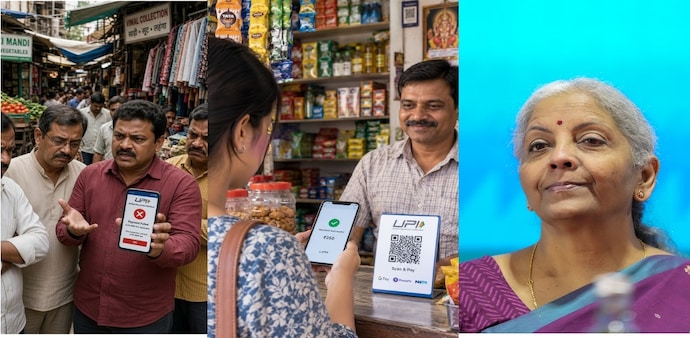
MDR on UPI: The merchant discount rate (MDR) proposed on UPI transactions has triggered concern among traders, with the Chamber of Trade and Industry urging the Centre to roll back the MDR on transactions above ₹2,000 before it takes effect on October 15. CTI Chairman Brijesh Goyal has written to Finance Minister Nirmala Sitharaman, saying the move has caused deep disappointment among the country’s 6 crore shopkeepers, traders and entrepreneurs and will place an additional financial burden on them, NDTV reported.
From October 15, eligible person-to-merchant UPI payments above ₹2,000 will attract an MDR of 0.4 per cent, capped at ₹300 per transaction. Payments between individuals will remain free, while small merchants receiving up to ₹1 lakh a month through UPI QR codes will stay exempt. The government has said the charge will be borne by merchants, not customers, and that the vast majority of everyday UPI transactions will continue to remain free.
MUST READ | BT Big Story: The price tag of UPI: Will small shops go back to cash?
CTI flags impact on large-value payments
CTI said the issue is not the number of transactions alone, but the value of transactions above ₹2,000. Citing UPI data, it said merchant payments accounted for around ₹198 lakh crore of the roughly ₹314 lakh crore processed through UPI in FY2025-26. The government has separately reported that UPI processed 24,162 crore transactions worth around ₹314 lakh crore during the financial year, accounting for about 85 per cent of India’s digital payment volume. CTI said transactions above ₹2,000 made up only around 4 per cent of the total number of transactions but accounted for about ₹131 lakh crore in value.
Goyal said the organisation fears merchants may reconsider UPI for larger transactions once the MDR comes into effect. CTI has estimated that UPI payments above ₹2,000 could decline by up to 50 per cent after the new charge is introduced, and said some merchants and customers could return to cash for larger purchases.
DON'T MISS | UPI MDR GST: NPCI says small merchants and 96% of transactions remain unaffected from October 15
What the MDR means
At 0.4 per cent, a ₹3,000 eligible payment would attract a charge of ₹12, a ₹10,000 payment ₹40, and a ₹50,000 payment ₹200. The charge will be capped at ₹300 for transactions of ₹75,000 and above. Essential services such as railways, telecom, fuel and insurance will attract a flat ₹5 fee per transaction above ₹2,000, while capital markets transactions, including mutual funds and stockbroking, will attract a lower 0.02 per cent rate, also capped at ₹300. The NPCI, which operates the UPI platform, issued a circular on September 15 for MDR on certain UPI transactions as part of what government sources described as a sustainable revenue framework for the digital payments ecosystem.
Government says customers will not pay
When questioned on Opposition claims that the consumers would have to pay out of their pockets, Finance Minister Nirmala Sitharaman said that this could not be farther from the truth.
In an exclusive interaction with PTI, she said, "They are not right. They are not correct. Because this is not a tax, this is not a cess, this is not even a surcharge. And the collection is not coming to the Consolidated Fund of India. So, let’s first understand, this is not a government issue. The MDR is being charged by NPCI, the aggregator, the service provider, those who provide the POS machines and the merchant bank. They are the ones providing the service for transactions above ₹2,000. The merchant is the one who is going to pay. That money is not coming to the Government of India and we are not imposing it. And this will not be passed on to the customer. In fact, it will not be charged even to the merchant for transactions below ₹2,000."
Moreover, sources within the government also told PTI that not a "single penny" of the MDR would go to the government coffers. According to them, 40 per cent of the MDR collected will go to customers’ banks, 30 per cent to the payment gateway, 20 per cent to the UPI app and 10 per cent to the sponsoring bank of the UPI app. They said the Indian Banks’ Association will soon run an awareness campaign to address what they called misconceptions and rumours around the levy.
ALSO READ | GST on UPI MDR: Government rejects ‘tax on UPI’ rumours, says MDR will be set off through input tax credit
GST Council to discuss UPI MDR
Government sources said the GST Council, which next meets on October 7, will take a view on the 18 per cent GST on merchant fees for UPI transactions above ₹2,000. They also said a dedicated fund, with 5 per cent of total MDR collections, will be created to promote UPI use among small merchants. As the October 15 deadline approaches, traders are seeking a rethink, while the government maintains that customers will not bear the charge and most UPI payments will remain unaffected.
(With inputs from PTI)
MDR on UPI: The merchant discount rate (MDR) proposed on UPI transactions has triggered concern among traders, with the Chamber of Trade and Industry urging the Centre to roll back the MDR on transactions above ₹2,000 before it takes effect on October 15. CTI Chairman Brijesh Goyal has written to Finance Minister Nirmala Sitharaman, saying the move has caused deep disappointment among the country’s 6 crore shopkeepers, traders and entrepreneurs and will place an additional financial burden on them, NDTV reported.
From October 15, eligible person-to-merchant UPI payments above ₹2,000 will attract an MDR of 0.4 per cent, capped at ₹300 per transaction. Payments between individuals will remain free, while small merchants receiving up to ₹1 lakh a month through UPI QR codes will stay exempt. The government has said the charge will be borne by merchants, not customers, and that the vast majority of everyday UPI transactions will continue to remain free.
MUST READ | BT Big Story: The price tag of UPI: Will small shops go back to cash?
CTI flags impact on large-value payments
CTI said the issue is not the number of transactions alone, but the value of transactions above ₹2,000. Citing UPI data, it said merchant payments accounted for around ₹198 lakh crore of the roughly ₹314 lakh crore processed through UPI in FY2025-26. The government has separately reported that UPI processed 24,162 crore transactions worth around ₹314 lakh crore during the financial year, accounting for about 85 per cent of India’s digital payment volume. CTI said transactions above ₹2,000 made up only around 4 per cent of the total number of transactions but accounted for about ₹131 lakh crore in value.
Goyal said the organisation fears merchants may reconsider UPI for larger transactions once the MDR comes into effect. CTI has estimated that UPI payments above ₹2,000 could decline by up to 50 per cent after the new charge is introduced, and said some merchants and customers could return to cash for larger purchases.
DON'T MISS | UPI MDR GST: NPCI says small merchants and 96% of transactions remain unaffected from October 15
What the MDR means
At 0.4 per cent, a ₹3,000 eligible payment would attract a charge of ₹12, a ₹10,000 payment ₹40, and a ₹50,000 payment ₹200. The charge will be capped at ₹300 for transactions of ₹75,000 and above. Essential services such as railways, telecom, fuel and insurance will attract a flat ₹5 fee per transaction above ₹2,000, while capital markets transactions, including mutual funds and stockbroking, will attract a lower 0.02 per cent rate, also capped at ₹300. The NPCI, which operates the UPI platform, issued a circular on September 15 for MDR on certain UPI transactions as part of what government sources described as a sustainable revenue framework for the digital payments ecosystem.
Government says customers will not pay
When questioned on Opposition claims that the consumers would have to pay out of their pockets, Finance Minister Nirmala Sitharaman said that this could not be farther from the truth.
In an exclusive interaction with PTI, she said, "They are not right. They are not correct. Because this is not a tax, this is not a cess, this is not even a surcharge. And the collection is not coming to the Consolidated Fund of India. So, let’s first understand, this is not a government issue. The MDR is being charged by NPCI, the aggregator, the service provider, those who provide the POS machines and the merchant bank. They are the ones providing the service for transactions above ₹2,000. The merchant is the one who is going to pay. That money is not coming to the Government of India and we are not imposing it. And this will not be passed on to the customer. In fact, it will not be charged even to the merchant for transactions below ₹2,000."
Moreover, sources within the government also told PTI that not a "single penny" of the MDR would go to the government coffers. According to them, 40 per cent of the MDR collected will go to customers’ banks, 30 per cent to the payment gateway, 20 per cent to the UPI app and 10 per cent to the sponsoring bank of the UPI app. They said the Indian Banks’ Association will soon run an awareness campaign to address what they called misconceptions and rumours around the levy.
ALSO READ | GST on UPI MDR: Government rejects ‘tax on UPI’ rumours, says MDR will be set off through input tax credit
GST Council to discuss UPI MDR
Government sources said the GST Council, which next meets on October 7, will take a view on the 18 per cent GST on merchant fees for UPI transactions above ₹2,000. They also said a dedicated fund, with 5 per cent of total MDR collections, will be created to promote UPI use among small merchants. As the October 15 deadline approaches, traders are seeking a rethink, while the government maintains that customers will not bear the charge and most UPI payments will remain unaffected.
(With inputs from PTI)