
Bangladesh set to sign 'secret' deal with US ahead of Feb 12 elections; business leaders, economists express concern
A secretive Bangladesh-US agreement set to be signed days before the national election is causing concern among business leaders, exporters and economists over its timing and lack of transparency.
- Feb 6, 2026,
- Updated Feb 6, 2026 2:00 PM IST
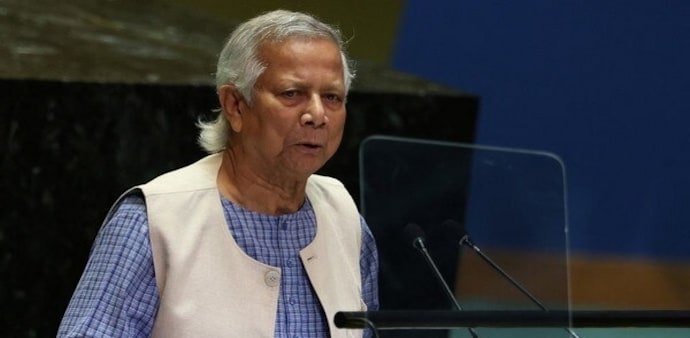
Bangladesh is preparing to sign a confidential agreement with the United States on 9 February, just three days before the country’s national election. The impending deal, negotiated by the interim administration led by Muhammad Yunus, has drawn criticism from business groups and economists who question both its secrecy and the propriety of its timing. The non-disclosure agreement with Washington ensures that the details remain undisclosed, prompting worry over which sectors might be affected and whether the move could constrain the next elected government.
Business leaders are openly expressing unease about the agreement’s opacity and potential consequences.
Taskeen Ahmed, president of the Dhaka Chamber of Commerce and Industry, was quoted as saying by India Today, "It is not clear what benefits Bangladesh will gain from the agreement with the US. At the same time, business leaders are concerned about what conditions the agreement will include and which sectors may face negative impacts."
Economists have also raised questions about the urgency and transparency surrounding the deal. Anu Muhammad criticised the rush to finalise such agreements before the election, questioning the "urgency to lease a port, import arms, and sign subordination agreements with the United States just a few days before the national election." He further alleged that decisions are being made in a "completely non-transparent, illogical, and irregular manner," with "lobbyists" pushing for these agreements.
The timing of the agreement has drawn particular criticism. Debapriya Bhattacharya, a distinguished fellow of the Centre for Policy Dialogue, commented, "Had the tariff agreement been signed after the election, political parties could have discussed it. It is also worth considering whether the hands of the incoming elected government are being tied."
Commerce Secretary Mahbubur Rahman confirmed the signing date, saying, "We have received the date from the US. It is 9 February. The agreement will be signed on that day."
Exporters, especially from the garments sector, have highlighted the lack of consultation. Inamul Haque Khan, senior vice president of the Bangladesh Garment Manufacturers and Exporters Association, said, "Based on the target for purchases from the US, it can be expected that the reciprocal tariff rate will come down to 15% (currently 20%). I was surprised to see the signing of the agreement come just three days before the election. I still believe this should have been done after the election, because it carries major implications."
The agreement’s potential impact is significant, as Bangladesh exports an estimated $7 to $8.4 billion in apparel and textiles to the US each year, making up around 96% of US-bound exports.
Political context further complicates matters. Journalist Sahidul Hasan Khokon noted the United States played a significant indirect role in the political changes of 2024. Meanwhile, Sajeeb Wazed, son of former Prime Minister Sheikh Hasina, criticised the upcoming election as a "sham" and described the Yunus administration as "completely non-transparent."
Bangladesh is preparing to sign a confidential agreement with the United States on 9 February, just three days before the country’s national election. The impending deal, negotiated by the interim administration led by Muhammad Yunus, has drawn criticism from business groups and economists who question both its secrecy and the propriety of its timing. The non-disclosure agreement with Washington ensures that the details remain undisclosed, prompting worry over which sectors might be affected and whether the move could constrain the next elected government.
Business leaders are openly expressing unease about the agreement’s opacity and potential consequences.
Taskeen Ahmed, president of the Dhaka Chamber of Commerce and Industry, was quoted as saying by India Today, "It is not clear what benefits Bangladesh will gain from the agreement with the US. At the same time, business leaders are concerned about what conditions the agreement will include and which sectors may face negative impacts."
Economists have also raised questions about the urgency and transparency surrounding the deal. Anu Muhammad criticised the rush to finalise such agreements before the election, questioning the "urgency to lease a port, import arms, and sign subordination agreements with the United States just a few days before the national election." He further alleged that decisions are being made in a "completely non-transparent, illogical, and irregular manner," with "lobbyists" pushing for these agreements.
The timing of the agreement has drawn particular criticism. Debapriya Bhattacharya, a distinguished fellow of the Centre for Policy Dialogue, commented, "Had the tariff agreement been signed after the election, political parties could have discussed it. It is also worth considering whether the hands of the incoming elected government are being tied."
Commerce Secretary Mahbubur Rahman confirmed the signing date, saying, "We have received the date from the US. It is 9 February. The agreement will be signed on that day."
Exporters, especially from the garments sector, have highlighted the lack of consultation. Inamul Haque Khan, senior vice president of the Bangladesh Garment Manufacturers and Exporters Association, said, "Based on the target for purchases from the US, it can be expected that the reciprocal tariff rate will come down to 15% (currently 20%). I was surprised to see the signing of the agreement come just three days before the election. I still believe this should have been done after the election, because it carries major implications."
The agreement’s potential impact is significant, as Bangladesh exports an estimated $7 to $8.4 billion in apparel and textiles to the US each year, making up around 96% of US-bound exports.
Political context further complicates matters. Journalist Sahidul Hasan Khokon noted the United States played a significant indirect role in the political changes of 2024. Meanwhile, Sajeeb Wazed, son of former Prime Minister Sheikh Hasina, criticised the upcoming election as a "sham" and described the Yunus administration as "completely non-transparent."