
Bernstein warns $100 oil could drag India back toward a 2011-14 style market pain
It noted that the cushion India benefited from in 2022 through discounted Russian oil is no longer helping reduce the import bill in the same way, even if it continues to support supply continuity.
- Mar 9, 2026,
- Updated Mar 9, 2026 10:29 PM IST
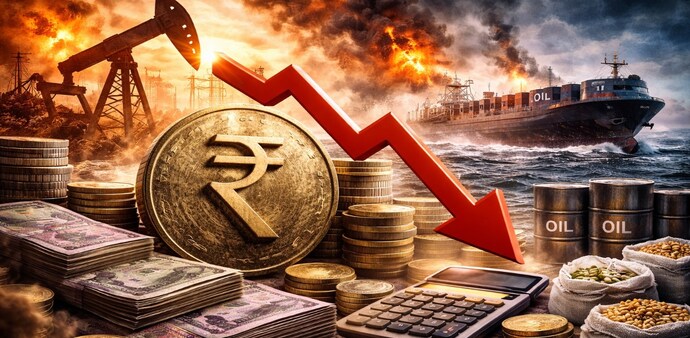
Bernstein has warned that Brent crude climbing back above $100 a barrel could reopen a familiar set of macro pressures for India, reviving concerns around growth, inflation, the current account deficit and the rupee. In a report dated March 9, the brokerage said the current environment bears resemblance to the stress seen during 2011-14, when elevated oil prices weighed heavily on the economy and markets.
The firm said India is particularly exposed because it imports around 85% of its crude needs, with roughly half of those supplies linked to the directly affected West Asia region. It noted that the cushion India benefited from in 2022 through discounted Russian oil is no longer helping reduce the import bill in the same way, even if it continues to support supply continuity.
Bernstein said the crude spike could widen the current account deficit, keep pressure on the rupee and add to inflation through higher transport-linked costs, especially in food. It also said the scope for policy support is limited, arguing that rate cuts are unlikely anytime soon, while rate hikes would do little to solve what is essentially a supply-side shock.
On equities, the brokerage said its downside case for the Nifty is now playing out. It added that the market appears to be pricing in crude at about $110 a barrel for around a month, with earnings pain contained to the March quarter. But if oil prices stay high for longer and the conflict stretches further into April, it warned that markets could face a sharper derating.
Sectorally, Bernstein said insurance, paints, aviation, energy, cement and staples have historically been the most vulnerable during crude upcycles, while metals, IT and, to a degree, auto components have tended to fare better. Aviation and transport, it said, are among the most directly hit when oil prices rise.
Even so, the brokerage does not yet see the oil shock as a structural break for India. It said the current episode is more likely to be acute than prolonged, unless the conflict widens materially and draws in more countries. Bernstein pointed to stronger buffers this time, including India’s forex reserves of about $720 billion and sharply higher US crude production compared with the early 2010s. Slower global demand growth, especially from China and other emerging markets, should also help prevent a repeat of a long stretch of structurally high oil prices, it said.
Bernstein’s base case is that the most disruptive phase may not last beyond roughly a year if the conflict does not broaden significantly. Still, it cautioned that a full-fledged escalation would force a reassessment of its broader India thesis.
Bernstein has warned that Brent crude climbing back above $100 a barrel could reopen a familiar set of macro pressures for India, reviving concerns around growth, inflation, the current account deficit and the rupee. In a report dated March 9, the brokerage said the current environment bears resemblance to the stress seen during 2011-14, when elevated oil prices weighed heavily on the economy and markets.
The firm said India is particularly exposed because it imports around 85% of its crude needs, with roughly half of those supplies linked to the directly affected West Asia region. It noted that the cushion India benefited from in 2022 through discounted Russian oil is no longer helping reduce the import bill in the same way, even if it continues to support supply continuity.
Bernstein said the crude spike could widen the current account deficit, keep pressure on the rupee and add to inflation through higher transport-linked costs, especially in food. It also said the scope for policy support is limited, arguing that rate cuts are unlikely anytime soon, while rate hikes would do little to solve what is essentially a supply-side shock.
On equities, the brokerage said its downside case for the Nifty is now playing out. It added that the market appears to be pricing in crude at about $110 a barrel for around a month, with earnings pain contained to the March quarter. But if oil prices stay high for longer and the conflict stretches further into April, it warned that markets could face a sharper derating.
Sectorally, Bernstein said insurance, paints, aviation, energy, cement and staples have historically been the most vulnerable during crude upcycles, while metals, IT and, to a degree, auto components have tended to fare better. Aviation and transport, it said, are among the most directly hit when oil prices rise.
Even so, the brokerage does not yet see the oil shock as a structural break for India. It said the current episode is more likely to be acute than prolonged, unless the conflict widens materially and draws in more countries. Bernstein pointed to stronger buffers this time, including India’s forex reserves of about $720 billion and sharply higher US crude production compared with the early 2010s. Slower global demand growth, especially from China and other emerging markets, should also help prevent a repeat of a long stretch of structurally high oil prices, it said.
Bernstein’s base case is that the most disruptive phase may not last beyond roughly a year if the conflict does not broaden significantly. Still, it cautioned that a full-fledged escalation would force a reassessment of its broader India thesis.