
BT Explainer: Anti-paper leak law — What the Public Examinations Act, 2024 says and what's changing
The Centre is preparing to strengthen India's anti-paper leak law with tougher punishments, including up to 10 years' imprisonment and a ₹10 crore fine. Here's a look at what the Public Examinations (Prevention of Unfair Means) Act, 2024 currently provides and the key changes proposed by the government.
- Jul 24, 2026,
- Updated Jul 24, 2026 8:34 PM IST
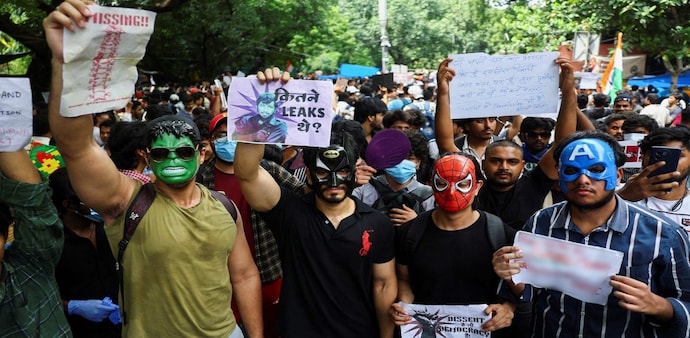
The Centre is set to strengthen India's anti-paper leak law with stricter punishments, including a proposed maximum prison term of 10 years and fines of up to ₹10 crore. The move comes amid growing concerns over recurring examination paper leaks, particularly after the NEET and UGC-NET controversies, and aims to reinforce the integrity of competitive examinations.
The proposed amendments build on the Public Examinations (Prevention of Unfair Means) Act, 2024, India's first dedicated central law to tackle organised examination fraud.
On Thursday, the Centre has designated a special fast-track court at Delhi's Rouse Avenue Court to expedite the trial of examination paper leak cases under the Public Examinations (Prevention of Unfair Means) Act, 2024.
Why was the law enacted?
The Act was introduced after a series of paper leak incidents exposed the absence of a comprehensive central law to deal with organised cheating in public examinations conducted by Union government agencies.
Although criminal laws such as the Indian Penal Code could be invoked in specific cases, there was no legislation specifically targeting offences such as question paper leaks, impersonation, organised cheating syndicates or the use of technology to manipulate examination processes.
The law received the President's assent in February 2024 and was notified in June 2024, around the time allegations of irregularities in the NEET-UG and UGC-NET examinations triggered nationwide protests.
MUST READ: Dharmendra Pradhan to not resign, issues with NTA to be resolved: Govt sources
Which examinations are covered?
The Act applies to public examinations conducted by the Central Government and its agencies. These include:
Union Public Service Commission (UPSC) Staff Selection Commission (SSC) National Testing Agency (NTA) Railway recruitment examinations Banking recruitment examinations Any other public examination notified by the Central Government
The legislation primarily covers recruitment and entrance examinations conducted by central authorities.
MUST READ: Modi govt to announce major changes to NTA at 8 PM; students await key decisions
What acts are considered illegal?
The law identifies a wide range of unfair practices designed to compromise examination integrity. These include:
- Leaking question papers before the examination
- Tampering with OMR sheets or answer scripts
- Creating or operating fake examination websites
- Issuing fake admit cards
- Impersonation and organised cheating
- Unauthorised access to confidential examination systems
- Other organised activities intended to manipulate examination outcomes
The Act also mandates security protocols across the examination cycle, including pre-audits of examination centres, biometric verification of candidates, secure handling of question papers, CCTV surveillance where applicable, and post-examination audits.
Who can be punished?
The legislation targets not only individuals who leak question papers but also organised criminal networks behind examination fraud.
Those liable for punishment include persons involved in planning, facilitating or executing paper leaks, organised cheating syndicates, technology providers aiding fraud, intermediaries, and institutions or entities that knowingly participate in examination-related offences.
Under the existing law, offences involving organised examination fraud can attract imprisonment ranging from five to 10 years along with a minimum fine of ₹1 crore.
Why are amendments now being proposed?
Despite the enactment of the 2024 law, major examination controversies continued to emerge, prompting demands from students and opposition parties for stronger deterrence.
The Cabinet has now approved amendments that would increase the minimum punishment for paper leak offences from three years to five years, raise the maximum imprisonment to 10 years and enhance the maximum fine to ₹10 crore. The proposed changes are also expected to pave the way for faster prosecution through special or fast-track courts, reflecting the government's attempt to restore public confidence in India's competitive examination system.
READ MORE | 'Non-negotiable': CJP holds firm on Pradhan's resignation as government seeks time till Saturday
The Centre is set to strengthen India's anti-paper leak law with stricter punishments, including a proposed maximum prison term of 10 years and fines of up to ₹10 crore. The move comes amid growing concerns over recurring examination paper leaks, particularly after the NEET and UGC-NET controversies, and aims to reinforce the integrity of competitive examinations.
The proposed amendments build on the Public Examinations (Prevention of Unfair Means) Act, 2024, India's first dedicated central law to tackle organised examination fraud.
On Thursday, the Centre has designated a special fast-track court at Delhi's Rouse Avenue Court to expedite the trial of examination paper leak cases under the Public Examinations (Prevention of Unfair Means) Act, 2024.
Why was the law enacted?
The Act was introduced after a series of paper leak incidents exposed the absence of a comprehensive central law to deal with organised cheating in public examinations conducted by Union government agencies.
Although criminal laws such as the Indian Penal Code could be invoked in specific cases, there was no legislation specifically targeting offences such as question paper leaks, impersonation, organised cheating syndicates or the use of technology to manipulate examination processes.
The law received the President's assent in February 2024 and was notified in June 2024, around the time allegations of irregularities in the NEET-UG and UGC-NET examinations triggered nationwide protests.
MUST READ: Dharmendra Pradhan to not resign, issues with NTA to be resolved: Govt sources
Which examinations are covered?
The Act applies to public examinations conducted by the Central Government and its agencies. These include:
Union Public Service Commission (UPSC) Staff Selection Commission (SSC) National Testing Agency (NTA) Railway recruitment examinations Banking recruitment examinations Any other public examination notified by the Central Government
The legislation primarily covers recruitment and entrance examinations conducted by central authorities.
MUST READ: Modi govt to announce major changes to NTA at 8 PM; students await key decisions
What acts are considered illegal?
The law identifies a wide range of unfair practices designed to compromise examination integrity. These include:
- Leaking question papers before the examination
- Tampering with OMR sheets or answer scripts
- Creating or operating fake examination websites
- Issuing fake admit cards
- Impersonation and organised cheating
- Unauthorised access to confidential examination systems
- Other organised activities intended to manipulate examination outcomes
The Act also mandates security protocols across the examination cycle, including pre-audits of examination centres, biometric verification of candidates, secure handling of question papers, CCTV surveillance where applicable, and post-examination audits.
Who can be punished?
The legislation targets not only individuals who leak question papers but also organised criminal networks behind examination fraud.
Those liable for punishment include persons involved in planning, facilitating or executing paper leaks, organised cheating syndicates, technology providers aiding fraud, intermediaries, and institutions or entities that knowingly participate in examination-related offences.
Under the existing law, offences involving organised examination fraud can attract imprisonment ranging from five to 10 years along with a minimum fine of ₹1 crore.
Why are amendments now being proposed?
Despite the enactment of the 2024 law, major examination controversies continued to emerge, prompting demands from students and opposition parties for stronger deterrence.
The Cabinet has now approved amendments that would increase the minimum punishment for paper leak offences from three years to five years, raise the maximum imprisonment to 10 years and enhance the maximum fine to ₹10 crore. The proposed changes are also expected to pave the way for faster prosecution through special or fast-track courts, reflecting the government's attempt to restore public confidence in India's competitive examination system.
READ MORE | 'Non-negotiable': CJP holds firm on Pradhan's resignation as government seeks time till Saturday