
BT EXPLAINER: How to convert your domestic LPG connection to PNG, key differences & step-by-step process
Delays in LPG supply due to disruptions in the Strait of Hormuz, a key energy route for India, are pushing households to consider alternatives like PNG
- Mar 26, 2026,
- Updated Mar 26, 2026 11:41 AM IST
Amid disruptions in LPG supply triggered by the ongoing conflict involving Iran, the US and Israel, many Indian households are beginning to explore alternatives such as piped natural gas (PNG). With shipments impacted due to restrictions around the Strait of Hormuz a key route for India's energy imports delays in LPG availability and rising concerns over supply have pushed consumers to consider more reliable, pipeline-based options.
Here's a simple breakdown of how LPG and PNG differ, and what the conversion process looks like.
What is the difference between LPG and PNG?
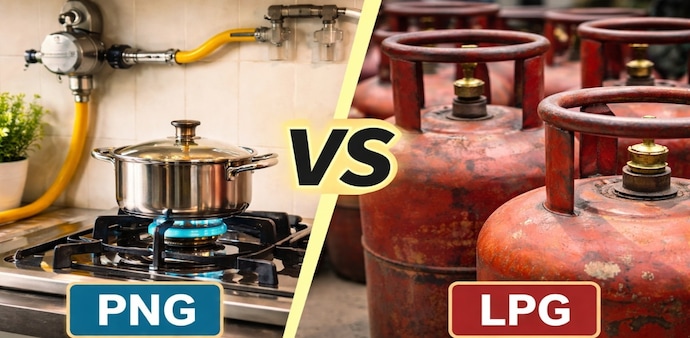
Liquefied Petroleum Gas (LPG) is stored in cylinders and delivered to homes, while Piped Natural Gas (PNG) is supplied directly through underground pipelines.
LPG consists mainly of propane and butane and requires regular refills. PNG, on the other hand, is primarily methane and offers a continuous supply, eliminating the need for cylinder storage.
In terms of safety, PNG is considered relatively safer as it is lighter than air and disperses quickly in case of leakage, whereas LPG is heavier and can accumulate near the ground, increasing risk.
Convenience is another key factor. PNG users do not need to book cylinders or worry about running out of fuel, while LPG users depend on delivery cycles.
Can I convert LPG to PNG at home?
Yes, households can switch from LPG to PNG, but the process cannot be carried out independently and requires authorised installation. It requires coordination with authorised gas distribution companies such as Indraprastha Gas Limited (IGL), Mahanagar Gas Limited (MGL) or other city gas distributors, depending on your location.
You cannot independently convert the connection without official approval, as safety checks and certified installations are mandatory.
The availability of PNG in your area is the first requirement. If pipeline infrastructure exists, you can apply for a new PNG connection and discontinue LPG usage after installation.
What is the process to convert LPG to PNG?
The conversion begins with an application to your local gas distribution company, either online or through an authorised centre. After registration, the company conducts a feasibility check to confirm pipeline access to your residence.
Once approved, technicians visit your home to install the pipeline, meter and necessary fittings. This includes setting up internal piping and connecting it to your kitchen stove. In some cases, minor modifications to your burner may be required to ensure compatibility with PNG.
After installation, safety checks are carried out before the connection is activated. Users are then guided on usage and billing, which is typically based on consumption rather than fixed cylinder pricing.
How much does it cost to convert LPG to PNG?
The cost of conversion varies by city and provider but generally ranges between ₹6,000 and ₹10,000. This includes installation charges, security deposit and initial setup costs.
Some providers also offer EMI options or waive certain charges during promotional periods.
Is PNG cheaper than LPG?
PNG is often more economical in the long run as billing is based on actual usage, unlike LPG, where users pay for an entire cylinder regardless of consumption.
While prices fluctuate, PNG tends to offer more stable rates and eliminates delivery charges, making it a cost-effective option for regular users.
Amid disruptions in LPG supply triggered by the ongoing conflict involving Iran, the US and Israel, many Indian households are beginning to explore alternatives such as piped natural gas (PNG). With shipments impacted due to restrictions around the Strait of Hormuz a key route for India's energy imports delays in LPG availability and rising concerns over supply have pushed consumers to consider more reliable, pipeline-based options.
Here's a simple breakdown of how LPG and PNG differ, and what the conversion process looks like.
What is the difference between LPG and PNG?
Liquefied Petroleum Gas (LPG) is stored in cylinders and delivered to homes, while Piped Natural Gas (PNG) is supplied directly through underground pipelines.
LPG consists mainly of propane and butane and requires regular refills. PNG, on the other hand, is primarily methane and offers a continuous supply, eliminating the need for cylinder storage.
In terms of safety, PNG is considered relatively safer as it is lighter than air and disperses quickly in case of leakage, whereas LPG is heavier and can accumulate near the ground, increasing risk.
Convenience is another key factor. PNG users do not need to book cylinders or worry about running out of fuel, while LPG users depend on delivery cycles.
Can I convert LPG to PNG at home?
Yes, households can switch from LPG to PNG, but the process cannot be carried out independently and requires authorised installation. It requires coordination with authorised gas distribution companies such as Indraprastha Gas Limited (IGL), Mahanagar Gas Limited (MGL) or other city gas distributors, depending on your location.
You cannot independently convert the connection without official approval, as safety checks and certified installations are mandatory.
The availability of PNG in your area is the first requirement. If pipeline infrastructure exists, you can apply for a new PNG connection and discontinue LPG usage after installation.
What is the process to convert LPG to PNG?
The conversion begins with an application to your local gas distribution company, either online or through an authorised centre. After registration, the company conducts a feasibility check to confirm pipeline access to your residence.
Once approved, technicians visit your home to install the pipeline, meter and necessary fittings. This includes setting up internal piping and connecting it to your kitchen stove. In some cases, minor modifications to your burner may be required to ensure compatibility with PNG.
After installation, safety checks are carried out before the connection is activated. Users are then guided on usage and billing, which is typically based on consumption rather than fixed cylinder pricing.
How much does it cost to convert LPG to PNG?
The cost of conversion varies by city and provider but generally ranges between ₹6,000 and ₹10,000. This includes installation charges, security deposit and initial setup costs.
Some providers also offer EMI options or waive certain charges during promotional periods.
Is PNG cheaper than LPG?
PNG is often more economical in the long run as billing is based on actual usage, unlike LPG, where users pay for an entire cylinder regardless of consumption.
While prices fluctuate, PNG tends to offer more stable rates and eliminates delivery charges, making it a cost-effective option for regular users.