
'Ego > Oxygen': Viral post blames Delhi’s air pollution crisis on collective arrogance, not just policy
Studies from the AIIMS have found that children in Delhi have stunted lung growth compared to peers elsewhere in India. Nearly one-third of children in the region suffer from asthma, compared to 5-10% nationally.
- Nov 1, 2025,
- Updated Nov 1, 2025 5:05 PM IST
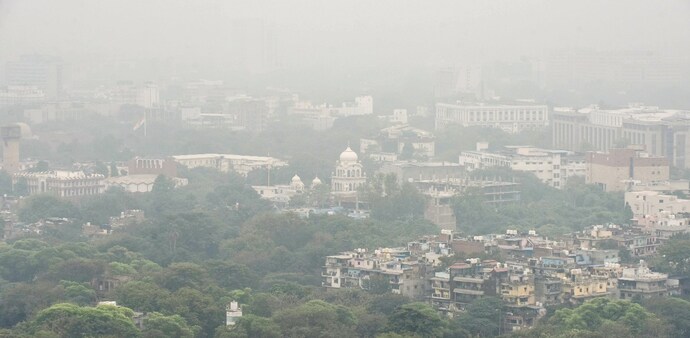
Every winter, Delhi turns into a choking cloud of dust, smoke, and denial. Schools shut down, hospitals overflow with respiratory patients, and air quality indices climb to catastrophic levels. Yet, despite years of outrage and finger-pointing, nothing changes — and one Reddit discussion this week may have captured why.
Titled “How ego is destroying Delhi through pollution,” the viral post blames not just industries, stubble burning, or vehicles, but a deeper human flaw: ego.
“Every year like clockwork, we all pretend to be shocked that Delhi turns into a post-apocalyptic gas chamber,” wrote one Reddit user. “Farmers don’t want to be told what to do. Politicians don’t want to admit failure or coordinate. Delhiites won’t give up their SUVs or crackers. Everyone wants to be right instead of responsible. Ego > Oxygen.”
The post has since struck a chord with thousands online, reflecting a growing frustration among citizens who feel trapped in an annual cycle of blame and inaction. Many commenters echoed the sentiment that Delhi’s air crisis is less a technical problem and more a social and political one — a “collective refusal to change” even when the health costs are visible.
Public health emergency
Those costs are staggering. According to the Institute for Health Metrics and Evaluation (IHME), air pollution is now the biggest health risk in Delhi, accounting for nearly 15% of all deaths in 2023. The latest Global Burden of Disease data reveals that one in every seven deaths in the capital is linked to polluted air — around 17,188 deaths this year alone, up from 15,786 in 2018.
Other major risk factors — such as high blood pressure, diabetes, or obesity — lag behind pollution as causes of premature mortality.
Senior pulmonologist Dr. Gopi Chand Khilnani, chairman of PSRI Institute of Pulmonary, Critical Care and Sleep Medicine, told The Indian Express that complaints of respiratory distress have spiked in the last 10 days as Delhi’s Air Quality Index (AQI) remained in the ‘very poor’ category, touching 303 at 4 pm on November 1.
“Air pollution can lead to severe forms of viral or bacterial pneumonia with high mortality rates,” Dr. Khilnani warned. His advice: “If possible, go away from Delhi until the middle or end of December.”
Children pay the price
Studies from the All India Institute of Medical Sciences (AIIMS) have found that children in Delhi have stunted lung growth compared to peers elsewhere in India. Nearly one-third of children in the region suffer from asthma, compared to 5-10% nationally.
Doctors say prolonged exposure to high particulate matter affects not only the lungs but also cardiovascular and immune systems, creating long-term health vulnerabilities that may not show up for years.
The Reddit discussion summed it up bluntly: Delhi doesn’t lack solutions — it lacks willpower. Users pointed to better public transport, waste management, and sustainable farming practices as obvious measures that never seem to take off because of political gridlock and public apathy.
As one comment read, “The rich think they can buy air purifiers. The poor just… breathe and suffer.”
Every winter, Delhi turns into a choking cloud of dust, smoke, and denial. Schools shut down, hospitals overflow with respiratory patients, and air quality indices climb to catastrophic levels. Yet, despite years of outrage and finger-pointing, nothing changes — and one Reddit discussion this week may have captured why.
Titled “How ego is destroying Delhi through pollution,” the viral post blames not just industries, stubble burning, or vehicles, but a deeper human flaw: ego.
“Every year like clockwork, we all pretend to be shocked that Delhi turns into a post-apocalyptic gas chamber,” wrote one Reddit user. “Farmers don’t want to be told what to do. Politicians don’t want to admit failure or coordinate. Delhiites won’t give up their SUVs or crackers. Everyone wants to be right instead of responsible. Ego > Oxygen.”
The post has since struck a chord with thousands online, reflecting a growing frustration among citizens who feel trapped in an annual cycle of blame and inaction. Many commenters echoed the sentiment that Delhi’s air crisis is less a technical problem and more a social and political one — a “collective refusal to change” even when the health costs are visible.
Public health emergency
Those costs are staggering. According to the Institute for Health Metrics and Evaluation (IHME), air pollution is now the biggest health risk in Delhi, accounting for nearly 15% of all deaths in 2023. The latest Global Burden of Disease data reveals that one in every seven deaths in the capital is linked to polluted air — around 17,188 deaths this year alone, up from 15,786 in 2018.
Other major risk factors — such as high blood pressure, diabetes, or obesity — lag behind pollution as causes of premature mortality.
Senior pulmonologist Dr. Gopi Chand Khilnani, chairman of PSRI Institute of Pulmonary, Critical Care and Sleep Medicine, told The Indian Express that complaints of respiratory distress have spiked in the last 10 days as Delhi’s Air Quality Index (AQI) remained in the ‘very poor’ category, touching 303 at 4 pm on November 1.
“Air pollution can lead to severe forms of viral or bacterial pneumonia with high mortality rates,” Dr. Khilnani warned. His advice: “If possible, go away from Delhi until the middle or end of December.”
Children pay the price
Studies from the All India Institute of Medical Sciences (AIIMS) have found that children in Delhi have stunted lung growth compared to peers elsewhere in India. Nearly one-third of children in the region suffer from asthma, compared to 5-10% nationally.
Doctors say prolonged exposure to high particulate matter affects not only the lungs but also cardiovascular and immune systems, creating long-term health vulnerabilities that may not show up for years.
The Reddit discussion summed it up bluntly: Delhi doesn’t lack solutions — it lacks willpower. Users pointed to better public transport, waste management, and sustainable farming practices as obvious measures that never seem to take off because of political gridlock and public apathy.
As one comment read, “The rich think they can buy air purifiers. The poor just… breathe and suffer.”