
India-Israel defence partnership: Iron Dome tech transfer, Joint production of equipment — All that happened during PM Modi's 2-day visit
India and Israel agreed to jointly develop and manufacture defence equipment, moving beyond a traditional buyer-seller dynamic.
- Feb 27, 2026,
- Updated Feb 27, 2026 12:41 PM IST
Prime Minister Narendra Modi and Israeli Prime Minister Benjamin Netanyahu have announced a significant expansion of defence cooperation, elevating bilateral ties to what both sides described as a "special strategic partnership." The announcement came during Modi's two-day visit to Israel, where defence collaboration dominated the agenda.
From buyer-seller to joint producers
India and Israel agreed to jointly develop and manufacture defence equipment, moving beyond a traditional buyer-seller dynamic. The decision reflects India's push for self-reliance in defence manufacturing while leveraging Israel's advanced military technology capabilities.
The leaders said both countries would strengthen defence production through collaborative manufacturing initiatives and enhanced technology transfer. India is already one of Israel's key defence partners, and the new framework aims to scale up the co-development of advanced systems.
Israel agrees to give Iron Dome to India
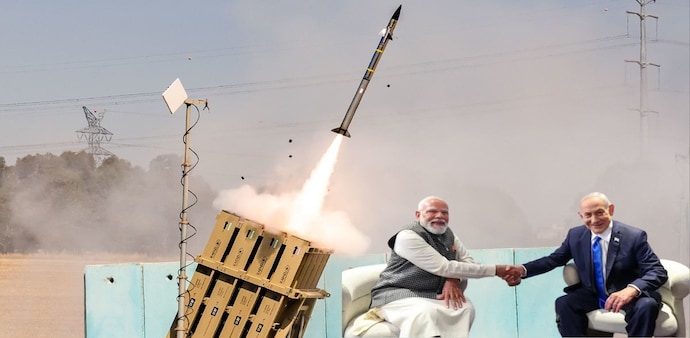
The Iron Dome is an Israeli short-range air defence system designed to detect and intercept incoming rockets, missiles and drones before they hit populated areas.
During Prime Minister Narendra Modi's visit to Israel, there was serious talk of including Iron Dome tech transfer as part of broader defence cooperation and not just a straight weapons purchase.
According to media reports, Israel might agree to share key technological components of Iron Dome (and related systems like Iron Beam) under a "Make in India" style arrangement to integrate them into India's planned multi-layer air defence network, including Mission Sudarshan Chakra.
However, nothing is officially signed yet the deal is still speculative and in the negotiation phase, with technology transfer expected to be the focus rather than an off-the-shelf system delivery.
If finalised, this could significantly boost India's short-range defence capabilities against rockets, missiles and drones while strengthening long-term strategic ties with Israel.
Technology transfer and 'horizon scanning'
A key element of the defence pact is cooperation in "horizon scanning", a strategic mechanism designed to improve long-term defence preparedness. According to the Ministry of External Affairs (MEA), the initiative will strengthen strategic foresight, risk assessment, and technology planning through joint research, capacity building, and artificial intelligence-driven tools.
The collaboration is expected to help India anticipate emerging security threats and align defence innovation accordingly. By combining Israeli expertise in cutting-edge defence technology with India’s expanding manufacturing base, both sides aim to build future-ready capabilities.
Tensions in West Asia
The defence pact was announced at a time of heightened tensions in West Asia. Modi's visit coincided with increased US military deployment near Iran amid ongoing disputes over Tehran's nuclear programme.
During a joint press briefing, Modi reiterated India's support for peace efforts in the region and stressed that terrorism "in any form" is unacceptable. Both leaders underscored their commitment to stand together against terrorism and security threats.
Modi described the upgraded partnership as a reflection of the shared strategic aspirations of both nations. His visit marks his first trip to Israel in nine years, reinforcing the growing centrality of defence cooperation in bilateral ties.
Prime Minister Narendra Modi and Israeli Prime Minister Benjamin Netanyahu have announced a significant expansion of defence cooperation, elevating bilateral ties to what both sides described as a "special strategic partnership." The announcement came during Modi's two-day visit to Israel, where defence collaboration dominated the agenda.
From buyer-seller to joint producers
India and Israel agreed to jointly develop and manufacture defence equipment, moving beyond a traditional buyer-seller dynamic. The decision reflects India's push for self-reliance in defence manufacturing while leveraging Israel's advanced military technology capabilities.
The leaders said both countries would strengthen defence production through collaborative manufacturing initiatives and enhanced technology transfer. India is already one of Israel's key defence partners, and the new framework aims to scale up the co-development of advanced systems.
Israel agrees to give Iron Dome to India
The Iron Dome is an Israeli short-range air defence system designed to detect and intercept incoming rockets, missiles and drones before they hit populated areas.
During Prime Minister Narendra Modi's visit to Israel, there was serious talk of including Iron Dome tech transfer as part of broader defence cooperation and not just a straight weapons purchase.
According to media reports, Israel might agree to share key technological components of Iron Dome (and related systems like Iron Beam) under a "Make in India" style arrangement to integrate them into India's planned multi-layer air defence network, including Mission Sudarshan Chakra.
However, nothing is officially signed yet the deal is still speculative and in the negotiation phase, with technology transfer expected to be the focus rather than an off-the-shelf system delivery.
If finalised, this could significantly boost India's short-range defence capabilities against rockets, missiles and drones while strengthening long-term strategic ties with Israel.
Technology transfer and 'horizon scanning'
A key element of the defence pact is cooperation in "horizon scanning", a strategic mechanism designed to improve long-term defence preparedness. According to the Ministry of External Affairs (MEA), the initiative will strengthen strategic foresight, risk assessment, and technology planning through joint research, capacity building, and artificial intelligence-driven tools.
The collaboration is expected to help India anticipate emerging security threats and align defence innovation accordingly. By combining Israeli expertise in cutting-edge defence technology with India’s expanding manufacturing base, both sides aim to build future-ready capabilities.
Tensions in West Asia
The defence pact was announced at a time of heightened tensions in West Asia. Modi's visit coincided with increased US military deployment near Iran amid ongoing disputes over Tehran's nuclear programme.
During a joint press briefing, Modi reiterated India's support for peace efforts in the region and stressed that terrorism "in any form" is unacceptable. Both leaders underscored their commitment to stand together against terrorism and security threats.
Modi described the upgraded partnership as a reflection of the shared strategic aspirations of both nations. His visit marks his first trip to Israel in nine years, reinforcing the growing centrality of defence cooperation in bilateral ties.