
'India really helped us': Iran envoy backs India after IRIS Dena strike, says New Delhi accepted request for help
The strike, in which more than 100 crew members were reported killed, drew attention because it occurred close to India’s sphere of influence, leading to questions over New Delhi’s role and response.
- Mar 14, 2026,
- Updated Mar 14, 2026 7:04 PM IST
The torpedoing of the Iranian frigate IRIS Dena by US forces on March 4 had triggered debate in India after the warship, which had recently participated in a multilateral naval exercise in Visakhapatnam, was attacked while returning through the Indian Ocean. The strike, in which more than 100 crew members were reported killed, drew attention because it occurred close to India’s sphere of influence, leading to questions over New Delhi’s role and response.
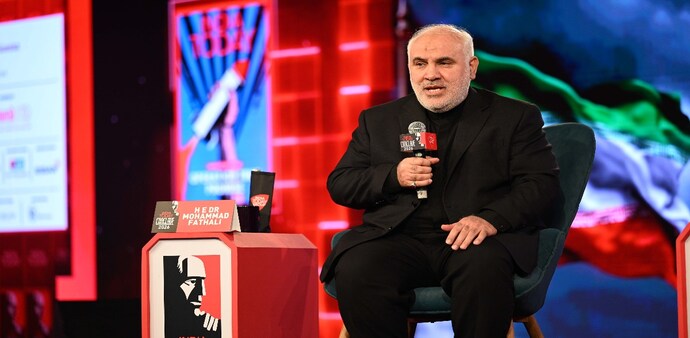
However, Iran’s Ambassador to India, Mohammad Fathali, said India had extended full cooperation in the matter, effectively putting the controversy to rest. Speaking at the India Today Conclave 2026, Fathali said, “The government of India has really helped us… The government of India regarding these ships really helped us. They accepted our request. Unfortunately, some other countries refused to cooperate.”
He declined to comment on the role of other countries, saying, “Let me just talk about Iran and India. I am the Iranian ambassador to India. Let me not talk about the third country you mentioned. As an ambassador, I should see everything precisely.”
Fathali also said Iran would respond to the attack, adding, “Despite all of this, we will definitely give them a response, and part of that we have done. Definitely you will hear good news in a few days. Iran doesn’t leave any action without a response.”
While the IRIS Dena was sunk, another Iranian naval vessel, IRIS Lavan, was allowed to dock in Kochi on March 4. According to sources, India later facilitated the repatriation of non-essential crew members, while the ship remained at port with a reduced crew. Both vessels had sailed weeks before the conflict escalated following US-Israel strikes on Iran on February 28.
The incident was also discussed at the conclave by Sri Lankan MP Namal Rajapaksa, who said the strike raised serious questions about maritime norms and regional stability. “The legality of it can certainly be debated… but the moral values, the ethics and the practices that have governed the Indian Ocean are clearly being broken,” he said, adding that cooperation among regional powers was essential and that India had a key leadership role in the region.
Defence analysts noted that the attack took place about 40 nautical miles south of Galle, in international waters but within India’s strategic neighbourhood, which led to debate over whether India bore any responsibility since the ship had earlier visited an Indian port.
Some former officials argued that India had only a moral concern, not operational responsibility, while security experts said India’s obligation ended once the ship left its territorial waters.
With Iran publicly acknowledging India’s assistance and support to its naval vessels, the remarks from Tehran are being seen as closing the debate over India’s role in the incident.
The torpedoing of the Iranian frigate IRIS Dena by US forces on March 4 had triggered debate in India after the warship, which had recently participated in a multilateral naval exercise in Visakhapatnam, was attacked while returning through the Indian Ocean. The strike, in which more than 100 crew members were reported killed, drew attention because it occurred close to India’s sphere of influence, leading to questions over New Delhi’s role and response.
However, Iran’s Ambassador to India, Mohammad Fathali, said India had extended full cooperation in the matter, effectively putting the controversy to rest. Speaking at the India Today Conclave 2026, Fathali said, “The government of India has really helped us… The government of India regarding these ships really helped us. They accepted our request. Unfortunately, some other countries refused to cooperate.”
He declined to comment on the role of other countries, saying, “Let me just talk about Iran and India. I am the Iranian ambassador to India. Let me not talk about the third country you mentioned. As an ambassador, I should see everything precisely.”
Fathali also said Iran would respond to the attack, adding, “Despite all of this, we will definitely give them a response, and part of that we have done. Definitely you will hear good news in a few days. Iran doesn’t leave any action without a response.”
While the IRIS Dena was sunk, another Iranian naval vessel, IRIS Lavan, was allowed to dock in Kochi on March 4. According to sources, India later facilitated the repatriation of non-essential crew members, while the ship remained at port with a reduced crew. Both vessels had sailed weeks before the conflict escalated following US-Israel strikes on Iran on February 28.
The incident was also discussed at the conclave by Sri Lankan MP Namal Rajapaksa, who said the strike raised serious questions about maritime norms and regional stability. “The legality of it can certainly be debated… but the moral values, the ethics and the practices that have governed the Indian Ocean are clearly being broken,” he said, adding that cooperation among regional powers was essential and that India had a key leadership role in the region.
Defence analysts noted that the attack took place about 40 nautical miles south of Galle, in international waters but within India’s strategic neighbourhood, which led to debate over whether India bore any responsibility since the ship had earlier visited an Indian port.
Some former officials argued that India had only a moral concern, not operational responsibility, while security experts said India’s obligation ended once the ship left its territorial waters.
With Iran publicly acknowledging India’s assistance and support to its naval vessels, the remarks from Tehran are being seen as closing the debate over India’s role in the incident.