
Monsoon rainfall deficit fears: Bengaluru bans use of drinking water for washing cars, watering gardens, filling pools
The Bengaluru Water Supply Board announced the measures on Saturday, citing a rainfall deficit linked to the El Niño phenomenon and the risk of water scarcity if monsoon conditions fail to improve
- Jul 5, 2026,
- Updated Jul 5, 2026 12:43 PM IST
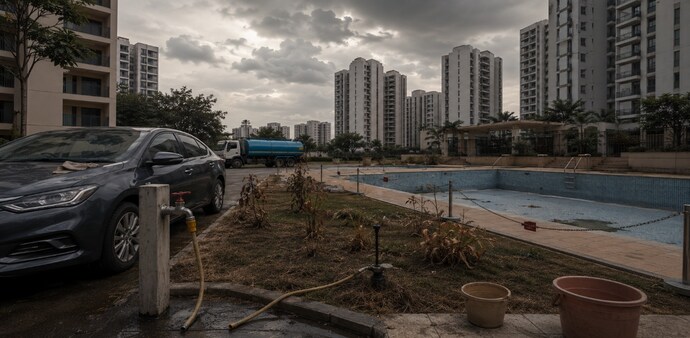
Fearing a repeat of last year's water crisis amid forecasts of a weak monsoon, Bengaluru has ordered the mandatory installation of water-saving aerators and banned the use of drinking water for activities such as washing vehicles, watering gardens, and filling swimming pools.
The Bengaluru Water Supply and Sewerage Board (BWSSB) announced the measures on Saturday, citing a rainfall deficit linked to the El Niño phenomenon and the risk of water scarcity if monsoon conditions fail to improve.
Don't Miss | Mumbai monsoon: 6 natural forces & 3 urban factors which turns the city into a 'bathtub'
The restrictions apply across residential buildings, apartment complexes, commercial establishments, industries, hotels, and government offices. All water connections must now be fitted with flow restrictors or aerators, which the BWSSB said can reduce consumption by 30-50 per cent without affecting water pressure.
The board has also barred the use of potable water for non-essential purposes.
Vehicles can no longer be washed with drinking water, gardens cannot be irrigated using potable supplies, and construction activity must rely on treated water or other approved sources. The same rule applies to public and private swimming pools, which have been prohibited from using drinking water to fill pools.
BWSSB Chairperson Dr Manjula appealed for public cooperation, saying conservation efforts would be critical amid uncertain weather conditions. The measures are based on recommendations by the Indian Institute of Science (IISc), the board said.
Must Read | Peat smoke meets monsoon rain: Why smoky whisky comes alive in India’s wet season
Authorities warned that violations would invite penalties under the Bengaluru Water Supply and Sewerage Act, 1964. Offenders face a fine of Rs 5,000, followed by an additional Rs 500 for every day the violation continues. The BWSSB may also cut water supply to the premises by up to 50 per cent and initiate further legal action.
Property owners who fail to install mandatory aerators could also face a Rs 5,000 penalty and a reduction in water supply.
By the end of June, India had recorded a rainfall deficit of nearly 45 per cent. However, after the southwest monsoon made a dramatic comeback over the past few days, the cumulative deficit narrowed sharply to 28 per cent between June 4 and July 5.
(With inputs from Sagay Raj)
Fearing a repeat of last year's water crisis amid forecasts of a weak monsoon, Bengaluru has ordered the mandatory installation of water-saving aerators and banned the use of drinking water for activities such as washing vehicles, watering gardens, and filling swimming pools.
The Bengaluru Water Supply and Sewerage Board (BWSSB) announced the measures on Saturday, citing a rainfall deficit linked to the El Niño phenomenon and the risk of water scarcity if monsoon conditions fail to improve.
Don't Miss | Mumbai monsoon: 6 natural forces & 3 urban factors which turns the city into a 'bathtub'
The restrictions apply across residential buildings, apartment complexes, commercial establishments, industries, hotels, and government offices. All water connections must now be fitted with flow restrictors or aerators, which the BWSSB said can reduce consumption by 30-50 per cent without affecting water pressure.
The board has also barred the use of potable water for non-essential purposes.
Vehicles can no longer be washed with drinking water, gardens cannot be irrigated using potable supplies, and construction activity must rely on treated water or other approved sources. The same rule applies to public and private swimming pools, which have been prohibited from using drinking water to fill pools.
BWSSB Chairperson Dr Manjula appealed for public cooperation, saying conservation efforts would be critical amid uncertain weather conditions. The measures are based on recommendations by the Indian Institute of Science (IISc), the board said.
Must Read | Peat smoke meets monsoon rain: Why smoky whisky comes alive in India’s wet season
Authorities warned that violations would invite penalties under the Bengaluru Water Supply and Sewerage Act, 1964. Offenders face a fine of Rs 5,000, followed by an additional Rs 500 for every day the violation continues. The BWSSB may also cut water supply to the premises by up to 50 per cent and initiate further legal action.
Property owners who fail to install mandatory aerators could also face a Rs 5,000 penalty and a reduction in water supply.
By the end of June, India had recorded a rainfall deficit of nearly 45 per cent. However, after the southwest monsoon made a dramatic comeback over the past few days, the cumulative deficit narrowed sharply to 28 per cent between June 4 and July 5.
(With inputs from Sagay Raj)