
Powerus-Pakistan drone deal raises new threat: Why India’s counter-drone shield matters
The development comes shortly after Pakistan military spokesman Lieutenant General Ahmed Sharif Chaudhry said, “We respect Indian military capabilities”. Pakistan attempted drone intrusions at 36 locations between Leh and Sir Creek during Operation Sindoor, with 300-400 drones.
- Sep 18, 2026,
- Updated Sep 18, 2026 3:23 PM IST
Pakistan’s latest move to expand its unmanned warfare capabilities comes as its military publicly acknowledges India’s growing firepower — a combination that adds a new dimension to the evolving India-Pakistan security equation.
US defence technology company Powerus has received a procurement order from Pakistan’s Ministry of Defence and signed a strategic memorandum of understanding covering unmanned and autonomous defence technologies. The agreement could pave the way for wider cooperation in drones, counter-drone systems and potentially local manufacturing.
The development comes shortly after Pakistan military spokesman Lieutenant General Ahmed Sharif Chaudhry said, “We respect Indian military capabilities”, while maintaining that Pakistan was not engaged in an arms race with India.
The timing is significant because Operation Sindoor in May 2025 had already demonstrated how quickly drones have become a battlefield tool between the two countries.
Why the Powerus deal matters
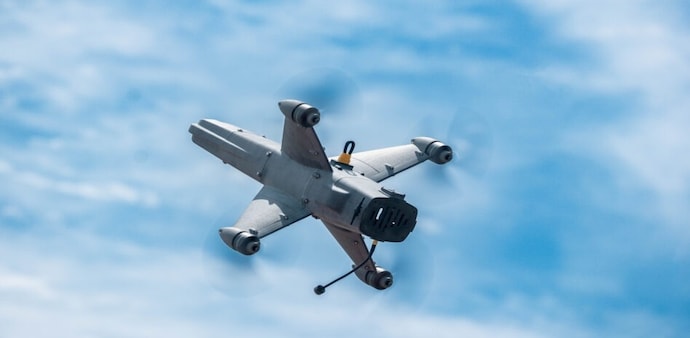
Powerus develops autonomous and unmanned systems and drone interceptors. The company has not disclosed the size or precise details of Pakistan’s initial order.
The strategic memorandum could prove more significant over time. Reports have pointed to potential localisation and manufacturing in Pakistan, raising the possibility of a broader unmanned-warfare ecosystem rather than a one-off acquisition.
For India, the issue is therefore not simply how many drones Pakistan buys. It is whether Islamabad develops greater capacity to manufacture, maintain and adapt unmanned and counter-UAS systems domestically.
Drone warfare also presents an economic challenge. A relatively cheap attacking drone can force the defender to use considerably more expensive interceptors or missiles. This makes layered, cost-effective counter-UAS systems increasingly important.
‘We respect Indian military capabilities’
Lt Gen Sharif’s remarks add another layer to the picture. While acknowledging India’s military capabilities, the Pakistan military spokesman said Islamabad was focused on defensive capabilities and was not seeking an arms race.
His comments come as India continues to expand indigenous missile and air-defence capabilities.
India’s 2026-27 defence allocation is ₹7.85 lakh crore, including around ₹2.19 lakh crore in capital expenditure for modernisation and procurement. The country is also expanding domestic production of missiles and transferring DRDO-developed technologies to Indian industry.
The indigenous Kusha long-range surface-to-air missile programme is another development relevant to the changing air-defence environment. DRDO conducted its maiden flight test of the system in July 2026. The system is being developed to counter threats including aircraft, missiles and UAVs.
India’s wider air-defence architecture includes systems such as Akash, Akash-NG, QRSAM, VSHORADS, MRSAM and S-400.
Operation Sindoor and the drone threat
Pakistan attempted drone intrusions at 36 locations between Leh and Sir Creek during Operation Sindoor, involving around 300-400 drones.
Indian forces used kinetic and non-kinetic measures to neutralise the threats. India also said an armed UAV targeting the Bathinda military station was detected and brought down.
The attacks stretched across a wide geography, highlighting the ability of drones to probe and potentially saturate air-defence networks.
India subsequently highlighted its Integrated Counter-UAS Grid and layered air-defence architecture, involving systems including Akash, Pechora, OSA-AK and low-level air-defence guns.
The episode underlined a central challenge of modern warfare: relatively inexpensive drones can be deployed in large numbers, forcing defenders to combine sensors, electronic warfare, guns and missiles to detect and neutralise them.
India’s next challenge: drones & counter-drones
Operation Sindoor showed that the contest is no longer confined to fighter aircraft and conventional missiles.
Drones can conduct surveillance, carry weapons, act as decoys or loitering munitions and be deployed in large numbers. Counter-UAS systems must detect, classify and neutralise them quickly, often under saturation conditions.
That makes radar and electro-optical sensors, electronic warfare, guns, surface-to-air missiles, interceptor drones and integrated command-and-control systems increasingly important.
India also faces the need to expand its own unmanned capabilities while strengthening its ability to defeat hostile systems. AI, autonomous navigation, electronic warfare, secure communications and real-time sensor fusion are becoming integral to this battlefield.
The reported 300-400 drone attempts during Operation Sindoor offered an early indication of the scale of the challenge.
Pakistan’s Powerus arrangement does not, by itself, establish a major change in Islamabad’s military capabilities. The initial order remains undisclosed, while the MoU provides a framework rather than a guarantee of future procurement.
Pakistan’s latest move to expand its unmanned warfare capabilities comes as its military publicly acknowledges India’s growing firepower — a combination that adds a new dimension to the evolving India-Pakistan security equation.
US defence technology company Powerus has received a procurement order from Pakistan’s Ministry of Defence and signed a strategic memorandum of understanding covering unmanned and autonomous defence technologies. The agreement could pave the way for wider cooperation in drones, counter-drone systems and potentially local manufacturing.
The development comes shortly after Pakistan military spokesman Lieutenant General Ahmed Sharif Chaudhry said, “We respect Indian military capabilities”, while maintaining that Pakistan was not engaged in an arms race with India.
The timing is significant because Operation Sindoor in May 2025 had already demonstrated how quickly drones have become a battlefield tool between the two countries.
Why the Powerus deal matters
Powerus develops autonomous and unmanned systems and drone interceptors. The company has not disclosed the size or precise details of Pakistan’s initial order.
The strategic memorandum could prove more significant over time. Reports have pointed to potential localisation and manufacturing in Pakistan, raising the possibility of a broader unmanned-warfare ecosystem rather than a one-off acquisition.
For India, the issue is therefore not simply how many drones Pakistan buys. It is whether Islamabad develops greater capacity to manufacture, maintain and adapt unmanned and counter-UAS systems domestically.
Drone warfare also presents an economic challenge. A relatively cheap attacking drone can force the defender to use considerably more expensive interceptors or missiles. This makes layered, cost-effective counter-UAS systems increasingly important.
‘We respect Indian military capabilities’
Lt Gen Sharif’s remarks add another layer to the picture. While acknowledging India’s military capabilities, the Pakistan military spokesman said Islamabad was focused on defensive capabilities and was not seeking an arms race.
His comments come as India continues to expand indigenous missile and air-defence capabilities.
India’s 2026-27 defence allocation is ₹7.85 lakh crore, including around ₹2.19 lakh crore in capital expenditure for modernisation and procurement. The country is also expanding domestic production of missiles and transferring DRDO-developed technologies to Indian industry.
The indigenous Kusha long-range surface-to-air missile programme is another development relevant to the changing air-defence environment. DRDO conducted its maiden flight test of the system in July 2026. The system is being developed to counter threats including aircraft, missiles and UAVs.
India’s wider air-defence architecture includes systems such as Akash, Akash-NG, QRSAM, VSHORADS, MRSAM and S-400.
Operation Sindoor and the drone threat
Pakistan attempted drone intrusions at 36 locations between Leh and Sir Creek during Operation Sindoor, involving around 300-400 drones.
Indian forces used kinetic and non-kinetic measures to neutralise the threats. India also said an armed UAV targeting the Bathinda military station was detected and brought down.
The attacks stretched across a wide geography, highlighting the ability of drones to probe and potentially saturate air-defence networks.
India subsequently highlighted its Integrated Counter-UAS Grid and layered air-defence architecture, involving systems including Akash, Pechora, OSA-AK and low-level air-defence guns.
The episode underlined a central challenge of modern warfare: relatively inexpensive drones can be deployed in large numbers, forcing defenders to combine sensors, electronic warfare, guns and missiles to detect and neutralise them.
India’s next challenge: drones & counter-drones
Operation Sindoor showed that the contest is no longer confined to fighter aircraft and conventional missiles.
Drones can conduct surveillance, carry weapons, act as decoys or loitering munitions and be deployed in large numbers. Counter-UAS systems must detect, classify and neutralise them quickly, often under saturation conditions.
That makes radar and electro-optical sensors, electronic warfare, guns, surface-to-air missiles, interceptor drones and integrated command-and-control systems increasingly important.
India also faces the need to expand its own unmanned capabilities while strengthening its ability to defeat hostile systems. AI, autonomous navigation, electronic warfare, secure communications and real-time sensor fusion are becoming integral to this battlefield.
The reported 300-400 drone attempts during Operation Sindoor offered an early indication of the scale of the challenge.
Pakistan’s Powerus arrangement does not, by itself, establish a major change in Islamabad’s military capabilities. The initial order remains undisclosed, while the MoU provides a framework rather than a guarantee of future procurement.