
Timeline | Why Raghav Chadha quit AAP: BJP switch stuns AAP's Arvind Kejriwal
Chadha’s exit from the Aam Aadmi Party and his subsequent shift toward the BJP did not happen overnight. Instead, it was the culmination of a steadily escalating breakdown in trust, authority, and political alignment between one of AAP’s most prominent young leaders and the party’s central leadership.
- Apr 24, 2026,
- Updated Apr 24, 2026 4:44 PM IST
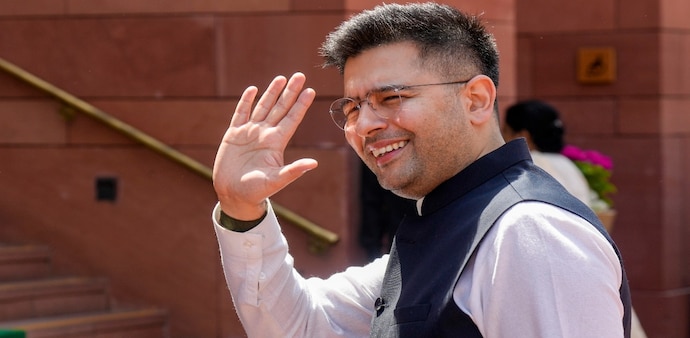
Aam Aadmi Party MP Raghav Chadha on April 24 said that the two-third members belonging to the AAP in Rajya Sabha are merging themselves with the Bharatiya Janata Party (BJP), exercising the provisions of the Constitution of India.
Chadha’s exit from the Aam Aadmi Party and his subsequent shift toward the BJP did not happen overnight. Instead, it was the culmination of a steadily escalating breakdown in trust, authority, and political alignment between one of AAP’s most prominent young leaders and the party’s central leadership led by Arvind Kejriwal.
What initially appeared as routine internal friction soon spiralled into a public and institutional confrontation, eventually resulting in one of the most surprising political crossovers in recent times.
March 23: Early signs of an independent pitch
In late March, Chadha appeared firmly within AAP but was already carving out a more individualistic political identity. His interventions in Parliament focused on consumer-facing issues, such as questioning telecom data expiry policies and highlighting concerns that directly affect everyday users.
MUST READ | ‘Irrespective of outcome...’: Raghav Chadha reveals promise made to mom on why he didn't quit CA practice
This phase reflected a leader still aligned with the party’s governance-first approach, but increasingly comfortable shaping his own narrative. In retrospect, it marked the beginning of a subtle shift — from party spokesperson to independent policy voice.
April 2: Institutional rupture begins
The first clear break came when AAP formally moved to remove Chadha as its deputy leader in the Rajya Sabha. This was a significant organisational decision, signalling that his standing within the party hierarchy had been weakened.
MUST READ | From Gig workers to airfares: How Raghav Chadha raised common people's issues - and created impact
Chadha’s response did not indicate reconciliation. Instead, he publicly highlighted his parliamentary contributions, suggesting that his removal was not performance-based. The disagreement had now moved beyond internal deliberations into the public domain.
April 3: Conflict spills into the open
A day later, the situation escalated sharply. AAP leaders publicly accused Chadha of softening his stance toward the Centre, a serious charge in a party that has built much of its identity on confronting the central government.
The criticism went beyond ideology. His political positioning and even personal financial standing became part of the public discourse. This marked a turning point where the dispute transformed into a full-fledged narrative battle, with both sides attempting to influence public perception.
April 4-5: Chadha’s counteroffensive
Chadha responded by rejecting AAP’s allegations as a “scripted campaign,” indicating that he viewed the attacks as coordinated and deliberate. Rather than retreat, he intensified his public engagement.
Don't Miss | Raghav Chadha’s net worth: How much does the AAP politician earn
He showcased his parliamentary track record — raising issues such as gig workers’ rights, airfare volatility, and telecom consumer policies. This effort appeared aimed at reinforcing his credibility as a policy-focused leader, while distancing himself from the political framing being imposed by his party.
April 6: Personal narrative enters the frame
Amid the escalating political battle, Chadha began invoking his personal journey more prominently. He spoke about leaving a career in chartered accountancy and the promise he had made to his mother about entering public life.
Don't Miss | Raghav Chadha, AAP crisis, BJP switch, Arvind Kejriwal, Indian politics, party infighting, Rajya Sabha, political defection, Delhi politics, Punjab politics
This shift toward a more personal narrative suggested an attempt to build a broader emotional connect with the public at a time when his political credibility was under scrutiny.
Mid-April: Security shift fuels speculation
A major turning point came when the Centre granted Chadha Z-category security, replacing the cover previously provided by the Punjab government.
In India’s political context, such a move is rarely seen as purely administrative. It immediately triggered speculation about his proximity to the BJP-led central leadership. For AAP, it reinforced suspicions that Chadha’s political alignment was shifting, deepening the trust deficit.
The deeper fault lines in AAP
By mid-April, the crisis had exposed structural tensions that went beyond individual disagreements.
- Erosion of internal standing: Chadha’s removal from a key parliamentary role indicated that his influence within AAP had diminished significantly, pointing to an internal power struggle.
- Breakdown of trust: Public accusations and counterclaims suggested that communication between Chadha and the party leadership had collapsed, leaving little room for reconciliation.
- Diverging political approaches: AAP’s leadership continued to adopt a confrontational stance toward the Centre, while Chadha’s positioning appeared more calibrated and less adversarial, hinting at a broader ideological drift.
- Battle for public narrative: Both sides actively shaped competing narratives — AAP portraying Chadha as drifting away from party principles, and Chadha presenting himself as a results-driven policymaker being unfairly targeted.
For AAP, the move is particularly jarring. Chadha had been one of its most recognisable national faces and was widely seen as part of Arvind Kejriwal’s next-generation leadership. His exit raises questions about internal cohesion at a crucial time for the party’s national ambitions.
For the BJP, his entry represents a strategic gain — a young, articulate parliamentarian with strong urban appeal and a record of raising policy-driven issues.
The “picture abhi baaki hai” remark Chadha made earlier now reads differently. What began as internal dissent has turned into a full-blown political realignment — one that could reshape opposition dynamics ahead of upcoming electoral battles.
Aam Aadmi Party MP Raghav Chadha on April 24 said that the two-third members belonging to the AAP in Rajya Sabha are merging themselves with the Bharatiya Janata Party (BJP), exercising the provisions of the Constitution of India.
Chadha’s exit from the Aam Aadmi Party and his subsequent shift toward the BJP did not happen overnight. Instead, it was the culmination of a steadily escalating breakdown in trust, authority, and political alignment between one of AAP’s most prominent young leaders and the party’s central leadership led by Arvind Kejriwal.
What initially appeared as routine internal friction soon spiralled into a public and institutional confrontation, eventually resulting in one of the most surprising political crossovers in recent times.
March 23: Early signs of an independent pitch
In late March, Chadha appeared firmly within AAP but was already carving out a more individualistic political identity. His interventions in Parliament focused on consumer-facing issues, such as questioning telecom data expiry policies and highlighting concerns that directly affect everyday users.
MUST READ | ‘Irrespective of outcome...’: Raghav Chadha reveals promise made to mom on why he didn't quit CA practice
This phase reflected a leader still aligned with the party’s governance-first approach, but increasingly comfortable shaping his own narrative. In retrospect, it marked the beginning of a subtle shift — from party spokesperson to independent policy voice.
April 2: Institutional rupture begins
The first clear break came when AAP formally moved to remove Chadha as its deputy leader in the Rajya Sabha. This was a significant organisational decision, signalling that his standing within the party hierarchy had been weakened.
MUST READ | From Gig workers to airfares: How Raghav Chadha raised common people's issues - and created impact
Chadha’s response did not indicate reconciliation. Instead, he publicly highlighted his parliamentary contributions, suggesting that his removal was not performance-based. The disagreement had now moved beyond internal deliberations into the public domain.
April 3: Conflict spills into the open
A day later, the situation escalated sharply. AAP leaders publicly accused Chadha of softening his stance toward the Centre, a serious charge in a party that has built much of its identity on confronting the central government.
The criticism went beyond ideology. His political positioning and even personal financial standing became part of the public discourse. This marked a turning point where the dispute transformed into a full-fledged narrative battle, with both sides attempting to influence public perception.
April 4-5: Chadha’s counteroffensive
Chadha responded by rejecting AAP’s allegations as a “scripted campaign,” indicating that he viewed the attacks as coordinated and deliberate. Rather than retreat, he intensified his public engagement.
Don't Miss | Raghav Chadha’s net worth: How much does the AAP politician earn
He showcased his parliamentary track record — raising issues such as gig workers’ rights, airfare volatility, and telecom consumer policies. This effort appeared aimed at reinforcing his credibility as a policy-focused leader, while distancing himself from the political framing being imposed by his party.
April 6: Personal narrative enters the frame
Amid the escalating political battle, Chadha began invoking his personal journey more prominently. He spoke about leaving a career in chartered accountancy and the promise he had made to his mother about entering public life.
Don't Miss | Raghav Chadha, AAP crisis, BJP switch, Arvind Kejriwal, Indian politics, party infighting, Rajya Sabha, political defection, Delhi politics, Punjab politics
This shift toward a more personal narrative suggested an attempt to build a broader emotional connect with the public at a time when his political credibility was under scrutiny.
Mid-April: Security shift fuels speculation
A major turning point came when the Centre granted Chadha Z-category security, replacing the cover previously provided by the Punjab government.
In India’s political context, such a move is rarely seen as purely administrative. It immediately triggered speculation about his proximity to the BJP-led central leadership. For AAP, it reinforced suspicions that Chadha’s political alignment was shifting, deepening the trust deficit.
The deeper fault lines in AAP
By mid-April, the crisis had exposed structural tensions that went beyond individual disagreements.
- Erosion of internal standing: Chadha’s removal from a key parliamentary role indicated that his influence within AAP had diminished significantly, pointing to an internal power struggle.
- Breakdown of trust: Public accusations and counterclaims suggested that communication between Chadha and the party leadership had collapsed, leaving little room for reconciliation.
- Diverging political approaches: AAP’s leadership continued to adopt a confrontational stance toward the Centre, while Chadha’s positioning appeared more calibrated and less adversarial, hinting at a broader ideological drift.
- Battle for public narrative: Both sides actively shaped competing narratives — AAP portraying Chadha as drifting away from party principles, and Chadha presenting himself as a results-driven policymaker being unfairly targeted.
For AAP, the move is particularly jarring. Chadha had been one of its most recognisable national faces and was widely seen as part of Arvind Kejriwal’s next-generation leadership. His exit raises questions about internal cohesion at a crucial time for the party’s national ambitions.
For the BJP, his entry represents a strategic gain — a young, articulate parliamentarian with strong urban appeal and a record of raising policy-driven issues.
The “picture abhi baaki hai” remark Chadha made earlier now reads differently. What began as internal dissent has turned into a full-blown political realignment — one that could reshape opposition dynamics ahead of upcoming electoral battles.