
Where is Mumbai's monsoon? City records barely any rain as El Nino threat grows
India's south-west monsoon has slowed sharply after an early advance, delaying its arrival in Mumbai and weakening rainfall across several states. The pause has deepened concerns over water storage and the growing impact of El Nino on the season.
Ashutosh Mishra
- Jun 16, 2026,
- Updated Jun 16, 2026 3:10 PM IST
India's south-west monsoon has lost momentum sharply just weeks after an encouraging start, raising fresh concerns over rainfall shortages, water security and the growing influence of a strengthening El Nino in the Pacific Ocean. Satellite imagery shows monsoon cloud cover thinning across large parts of the country, with rainfall activity weakening after the seasonal rains advanced into southern and central India.
Advertisement
MUST READ | Monsoon is here, but relief is not: South Bengal faces another hot week
According to the India Meteorological Department, the country received only 19.2 mm of rainfall between June 4 and June 15 against a normal of 53.7 mm, leaving India with a rainfall deficit of nearly 64 per cent during the period. The slowdown has been especially visible along India's west coast, where Mumbai is still waiting for the monsoon despite the second half of June having begun.
Usually, the monsoon reaches Mumbai between June 9 and June 11. This year, its arrival has already been delayed by more than a week, and meteorologists expect another four to five days before the system advances across the remaining parts of Maharashtra and the central Arabian Sea. Weather agencies say monsoon conditions over Maharashtra and Gujarat have weakened significantly. While some progress is expected after June 20, widespread and meaningful rainfall may not arrive until the final week of June.
Advertisement
DON'T MISS | Monsoon disappears from satellite view. India records 64% rainfall deficit since June 4
The weak start has left large parts of the country dry. Data from 723 districts show that only 103 districts have recorded near-normal monsoon conditions so far, while 236 districts have seen weak rainfall and another 202 districts have experienced very weak rainfall.
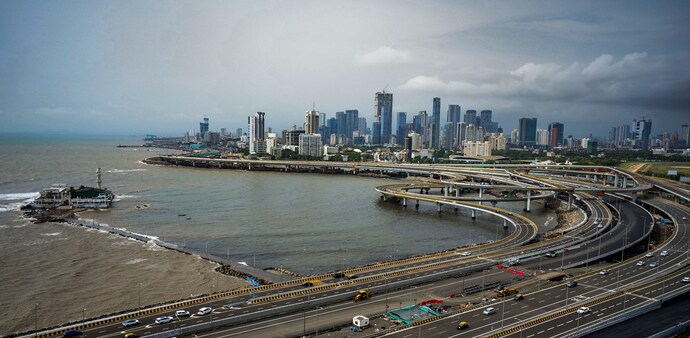
Mumbai is now on track to record one of its driest June months in nearly two decades. Santacruz observatory has received only 13.1 mm of rainfall this month, while Colaba has recorded just 5 mm. The city's average June rainfall stands at 526.3 mm. If the current trend continues, June 2026 could rival June 2014, when Mumbai recorded only 87.3 mm of rain, one of the lowest totals on record.
Advertisement
The delayed monsoon is also beginning to affect water resources. Maharashtra's reservoirs currently hold only about 24.5 per cent of their total storage capacity, while several reservoirs in Gujarat are reporting sharply reduced water levels. The Sardar Sarovar reservoir alone is facing a significant storage deficit. Meteorologists have linked much of the slowdown to the absence of strong weather systems over the Bay of Bengal and the Arabian Sea, both of which are crucial for monsoon advancement.
At the same time, global climate agencies have confirmed the development of El Nino conditions in the Pacific Ocean. Historically, El Nino has been closely linked with weaker Indian monsoons. Since 1950, India has experienced 16 El Nino years, many of them associated with droughts and significant rainfall deficits. With Pacific Ocean temperatures continuing to rise rapidly, forecasters have warned that El Nino's influence could intensify further by September, adding to the challenge for India's monsoon season.
FAQs
- +−
Why has India’s south-west monsoon weakened after an encouraging start?
The monsoon has lost pace because strong weather systems have not formed over the Bay of Bengal and the Arabian Sea, which are important for pushing rains inland. Satellite images also show reduced cloud cover across many parts of the country.
- +−
How big is the rainfall deficit in India so far this monsoon season?
Between June 4 and June 15, India received only 19.2 mm of rain against the normal 53.7 mm. This means the country recorded a rainfall deficit of nearly 64 per cent during that period.
- +−
Why is the delay of the monsoon in Mumbai a matter of concern?
The monsoon usually reaches Mumbai between June 9 and June 11, but this year it is running more than a week late. The city has received very little rain so far, raising the possibility of one of its driest June months in nearly two decades.
- +−
How is the weak monsoon affecting water storage in Maharashtra and Gujarat?
Low rainfall is beginning to put pressure on water resources. Maharashtra’s reservoirs are holding only about 24.5 per cent of their total storage capacity, while several reservoirs in Gujarat, including Sardar Sarovar, are also reporting significant storage shortages.
- +−
What is the role of El Nino in India’s monsoon outlook this year?
Global climate agencies have confirmed El Nino conditions in the Pacific Ocean. El Nino is often linked with weaker Indian monsoons, and forecasters say its impact may strengthen further by September, which could increase the risk of below-normal rainfall.
India's south-west monsoon has lost momentum sharply just weeks after an encouraging start, raising fresh concerns over rainfall shortages, water security and the growing influence of a strengthening El Nino in the Pacific Ocean. Satellite imagery shows monsoon cloud cover thinning across large parts of the country, with rainfall activity weakening after the seasonal rains advanced into southern and central India.
Advertisement
MUST READ | Monsoon is here, but relief is not: South Bengal faces another hot week
According to the India Meteorological Department, the country received only 19.2 mm of rainfall between June 4 and June 15 against a normal of 53.7 mm, leaving India with a rainfall deficit of nearly 64 per cent during the period. The slowdown has been especially visible along India's west coast, where Mumbai is still waiting for the monsoon despite the second half of June having begun.
Usually, the monsoon reaches Mumbai between June 9 and June 11. This year, its arrival has already been delayed by more than a week, and meteorologists expect another four to five days before the system advances across the remaining parts of Maharashtra and the central Arabian Sea. Weather agencies say monsoon conditions over Maharashtra and Gujarat have weakened significantly. While some progress is expected after June 20, widespread and meaningful rainfall may not arrive until the final week of June.
Advertisement
DON'T MISS | Monsoon disappears from satellite view. India records 64% rainfall deficit since June 4
The weak start has left large parts of the country dry. Data from 723 districts show that only 103 districts have recorded near-normal monsoon conditions so far, while 236 districts have seen weak rainfall and another 202 districts have experienced very weak rainfall.
Mumbai is now on track to record one of its driest June months in nearly two decades. Santacruz observatory has received only 13.1 mm of rainfall this month, while Colaba has recorded just 5 mm. The city's average June rainfall stands at 526.3 mm. If the current trend continues, June 2026 could rival June 2014, when Mumbai recorded only 87.3 mm of rain, one of the lowest totals on record.
Advertisement
The delayed monsoon is also beginning to affect water resources. Maharashtra's reservoirs currently hold only about 24.5 per cent of their total storage capacity, while several reservoirs in Gujarat are reporting sharply reduced water levels. The Sardar Sarovar reservoir alone is facing a significant storage deficit. Meteorologists have linked much of the slowdown to the absence of strong weather systems over the Bay of Bengal and the Arabian Sea, both of which are crucial for monsoon advancement.
At the same time, global climate agencies have confirmed the development of El Nino conditions in the Pacific Ocean. Historically, El Nino has been closely linked with weaker Indian monsoons. Since 1950, India has experienced 16 El Nino years, many of them associated with droughts and significant rainfall deficits. With Pacific Ocean temperatures continuing to rise rapidly, forecasters have warned that El Nino's influence could intensify further by September, adding to the challenge for India's monsoon season.
Read more!